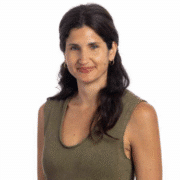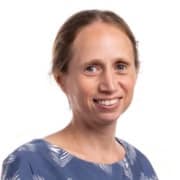
Dr. Yael Bitterman is a new faculty member in the Department of Medical Neurobiology at the Hebrew University of Jerusalem. Her research focuses on developing analytical and conceptual frameworks for inferring the function of brain circuits from large-scale neuronal and behavioural data. Leveraging the current unprecedented capabilities to monitor and manipulate the activity of many neurons, novel computational tools promise to enhance our capacity to characterize and interpret complex neuronal dynamics in relation to cognition, action, and sensation.

Yael studies the distributed neuronal code of adaptive behaviour and its evolution in both healthy conditions (e.g., learning) and maladaptive and pathological conditions (e.g., compulsion).

Yael completed her PhD in computational neuroscience in the lab of Prof. Israel Nelken at the Hebrew University. She developed pragmatic methods based on minimalistic assumptions for detecting regularities in the evolution of natural sounds to study the neuronal processing of naturalistic sounds in the auditory cortex of humans and rodents. For her postdoctorate, she joined the lab of Prof. Andreas Lüthi at the Friedrich Miescher Institute for Biomedical Research in Basel, Switzerland. There she established approaches for extracting structures in high dimensional neuronal dynamics and relating them to local network’s role in learning, action selection, and the regulation of persistent states that underlie complex behaviour. Upon returning to the Hebrew University, Yael, a mother of three daughters, feels fortunate to join an academic community that advocates for scientific progress alongside truth, diversity, freedom, equality, and social cohesion.
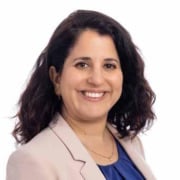
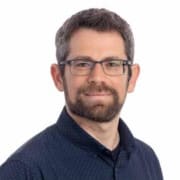
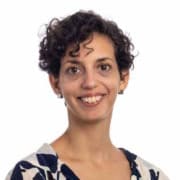
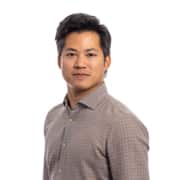
Dr. Reut Naim is a new faculty member in the School of Psychological Sciences at Tel Aviv University. In her work, she uses clinical neuroscience and naturalistic research methods to study deep phenotyping of externalizing problems and disruptive behaviours while advancing mechanism-informed treatments to reduce these symptoms and distress in youth.

Reut’s research focuses on leveraging technology to investigate mechanisms of risk for externalizing psychopathology and to develop, evaluate, and implement interventions for large-scale dissemination to improve public health.

As an Azrieli Fellow, Reut will investigate the dynamics between inhibitory control, physiological arousal, and aggressive behaviours as they occur in the real world. Her aim is to explore temporal patterns and predict the likelihood of aggressive behaviour manifestation in the context of increased arousal and impaired inhibition.

Reut is a researcher and a certified clinical psychologist. She received her BA and MA from the School of Psychological Sciences at Tel Aviv University (summa cum laude), where she also earned her PhD in clinical psychology in the lab of anxiety and trauma. She completed a clinical psychology internship at Tel Aviv Sourasky Medical Center’s psychiatric clinic. Reut received an intramural research fellowship award from the National Institute of Mental Health (NIMH), where she completed her postdoctoral research in the Neuroscience and Novel Therapeutics Unit, studying mood dysregulation in youth. She lives in Herzliya with her partner, Noam, and their three children and enjoys hiking, going to concerts, practicing yoga, and spending time with friends and family.

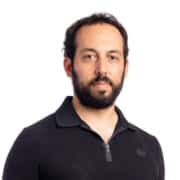
Dr. Or Litany is a new faculty member in the Department of Computer Science at the Technion – Israel Institute of Technology.

Specializing in artificial intelligence (AI) for computer vision, Or’s work emphasizes the generation, reconstruction, and semantic interpretation of what he terms 4D digital environments, namely, the three spatial dimensions plus time.

As an Azrieli Fellow, Or will push the boundaries of leveraging internet-scale video data in order to analyze and synthesize dynamic 3D objects and scenes. By incorporating the rich spatio-temporal structures present in videos, Or intends to advance the domain of 3D vision. Given the exponential growth in video content, his research posits that utilizing videos for 3D tasks could overcome the complexities of capturing 3D data at scale using specialized equipment. The practical applications of this research are manifold, including detecting and tracking objects of any category in images and videos, recovering the geometric structure of scenes, and generating and editing visual content from partial observations for immersive interaction.

Or received his BSc in physics and mathematics from the Hebrew University under the auspices of the IDF Talpiot program. He subsequently completed his Masters and PhD at Tel Aviv University under the supervision of Prof. Alex Bronstein. He conducted postdoctoral research at Stanford University and Meta AI Research under the guidance of Prof. Leonidas Guibas, developing VoteNet, an innovative technique for 3D object detection in point cloud environments. He also introduced PointContrast, the first large- scale point cloud contrastive representation learning method. He lives in Haifa with his wife, Ayelet, and their three children: Adam, Roni, and Nadav. In his free time, Or enjoys writing and recording music.

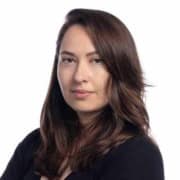
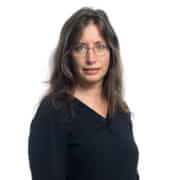
Dr. Maya Fennig is a new faculty member in the Bob Shapell School of Social Work at Tel Aviv University. Her research lies in two independent yet inter-related areas of well-being.

The first concerns cross-cultural mental health, exploring how sociocultural contexts shape individuals’ mental health. The second focuses on the psychosocial consequences of exposure to adversity and forced migration on children, youth, and families. As an Azrieli Fellow, Maya will use interviews, focus groups, and innovative arts- based methods – storytelling, drawing, drama and spoken word – in her ethnographic research.

Through these methods, Maya will explore the ways in which protracted displacement unfolds in the lives of war-affected refugee children residing in Italy and shapes their identity, sense of belonging, rights, citizenship, mental health, well-being, and imagined futures.

Her research will be part of a multi-site, multi-year study which will allow Maya and her colleagues to explore protracted displacement in diverse conditions, including reception centres in Italy, urban communities in Israel, and refugee camps and makeshift squats in Greece.

Maya completed her PhD at McGill University’s School of Social Work under the supervision and mentorship of Prof. Myriam Denov. In her dissertation, she explored Eritrean refugees’ interpretations of the effects of trauma, torture, loss, and protracted displacement, as well as their subsequent coping strategies. Maya has worked with non-governmental organizations in both Israel and Canada to promote the health and rights of refugees, for which she received numerous awards including the Jeanne Sauvé Public Leadership Fellowship, and the Vanier Canada Graduate Scholarship. After living in Montreal for almost a decade, Maya recently moved back to Tel Aviv, where she lives with her partner and two young daughters.

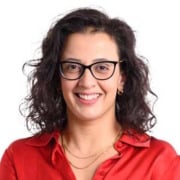
Dr. Maayan Keshev is a new faculty member in the Department of Linguistics at The Hebrew University of Jerusalem. Her research examines the cognitive process of understanding language.

Through psycholinguistic experiments, Maayan examines how readers and listeners extract meaning from a sentence quickly and efficiently (even before it is complete).

As an Azrieli Fellow, Maayan will investigate comprehenders’ predictions regarding the unfolding of sentences. Specifically, her project will examine whether, in this prediction process, comprehenders use abstract grammatical categories that unite a broad array of words or word strings. The project will contribute to core debates in linguistics about the balance between abstract generative knowledge and the knowledge of regularities associated with specific words.

Maayan completed her PhD at Tel Aviv University under the supervision of Prof. Aya Meltzer-Asscher. During her doctoral studies, she examined how comprehenders use grammatical knowledge and past experience to overcome ambiguity and errors in sentences they read. Her work was among the first to explore sentence processing in Hebrew. In her postdoctoral work at the University of Massachusetts Amherst, Maayan investigated questions about the source of comprehension errors with her advisor, Prof. Brian Dillon. She advanced an account of interference between multiple linguistic elements that have to be concurrently maintained in memory. Maayan lives with her spouse, Ofir, and their dog, Fudge. She enjoys sewing clothes, eating chocolate, and sunshine.

Dr. Ella Klik is a new faculty member in the Program for Hermeneutics and Cultural Studies at Bar-Ilan University. Her areas of expertise are media theory, materiality, and aesthetics.

Specifically, her research deals with technological innovation and traces the emergence of media economies shaped by storage space constraints, which are mitigated by a host of reusable design strategies.

As an Azrieli Fellow, Ella will extend her research into the contemporary tech landscape by combining historical approaches to studying analog recording technologies with an analysis of emerging storage solutions, such as commercial server farms in orbit and undersea, DNA storage, and blockchain. Ultimately, her aim is to critically examine the underlying assumptions and values that fuel future visions of data storage as unencumbered by physical limitations.

Ella received her PhD from the Department of Media, Culture, and Communication at New York University, where she explored the “life” cycle of media: from engineering to production, use, and, eventually, discard. She has held fellowships in various institutions worldwide, including the Institute for Human Sciences in Vienna, NYU Shanghai, the Polonsky Academy for Advanced Study in the Humanities and Social Sciences at the Van Leer Institute in Jerusalem, and the Society of Fellows in the Humanities at the University of Southern California in Los Angeles. All of these interdisciplinary spaces and the colleagues she has encountered throughout her academic journey have contributed to her intellectual fascination with the ways in which media shape our present and, no less crucially, our futures. Perhaps unsurprisingly, Ella enjoys consuming science fiction books and films in her spare time.

Dr. Elena Meirzadeh is a new faculty member in the Department of Molecular Chemistry and Materials Science at the Weizmann Institute of Science.

Her research centres on the synthesis of novel nanomaterials and holds great promise for cutting-edge technologies like clean energy and new optical and electronic devices.

As an Azrieli Fellow, Elena will explore how superatoms, namely, atomically precise nanoscale building blocks, interact in the gas phase, form intermolecular covalent bonds, and crystallize as infinite extended structures.

Elena completed her PhD under the supervision of Prof. Meir Lahav and Prof. Igor Lubomirsky at the Weizmann Institute of Science and developed an extremely sensitive technique for detecting deviations from symmetry in crystals. Using pyroelectric measurement, she was able to improve our fundamental understanding of crystal structure, function, and different growth mechanisms. During her postdoctoral research as a Rothschild Fellow at Columbia University in New York City, she created a new form of carbon, named graphullerene, which consists of layers of fullerene molecules peeled into two-dimensional sheets as thin as a single molecular carbon