Protected: The Science of Making Peace

There is no excerpt because this is a protected post.

Photographs by Kimberly Lauren Bryant and Hadas Parush
October 14, 2026 By Alan Morantz
View PDF version

“We used to wonder where war lived, what it was that made it so vile. And now we realize that we know where it lives, that it is inside ourselves.”

French philosopher Albert Camus wrote those words in 1945. For most of the decades that followed, the world largely ignored the larger meaning; instead, we’ve treated intergroup conflict as a problem of ideology, religion, history, territory, resources or power, to be resolved through diplomacy or deterrence. Wars were always “out there.”

And still, conflict rages. According to the Institute for Economics and Peace, global peacefulness has declined every year since 2014, with 100 countries becoming less peaceful over the past decade. And it isn’t only conflict on the battlefield: across democracies, an emotional and tribal form of polarization has deepened fault lines within societies, turning neighbours into opponents to be shunned or vilified.

Facts, we now know, do not defuse conflict. Presenting people with accurate information rarely changes entrenched views; in some cases, it hardens them. Reasoned argument can backfire. The issue, social psychologists say, is that Camus was right all along: conflict lives inside us. It is sustained not just by disagreements over land or policy, but by the fears, identities and psychological needs that become fused with those disputes over time — and that make them feel, to the people experiencing them, like existential struggles.

If the seeds of intergroup conflict are partly psychological, can they be unsown by psychology? Researchers like Boaz Hameiri and Nadine Knab believe they can, and they’re developing the evidence to prove it.

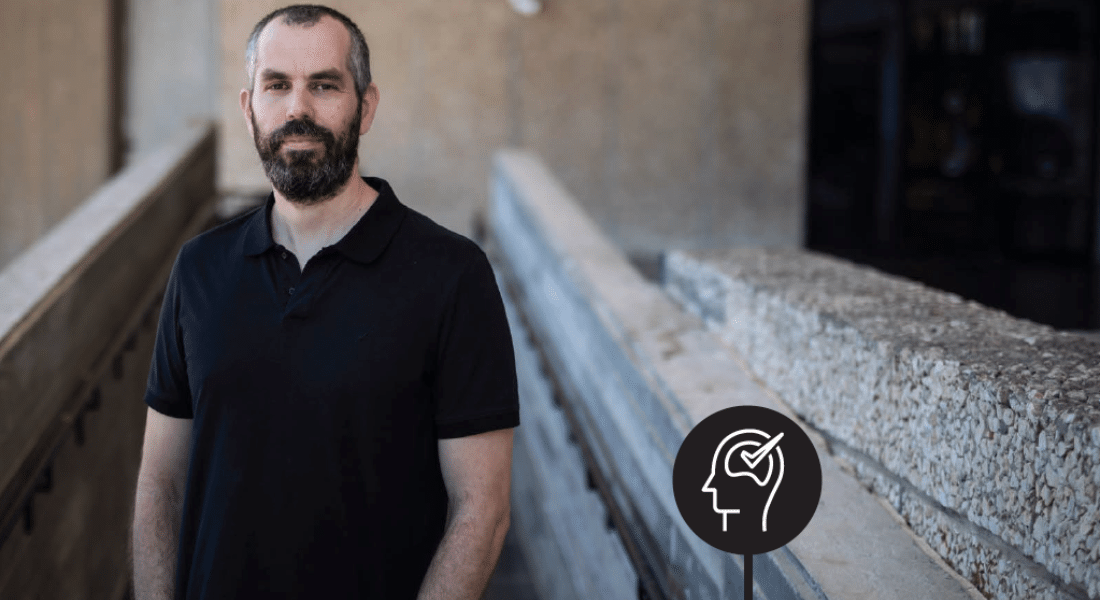
Hameiri is an associate professor in the School of Social and Policy Studies and head of the Program in Conflict Management and Mediation at Tel Aviv University. His interest in the social psychology of conflict was heavily influenced by his own experiences growing up in Netanya in central Israel during the late 1990s, after the breakdown of the Oslo Accords. Hameiri, who was awarded an Azrieli Graduate Studies Fellowship in 2015, went on to complete his graduate training in social psychology at Tel Aviv University in 2019. He then spent two years as a postdoctoral fellow in the Peace and Conflict Neuroscience Lab at the University of Pennsylvania.

Since then, Hameiri has built an influential body of research exploring how group identity, emotions and political context shape openness to peace. His work has taken him from conflict zones in the Middle East to polarized communities in Nigeria and Colombia. Recently, he received a prestigious €1.8 million European Research Council grant to systematically study not just whether interventions based on social psychology reduce intergroup conflict, but in which types of conflicts and why.
Share this article
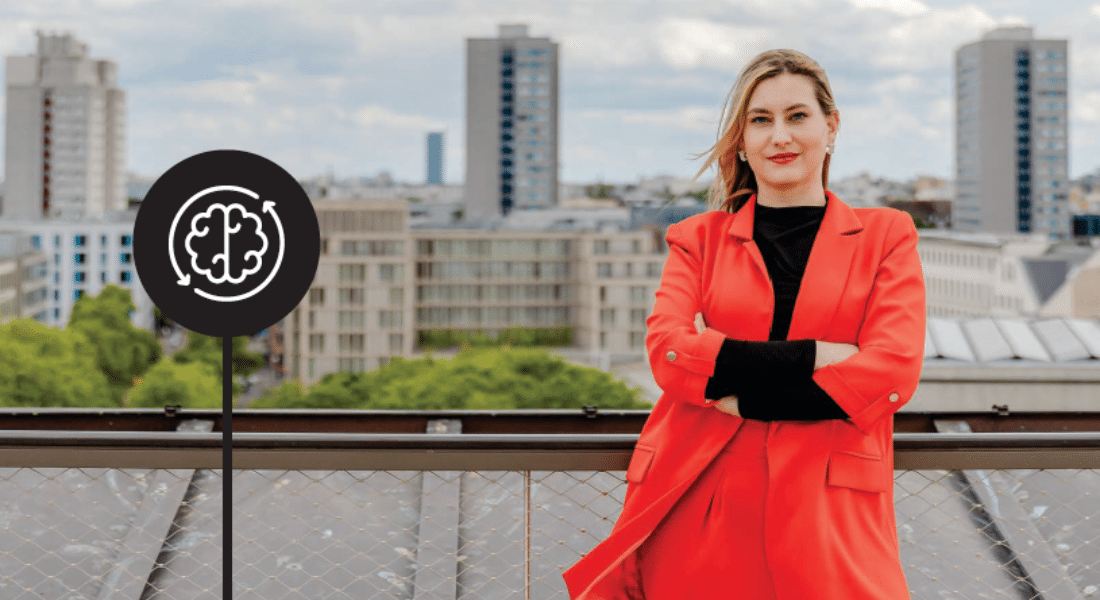
An advocate of peace psychology, Nadine Knab researches affective polarization and the psychological processes shaping intergroup conflict and societal cohesion. She suggests affective polarization may be a coping mechanism in times of uncertainty.

Knab is a social and peace psychologist whose work integrates insights from psychology and political science to understand the psychological processes that sustain conflict and polarization. She completed her doctoral work in psychology at the University of Koblenz and Landau in 2020 and spent time as a visiting scholar at institutions in Israel, Russia and the U.S. Currently, she is a postdoctoral researcher at Charité – Universitätsmedizin Berlin, where she coordinates the Interventions Lab in the Einstein Research Unit, Coping with Affective Polarization.

She has led and collaborated on experimental and applied research across several countries, studying how psychological interventions, identity processes and coping mechanisms can shape intergroup relations and democratic engagement.

Knab has also been an energetic advocate for research into the psychological conditions that make societies more resilient to conflict in the first place — a guiding tenet of peace psychology. Those conditions include everything from how social groups are perceived to how everyday interactions can either reinforce or soften divisions. In this view, “positive” peace, which is more than merely the absence of violence, has to be constructed, deliberately and continuously, at every level of society. Knab shares this message widely; she served as president of the German Peace Psychology Association and is co-editor of the recently published Handbook of Peace Psychology.

The collaboration between Hameiri and Knab grew out of a shared interest in paradoxical thinking, one of the most talked-about psychological interventions in conflict resolution. Paradoxical thinking interventions involve confronting people with extreme versions of their views.

The two researchers were able to explore research interests as colleagues when Knab was selected as an Azrieli International Postdoctoral Fellow in 2021, enabling her to work in the Hameiri lab at Tel Aviv University. It is the kind of research that reflects the commitment of the Azrieli Fellowship program to drive creative solutions to some of society’s most pressing issues.

“Conflicts don't just divide people. They can create a sense of belonging and shared fears. Interventions need to satisfy these underlying psychological needs instead of just providing facts.”

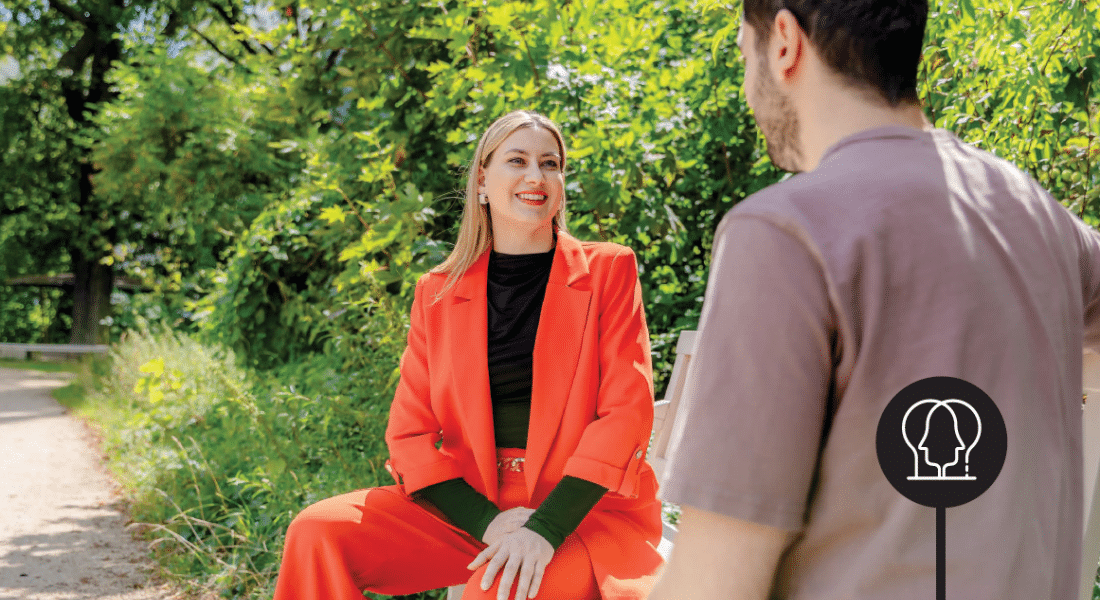
In conversation with Aperio editor Alan Morantz, Hameiri and Knab discuss the promise and limits of paradoxical thinking for conflict resolution, and what psychological science can offer a polarized world.

Alan Morantz: You both study the psychology of deep-rooted conflicts and are intentional in how you describe yourselves. There’s peace psychology on one side and conflict management on the other. Where do your insights most strongly align and where do you see meaningful differences in your perspectives?

Nadine Knab: One of the areas where our research and approaches align is the assumption that deeply rooted conflicts are not just disagreements of attitudes or the result of a lack of information — the idea that just giving a person information will lead to a change of attitudes. And more, it’s that there is some kind of psychological system that sustains this conflict, a system that people also feel protected by.

So, for example, conflicts don’t just divide people — they can create and feed a sense of belonging and shared fears. Both of us think that interventions need to also reduce this defensiveness and satisfy the underlying psychological needs instead of just providing facts.

Where our approaches differ is mainly in the types of cases we examine, not so much in their insights or conclusions. Boaz focuses on conflicts with longer histories and experiences of physical violence, while my recent work has centred on politically polarized contexts surrounding specific societal issues.

AM: Paradoxical thinking interventions have attracted a lot of attention among social psychologists working in conflict resolution. Boaz, you’ve been one of the leaders in this area on the strength of your experiments during a period of active conflict in the Middle East. What does it entail?

Boaz Hameiri: The idea behind paradoxical thinking traces back to ancient Greek debating techniques, where a position is taken to an extreme to reveal its problems. In the context of conflict resolution, paradoxical thinking presents conflict-related beliefs in an exaggerated or extreme form. So rather than directly arguing against people’s views or trying to get them to see the other side, it amplifies their beliefs to a point where they begin to recognize inconsistencies or absurd consequences on their own.

An example would be: “If security is the most important value, perhaps we should never negotiate, never compromise and continue pursuing security at any cost forever.” Notice how this doesn’t require people to immediately adopt the perspective of an adversary. Instead, it encourages reflection from within their own belief system.

The study we did with Jewish Israelis in 2015–2016 was to try to get them to reassess what they thought and felt when it came to conflict with the “enemy.” In settings shaped by long-running conflict, people are socialized to think and feel different things from the day they’re born. People have very entrenched views when they live in these contexts.

Across multiple studies, we found that among Jewish Israelis who engaged with paradoxical thinking, biases and negative attitudes toward Palestinians lessened. Overall, they were more willing to engage in constructive dialogue and consider alternate viewpoints. When I saw the results of one of the studies for the first time, I was completely shocked and didn’t believe it. I remember sitting in the office with a friend of mine, asking her to double-check the results because they seemed too good to be true.

One of the field’s most influential researchers, Boaz Hameiri is systematically studying not only whether social psychology interventions can reduce intergroup conflict, but also where they work — and why.

AM: Nadine, you took this idea into a very different context — Germany and attitudes toward refugees. How did that translate?

NK: The main focus of my study with paradoxical thinking was not necessarily attitude change; it was more about how to make people more open toward information that contradicted their initial opinion. We used well-known fears that people have about refugees. Examples would be the fear that culture and traditions might change because of the higher number of refugees, and the fear of refugees worsening the economic situation in Germany.

So, in a lab experiment, we asked, Why do you think all Germans will be jobless because of the higher number of refugees? Why do you think all Christian holidays will be abolished? We wanted to make these extreme views salient in people’s minds so they might realize: okay, there could be changes due to people moving to Germany from war-torn countries, but the changes might not be so extreme that we’re going to abolish Christmas or not speak German anymore.

In this experiment, we found participants who were asked paradoxical leading questions, particularly people who were more right-wing and had more extreme attitudes toward refugees, showed a greater openness to alternative information and greater willingness to compromise.

AM: It sounds counterintuitive: push people to extremes to make them more moderate. What’s actually happening in their minds?

BH: My former advisors, Danny Bar-Tal and Eran Halperin, and I made the argument that paradoxical thinking works because, first of all, it’s something people are willing to tolerate or engage with. It may be inconsistent with what they think and it may be surprising, but there’s a way in.

The key ingredient, in our view, is that it leads to something we call identity threat. It’s like, I see how this reflects negatively on me, so I’m taking a step back to move away from this threatening message. This is what, we argue, ultimately leads to attitude moderation.

We filmed all the sessions and have a few examples where you see this identity threat actually happening, when they try to distance themselves from the extreme views. I’m not like that. I’m moderate.

NK: In my research with Kevin Winter, I also found that paradoxical leading questions can increase cognitive flexibility — people become more able to consider alternative perspectives and move beyond rigid, one-sided thinking. So, from my perspective, what’s happening is not only a distancing from an extreme position, but also a loosening of cognitive rigidity.

“Changing beliefs is more difficult than changing how people feel about something. But at the same time, this is what we should aim for. If you manage to change beliefs, then there's a greater likelihood that the change will last longer.”

AM: Despite these successes, paradoxical thinking hasn’t featured in many of your interventions in recent years. Why not?

BH: It’s because it’s a very difficult intervention to develop. It requires a lot of effort and resources and time to find the right message or the right questions or the right way to operationalize the intervention. In recent years, I was semi-involved in different projects that tried to use paradoxical thinking, and they backfired spectacularly. People become either more extreme or their views become more entrenched.

NK: I can only support what Boaz is saying. If you don’t exactly know the attitudes of the participants that you’re confronting with the statements, it might either backfire or not work at all. At the time in Germany, there were some shared attitudes regarding refugees and we knew roughly what they were. But when you think of the magnitude of polarized issues, it’s way more diverse and complex in terms of what people think about them, so it’s much more difficult to implement on a broader scale of conflicts.

The good thing about a paradoxical intervention is that it doesn’t have to be scaled up. You can use it in everyday conversations with people. If you really know your counterpart and roughly understand their attitudes, it can be used safely to help people challenge their beliefs.

AM: Paradoxical thinking interventions primarily target beliefs, reasoning and cognitive frameworks, rather than directly targeting emotions, like empathy, fear, hope. Generally in your research, what seems to matter more and under what conditions?

BH: I find that changing beliefs is more difficult than changing how people feel about something. But at the same time, this is what we should aim for. If you manage to change beliefs, then there’s a greater likelihood that the change will last longer.

In the work we did in Colombia, we found that the changes that followed our intervention were mostly driven by changing cognitions or beliefs versus emotions. And they were long-lasting changes.

NK: I wouldn’t separate them into two completely distinct categories, because emotions are shaped by beliefs, interpretations and reasoning. In most interventions, you’re not addressing “only” emotions or “only” cognitions; the two are closely intertwined.

Empathy is a good example of this. It involves a cognitive component, such as taking the perspective of another group, but it also involves an emotional component, such as feeling concern or compassion. So, in practice, it’s often difficult to clearly disentangle emotion and cognition.

This distinction becomes especially important in contexts of ongoing physical violence or hostility. In these situations, empathy interventions that require people to deeply engage both cognitively and emotionally with the perspective of an outgroup member can be very difficult, and sometimes unrealistic. It may be too demanding to ask people to feel empathy for someone who belongs to a group they currently perceive as threatening. In these contexts, it may be more feasible to focus first on the emotions people themselves are experiencing and on how they can cope with or regulate these emotions.

As both Hameiri and Knab discovered, when people are pushed to take their views of the outgroups to the extreme, they become more moderate and able to consider competing views. It's a high-risk, high-reward strategy.

AM: Emotions are a driving force behind one of the defining anxieties of contemporary civil society in the West — affective polarization, the intense negative emotions people feel toward those on the other side of a political divide. Nadine, you are actively researching this question. What have you noticed in how policymakers and researchers typically approach affective polarization?

NK: The standard response is to treat polarization as a pathology to be cured, but I think this approach misses something important. I’m investigating whether affective polarization could also be a coping mechanism that we develop in times of uncertainty. We’re looking at this now in Germany and Italy, and also with a group of Syrians regarding uncertainty in their country. When you don’t know what tomorrow looks like, knowing you belong somewhere — be it a family, a movement, a political group — gives you a sense of control. It can reduce loneliness and provide meaning.

So just reducing polarization should not be the goal, because it has a function. Research consistently shows, for example, that some of the most committed social activists, the people trying to improve society, are also among the most polarized. Decreasing polarization could basically mean that we have fewer people who care and are engaged. The question is how we can impact those other negative aspects that often come along or are shaped by affective polarization, such as loneliness, loss of control or hostility toward people who think differently.

AM: Boaz, your new project, based on a significant grant from the European Research Council, focuses on the importance of context, the idea that a well-designed conflict-reduction intervention could be completely wrong when attempted in a different setting. What do you hope to accomplish?

BH: For decades, social psychology researchers in different domains haven’t really communicated with one another. One area of research focuses on violent and intractable conflicts. Another focuses on prejudice reduction, like relationships between different minority groups in Europe. And there’s a third addressing political polarization, mostly in the U.S. These literatures have developed in parallel.

Moreover, researchers and practitioners routinely borrow techniques from other contexts, based on their intuition that an intervention that worked in one setting would work in another. You saw that when policy-makers took interventions from the prejudice reduction world and used them in the more violent conflict domain. It didn’t work as well. Sometimes, it didn’t work at all.

What I want to do is to look at this more systematically and develop a more comprehensive understanding of interventions to help us all do better work. We’re focusing on three key dimensions: the level of violence in a conflict; the level of perceived threat felt by ordinary people; and power dynamics between groups, whether the two groups are more equal in terms of their power in the intergroup dynamics or more unequal.

We hope to study at least a dozen conflict contexts worldwide. We also plan to run multiple “intervention tournaments” that test various approaches simultaneously rather than studying one intervention at a time. That way we could hopefully develop a model explaining how context of intergroup relations and different types of interventions interact and how this predicts effectiveness of different interventions. If that happens, I’ll be very happy. If I can translate this model into something that would be useful for practitioners and NGOs, I’ll be over the moon.

AM: That’s a welcome note of optimism. Where do you both see promising opportunities for improving intergroup relations right now?

BH: I’m working on a project that tries to operationalize paradoxical thinking using AI chatbots, which I think is an exciting approach. Because it’s so difficult to come up with the right messages or the right questions, AI chatbots can be very useful in that sense. They may be able to help us create a more tailored intervention that’s less likely to backfire. AI is an exciting frontier, for better or for worse.

NK: I recently received a grant to investigate coping mechanisms of activists incorporating neuroscience methods, such as fMRI. We want to understand how emotionally challenging information is processed and how it relates to democratic engagement, what indicators imply resilience, and what indicators imply action but are maybe challenging for mental health.

I do think we already have many interesting tools and methods; we just need to bring different disciplines together. Peace can’t be achieved by just including one perspective, so the research supporting it shouldn’t come from only one perspective either.


Subscribe to our newsletter

* indicates required

All fields are mandatory.