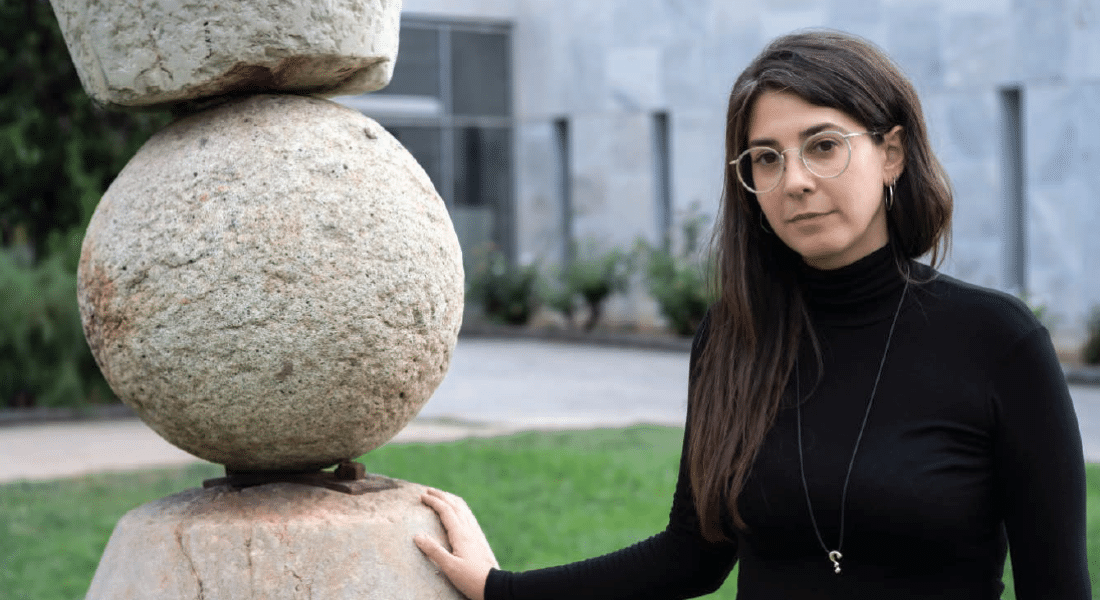
It happened fast. At a scientific conference in her home city of Athens in the fall of 2021, a young Greek researcher named Evgenia Mitsou heard a talk that fascinated her. It was an eagerly anticipated lecture by Jacob Klein, a world-renowned materials scientist at the Weizmann Institute of Science, whose discoveries about friction and biological lubrication had revolutionized the field.
Mitsou chatted with Klein after the talk about a postdoctoral position in his lab; he emailed a few hours later to say he would be in Athens until nine o’clock that evening — and would she like to meet before then to interview? The meeting went well, and two months later, she recalls with amazement, “I just packed my things and went to Israel.”
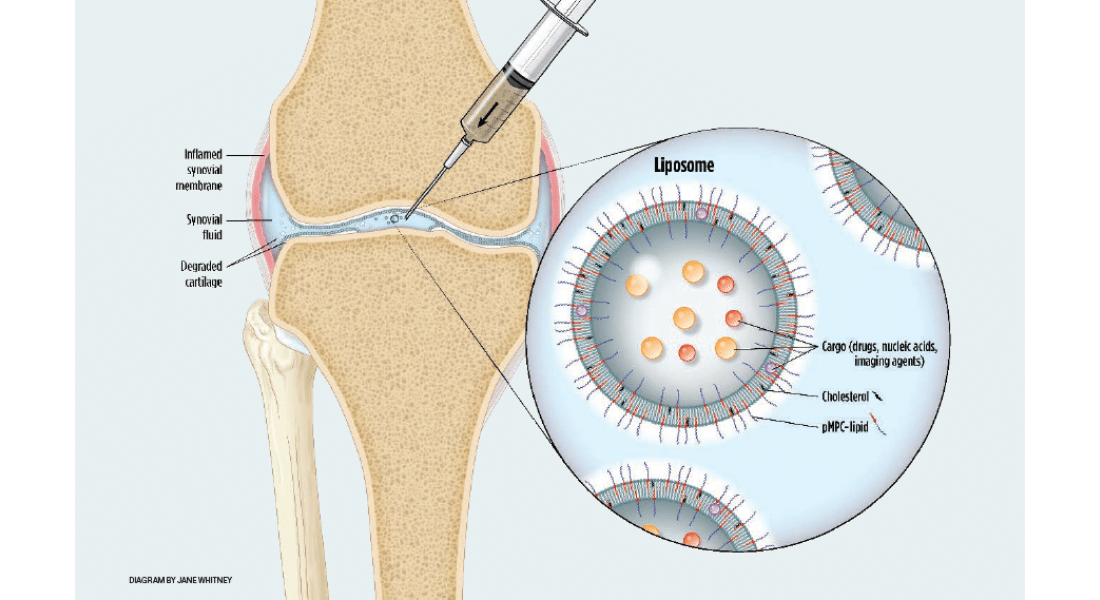
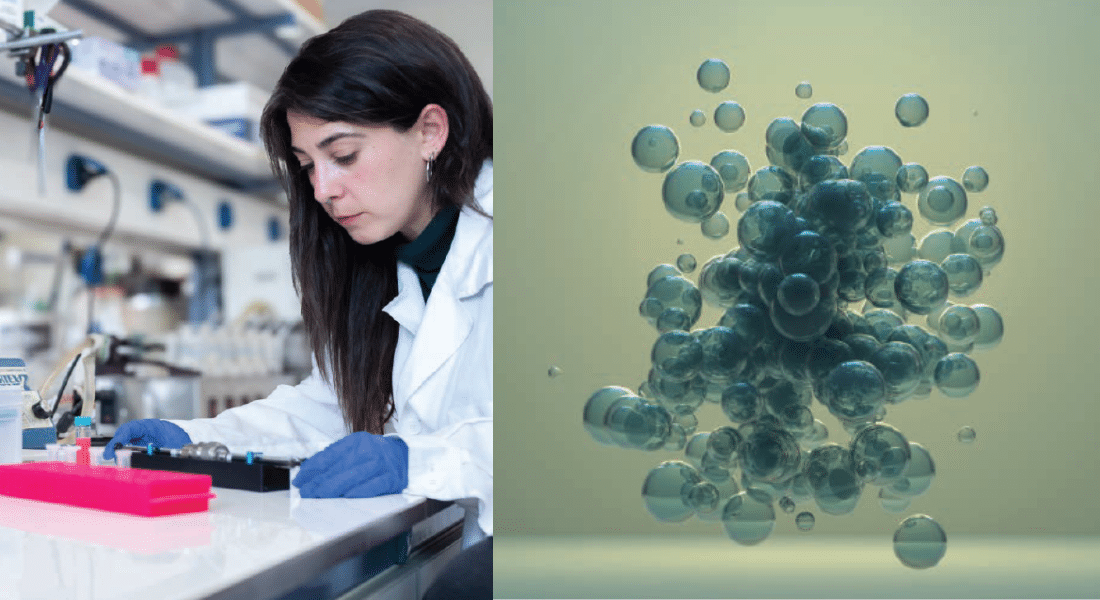
These days, Mitsou leads a team at the National Hellenic Research Foundation’s Institute of Chemical Biology, in Athens, focusing on the emerging field of nanotherapeutics — that is, the use of bespoke nanoparticles (particles up to 100 nanometres in diameter) to deliver medicines in new and efficient ways. Mitsou’s entire research career, dating back to her master’s and PhD work, has revolved around the use of nanoparticulate carriers to encapsulate and deliver antioxidants, vitamins and drugs wherever they’re needed in the body. But her three-year stint in Klein’s lab gave her a crucial insight: that the nanoparticle itself can have benefits, regardless of what’s inside it. “It can be active even without delivering anything,” she says. “And this was something I never imagined.”
New drugs are often hailed as breakthroughs, but figuring out how to deliver those drugs remains one of the central barriers to the successful rollout of new therapies. Mitsou’s collaboration with Klein is just one element of a broader mission to crack the problem of getting the right dose to the right place by tailoring the properties of the drug’s carrier. Mitsou even envisions a future where bespoke carriers will be optimized for individual patients.
“Researchers who can integrate nanotechnology with real biological challenges are contributing to the future direction of modern medicine,” says Aristotelis Xenakis, Mitsou’s colleague and former doctoral supervisor at the National Hellenic Research Foundation. “Evgenia is clearly part of this new generation.”