Protected: The Money Makers

There is no excerpt because this is a protected post.

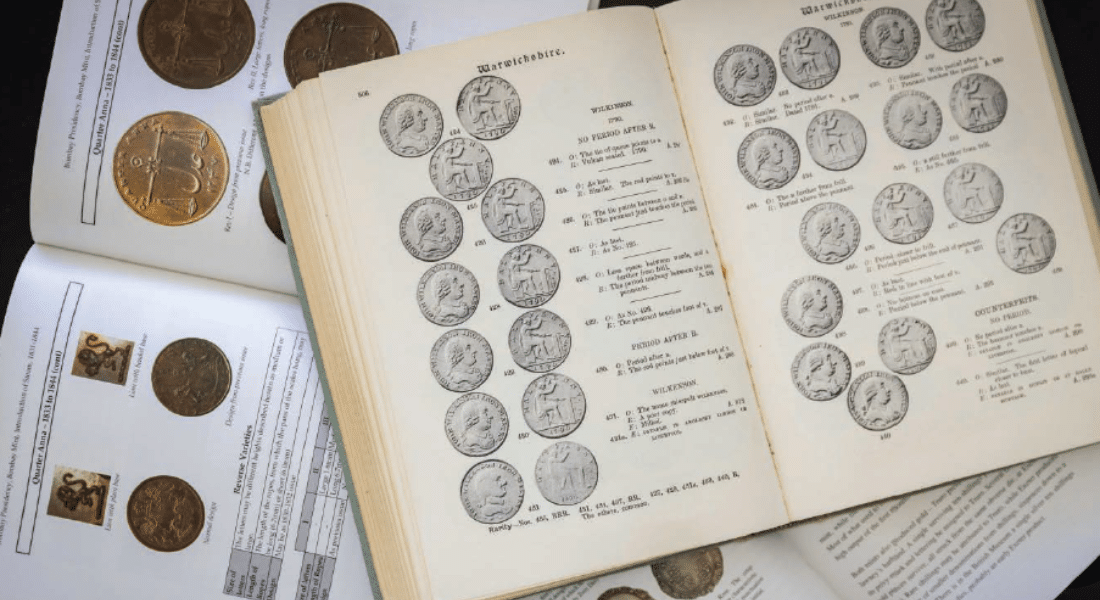
Photographs by Hadas Parush © The Trustees of the British Museum. Shared under a Creative Commons Attribution-NonCommercial-ShareAlike 4.0 International (CC BY-NC-SA 4.0) licence
October 14, 2026 By Robert Gerlsbeck
View PDF version

Among the many puzzles surrounding cryptocurrencies today, one stands out: How is this even allowed? Bitcoin and other digital currencies are minted by private players. Aren’t only countries permitted to make money?

Mostly, yes. But history, as researcher Idit Ben-Or has found, tells a messier story.

Ben-Or has traced eras when private firms and even ordinary citizens issued their own money. Sometimes, it circulated widely. In other cases, use was limited to a single village or even a few city streets. It’s an important piece of history that has modern resonance, says Ben-Or, an assistant professor at Tel Aviv University and former Azrieli Graduate Studies Fellow who specializes in the overlooked history of privately issued money in present-day Britain from the 17th to 19th centuries. “Economies are created by people. The idea that only governments have ever shaped coinage and paper money and how we use it, isn’t true.”

The range of private money she has uncovered is striking. At one end, one of the most powerful companies the world has ever known, whose currency helped it dominate vast territories and people well into the 1800s. At the other, humble tavern owners, milliners, grocers and potters in late-1600s London — some of them female business owners — who literally put their own stamp on coins.

Ben-Or’s research moves beyond government treasuries and the world of high finance to explore how private money evolved on the ground. She examines the local economies that sustained these currencies and the workers who ultimately used them in their daily lives.

Ben-Or’s research starts with small change. It is through the jingle-jangle of coins that private money once played a surprisingly large role in daily life. One of the clearest examples comes from the first Industrial Revolution.

In late-1700s Britain, people moved from farms to factory jobs. Growing trade meant markets were filling with goods beyond simple necessities. People relied on pennies, halfpennies and farthings (quarterpennies) to shop. Industrialists also paid wages in these denominations.

But there was a problem: there wasn’t enough small change available. In 1775, the Royal Mint stopped making such coins, as they were too expensive to distribute. That shortage created “real distress” among ordinary English folk, Ben-Or says. The dilemma of the penny loaf illustrates what they faced. Penny-loaf bread was a staple in every home. It only cost a penny. “But if you couldn’t get a penny, how could you buy a penny loaf?” she asks.

The issue came to a head in the 1780s at Parys, Britain’s largest copper mine, in Wales, which had about 1,500 men, women and children on its payroll but not enough coinage to pay them. That’s when the mine’s primary owner, Thomas Williams, decided to mint his own coins to cover wages.

Other factory owners followed. Between 1787 and 1797, privately issued coins flourished, with roughly 130 factory owners minting across Britain. Known as provincial tokens, these mostly copper coins were not crude counterfeits. Each carried an elaborate design tied to the issuer. Williams put the face of an ancient druid on his coins. Others showed images meant to symbolize the Industrial Revolution’s progress: iron bridges, men and machines, and factory scenes.

By digging into archives and history books and examining coins, Ben-Or set out to understand the effect this money had on everyday people. “Working people didn’t have a lot of say when their employer paid them in provincial coins,” she says. But that didn’t mean they automatically accepted every piece. One major industrialist, John Wilkinson, was well regarded by his workers, but they initially rejected his coins. The problem, Ben-Or says, was that the metal in the coins was worth less than the value stamped on them. Only when he lowered the face value did they take them.

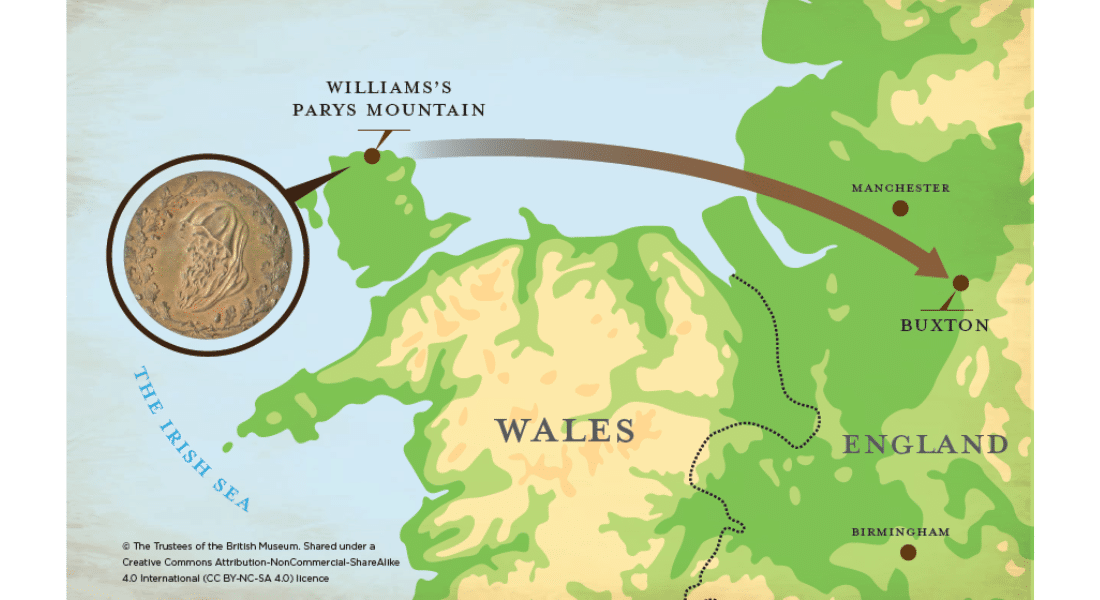
With provincial coins in workers’ pockets, shops in factory towns began accepting them, too. Some coins even travelled far beyond their origins. Ben-Or cites an account by a man named John Byng, who, in 1790, received change in Williams’s coins on a toll road in the spa town of Buxton, England. That was 250 kilometres away from the Welsh mine where they were issued.

So why didn’t the British Crown step in? Counterfeiting and other coinage offences carried the death penalty. Ben-Or’s research suggests the government didn’t consider small coins to be a meaningful part of the nation’s wealth. Even as they became more important in everyday life, they were seen as economically trivial. “Small change was petty commerce,” she says. “The government wasn’t interested in controlling it, so they left it to the private sector.”
Share this article
In the 1780s, when the Royal Mint stopped minting coins of small denomination, the Parys copper mine issued its own “provincial tokens” to pay wages. These druid-themed coins were accepted in factory town shops and even exchanged on a toll road 250 kilometres away from the Welsh mine where they were issued.

Ben-Or’s interest in private currencies began with a coin and a question. Although she was born in Baltimore, her family moved to Israel when she was three. Growing up, she was surrounded by history, and the idea of studying the past captured her imagination.

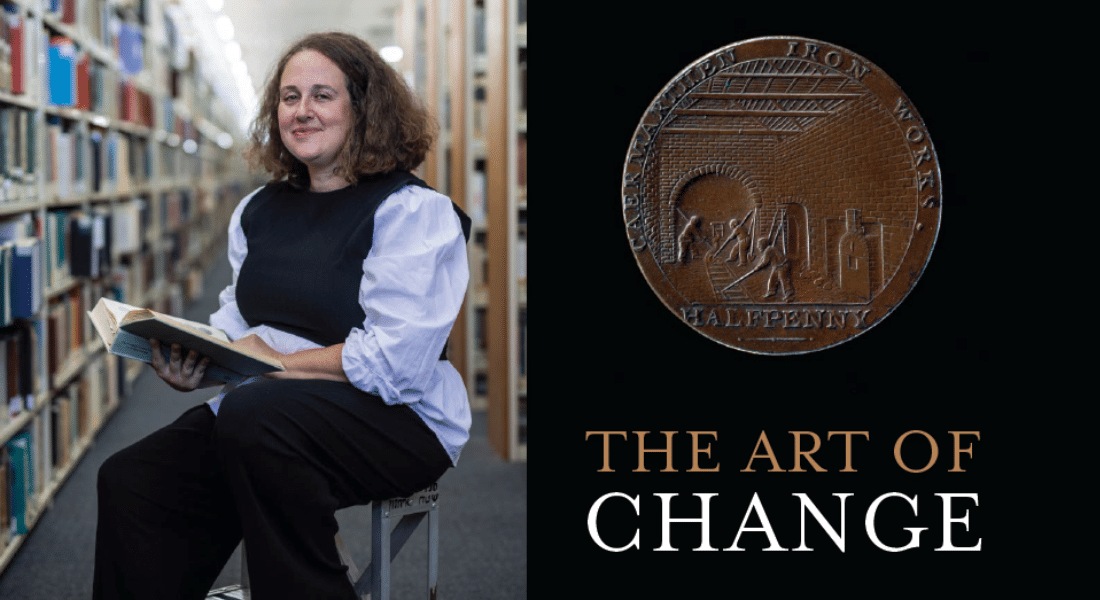
As she worked toward her doctorate at the Hebrew University of Jerusalem, she considered researching library histories. It seemed a natural fit; at the time, she was the producer of the Jerusalem International Book Fair. Then one day, while looking through historical catalogues, a picture caught her eye. “It was a copper coin with this beautiful image of people working inside an old ironworks,” she recalls. “The catalogue said it was from England in 1790 and had been minted by an ironworks company.”

She was curious. “It was a period of time where high-value coinage was really regulated. It was also soon after the outbreak of the French Revolution, when monarchies censored like mad and were super paranoid. What do you mean there’s private money?” she wondered. That led Ben-Or, as she puts it, “down the rabbit hole” of private money. She began asking important questions: Who was allowed to mint private coins? And why were people willing to accept money that was not backed by the Crown?

To answer the second question, Ben-Or closely examined how local economies functioned in early modern England. During the Industrial Revolution, for example, factory owners’ coins circulated mainly in areas where the issuer was well known and trusted. People accepted the coins because they believed the factory owners behind them would back the value. The more powerful and influential an issuer was, the more widely their money was likely to be accepted, she says.

Ben-Or has studied several periods when private money caught on. One such time occurred a century before the Industrial Revolution, when ordinary shopkeepers and tradespeople, rather than wealthy industrialists, found a reason to mint money.

The mid-1600s was a chaotic period in England. There was a civil war, King Charles had been executed and, among other woes, the country faced a severe shortage of small change. Tavern owners, innkeepers, shoemakers, weavers and other businesses relied on these coins. So, they issued their own, stamped with their initials. One advantage for the issuers: the cost of producing each coin was less than its face value. Shops made a profit every time they gave change.

In London alone, about 4,200 businesses issued what became known as trade tokens. As with provincial coins in the 1700s, some spread more widely — in this case, to businesses on nearby streets.

In her research, Ben-Or has focused on trade tokens issued by female business owners during this period. At least 140 of these coins were minted by women in London between 1649 and 1672. By studying the tokens and comparing them with other privately issued coins from the period, she has uncovered evidence of the economic influence women held in a society that strictly limited their rights.

“During the Industrial Revolution, factory owners’ coins circulated mainly in areas where the owner was well known and trusted.”

When male business owners issued trade tokens, the coins typically carried their full names. Some businesses, however, were run by husbands and wives. In those cases, the tokens featured a three-part name: the husband’s first initial, followed by his wife’s initial, and then the family surname.

But some tokens were clearly issued by women alone. These were usually widows or unmarried business owners. The coins offer a rare glimpse into the legal and financial standing of these women. “Not only were they running businesses, but they were able to own property, sign contracts and control their own earnings,” she says. Plus, they were members of established trade guilds (or livery companies).

Through her studies, Ben-Or has brought 17th-century women such as Mary Woodfall and Elizabeth Mayne out of the shadows of history. Woodfall ran a tavern in Cheapside, while Mayne belonged to a London livery company. Both issued their own trade tokens and made a point of identifying themselves as women. Mayne’s 1668 halfpenny, for example, carried the inscription “Her Half Penny.”

More recently, Ben-Or has turned her attention to money issued by the British East India Company. Founded in 1600 as a small trading outfit, the company grew into a colonial powerhouse that ruled much of India through the 1700s and early 1800s. It collected taxes, ran services and maintained its own army to quell unrest. In many ways, it operated like a sovereign state.

While collectors have long been fascinated by privately minted coins, historians have largely overlooked them, perhaps because they carried little monetary value and played no role in significant historical events. Ben-Or has paid close attention to their designs and impact on ordinary people.

Ben-Or wants to understand how the company got its currency into circulation in India — and how that helped it tighten its grip on power. To find answers, she travelled to the British Library in London, where the East India Company archives are stored, and dug through ledgers, meeting notes and other records.

She remembers finding an accounting book from the 1680s packed with detailed entries on every transaction the company made. “It was this enormous book, almost half my size, and it recorded everything they bought and sold,” she says. “It listed employees’ names, too. You could start to see how connected everything was — the importance of resources and the sheer scale of this early colonial project.”

Many historians have studied how the East India Company took control through military force. Its victory at the Battle of Plassey in 1757, for example, helped it seize Bengal. Others have focused on the company’s sprawling bureaucracy and financial heft and how that helped cement its authority.

Ben-Or is taking a different approach: following the money. Her research shows that despite the company’s enormous power, many people in places like Chennai (formerly known as Madras), Bengal and Mumbai (Bombay) were initially reluctant to accept its currency. At one point, the company minted a rupee in Mumbai bearing the names of British monarchs rather than those of the Mughal ruler. The local population rejected it almost immediately.

“But the company kept looking for new ways to get its money into circulation,” Ben-Or says. “You can see that in the documents.” It began by setting up mints and producing coins for the Mughal government. From there, it began issuing its own currency. “How do you build an empire?” she asks. “With money, of course.”

It’s the kind of deep research Ben-Or loves but once thought she wouldn’t have time to pursue. Even while earning her doctorate, she didn’t see a path to becoming a full-time researcher. That changed, she says, when she was awarded a three-year Azrieli Graduate Studies Fellowship in 2017.

“It was the first time I could stop working,” she says. “I realized I could commit myself to studying history. I didn’t need to do anything else.” Ben-Or’s interest in the coins can be traced back to her time at the Hebrew University of Jerusalem, where she studied under history professor Dror Wahrman.

Wahrman first met Ben-Or after she had completed her bachelor’s degree and encouraged her to pursue a PhD. And it was Wahrman who shared her interest in privately minted 18th-century coins, setting her on the path that would shape her research career. While collectors have long been fascinated by the coins, he says historians largely overlooked them, perhaps because they carried little monetary value and played no role in grand affairs.

Ben-Or has tried to change that perspective by examining how the coins affected day-to-day life. “Idit has also paid close attention to their designs and how ordinary people experienced the economy, rather than just from the government’s perspective,” he says. “She has really emphasized that aspect in her work.”

When people learn what Ben-Or studies, they sometimes ask her about cryptocurrency. She’s no Bitcoin expert, but she sees similarities between today’s digital currencies and centuries-old private coins. For one, both were responses to rapid economic shifts. Provincial coins and trade tokens emerged alongside the early cash economy. Cryptocurrencies are a reaction to the expanding digital economy and globalization.

Both also introduced new technologies. For cryptocurrencies, that’s blockchain. In the 17th and 18th centuries, private moneymakers were among the first to use screw presses and steam power to produce coins more efficiently. Matthew Boulton, a Birmingham manufacturer, helped pioneer steam-powered private coin production in the late 1700s. He later won a government contract to produce official copper coinage.

Private coins would come and go over several centuries in England. But by the 1820s, the government had regained full control of the money supply following the “Great Recoinage” of 1816 and a move toward the gold standard. The East India Company, too, was forced to give way to official imperial coinage. Will the same happen to cryptocurrencies? “Blockchain is this new technology,” Ben-Or says. “Will the money be nationalized?” Historians like her probably aren’t putting money on the outcome. But they’ll be watching to see how this latest chapter in the story of private money turns out.

The coin that sparked Ben-Or’s pursuit: an elegant ironworks scene on an 18th-century halfpenny issued by Welshman John Morgan (right).

The Art of Change

When governments today decide what art belongs on their bills and coins, they usually look to the past for inspiration. That often means an important historical figure or cultural landmark, such as George Washington on the U.S. dollar and 25-cent piece or the Great Wall on certain editions of the Chinese yuan.

But in the late 1700s, a shortage of small change pushed English industrialists to mint their own money to pay workers. Instead of looking back for art, they looked ahead, toward what they saw as a bold new future. Their coins celebrated the factories, furnaces and machinery that drove the first Industrial Revolution, then underway.

In her research on privately issued money, Idit Ben-Or pays close attention to the images stamped on these coins and why business owners chose them over pastoral landscapes or figures from legend.

One coin showed a worker forging metal in a furnace. Others pictured scenes from factories and mines. An especially striking coin, Ben-Or says, came from the town of Coalbrookdale, an early iron-making centre. It showed the town’s famous Iron Bridge spanning the River Severn. Completed in 1779, it was the world’s first major bridge built from cast iron. Looking at these coins today, she says, “is almost like browsing through a guidebook to the Industrial Revolution.”

Such images weren’t just beautiful; they also served a practical purpose. The coins’ images would have been familiar to the local population and thereby helped them to gain acceptance. For example, Ben-Or says, the Iron Bridge coin clearly identifies its issuer and the employers behind the bridge’s construction. “The images are advertisements [for the industrialists],” she says. “But when looking at it through the lens of reception, the design is mainly related to authority and trust.”


Subscribe to our newsletter

* indicates required

All fields are mandatory.