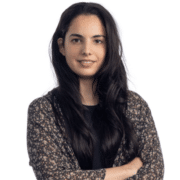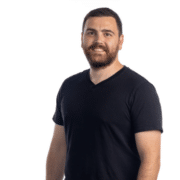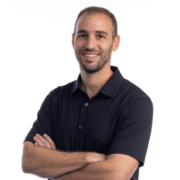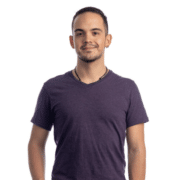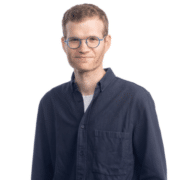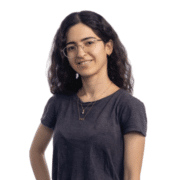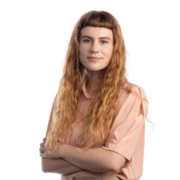
Levana Chajes is a PhD candidate in the field of Jewish thought. Her research explores the material and intellectual transmission of Ma’arekhet ha-Elohut, an essential work of medieval Jewish mysticism. Through analyzing its commentaries and translations as well as its controversial journey into print, she reveals how this text became a crucial nexus for the transformation of kabbalistic thought in Early Modern Europe. Her work provides new insights into how ideas traverse cultures and how texts shape intellectual traditions across cultural boundaries.

Levana provides new insights into how ideas traverse cultures and how texts shape intellectual traditions across cultural boundaries.

Levana received a BA from Tel Aviv University and an MA from The Hebrew University of Jerusalem, where she was a Mandel Fellow. She grew up in Zikhron Ya’akov and now lives in the Galilee region with her husband and children. She has volunteered with Holocaust survivors, playing violin in old age homes, and facilitated women’s empowerment workshops in remote Nepali villages. Levana also enjoys hiking in the mountains and baking.

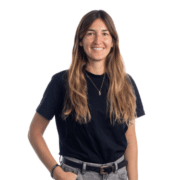
Nitzan Caspi Shiloni is a PhD researcher in Jewish law and gender studies. Her research focuses on the perspectives of rabbinical court judges in Israel toward women who are unable to obtain a religious divorce due to their husbands’ refusal—commonly referred to as the agunah problem. Taking a narrative rather than a legal outcome approach, her interdisciplinary work offers a new lens through which to understand rabbinical rulings. The research also holds potential to inform feminist legal activism in Israel.

Nitzan’s research offers a new lens through which to understand rabbinical rulings, and also holds potential to inform feminist legal activism in Israel.

Nitzan holds an LLB from The Hebrew University of Jerusalem and an LLM from Bar-Ilan University. She also completed a thesis in gender studies at Bar-Ilan University. Before starting her PhD program, she worked as a lawyer and legal manager for an organization promoting women’s rights and continues to provide legal counsel to human rights organizations. She lives in Modi’in with her partner and their four children.

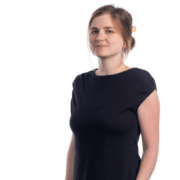
Amichai Berman is a PhD candidate in plant biology. His research focuses on developing CRISPR-based gene-editing tools to better understand how plants sense and respond to water availability. He aims to uncover genes that play key roles in water-sensing mechanisms. This work could help address agricultural challenges related to drought and water use by revealing how plants sense and adapt to changing environments.

Amichai is helping to address agricultural challenges related to drought and water use by revealing how plants sense and adapt to changing environments.

Amichai earned his BSc from the Robert H. Smith Faculty of Agriculture, Food and Environment at The Hebrew University of Jerusalem, and completed his MSc in the same lab where he is now pursuing his PhD. Originally from the Jerusalem area, he lives in Ra’anana with his wife and son. During his military service, he served as an officer, training combat medics, and later volunteered in a student village in Lod, focusing on community engagement. He enjoys hiking, astronomy, woodworking, and family time.

Yuval Barzilay is a PhD candidate in the field of molecular biology, exploring how animals use organic crystalline materials to produce colours essential for camouflage, communication, vision, and more. He combines advanced techniques from materials science—such as electron microscopy, X-ray diffraction, and spectroscopy—alongside cellular biology tools to achieve a comprehensive understanding of biological crystallization. Gaining insights into organic crystal formation may unlock new bio-inspired materials and potentially lead to novel therapeutics for human diseases such as gout and kidney stones.

Yuval’s research may unlock new bio-inspired materials and potentially lead to novel therapeutics for human diseases.

Yuval was born in Israel and grew up in Modi’in-Maccabim-Re’ut, and currently lives in Rehovot with his wife. He completed his BSc in life sciences at Ben-Gurion University of the Negev, and earned his MSc at the Weizmann Institute of Science. Outside the lab, Yuval volunteers with the Movement for Quality Government in Israel, and enjoys outdoor activities like scuba diving, hiking, basketball, and photography.

Eduardo Balbo is a PhD candidate in Arabic dialectology and sociolinguistics. His research examines the endangered Arabic dialects spoken by Tunisian Jews—known as Tunisian Judeo-Arabic dialects—with a focus on those once spoken near the island of Djerba. Eduardo also focuses on the contact of Tunisian and Libyan Judeo-Arabic dialects with Modern Hebrew in immigrant communities in Israel. By analyzing the unique linguistic features of these dialects, he aims to provide new data on early linguistic Arabization in North Africa—the gradual shift of communities to speaking Arabic under historical Islamic rule—while helping preserve a disappearing linguistic and cultural heritage.

Eduardo aims to provide new data on early linguistic Arabization in North Africa while helping preserve a disappearing linguistic and cultural heritage.

Eduardo holds a BA in English and Arabic from the University of Palermo and an MA in Arabic and Modern Hebrew from the University of Naples “L’Orientale.” Originally from a small village in Sicily, Italy, he has volunteered with refugee minors in Italy and Palestinian high school students in East Jerusalem. In his off hours, he enjoys baking, singing, and playing guitar and ukulele.

Matan Aviel is a PhD candidate in art history researching funerary monuments in southern Italy between the late Middle Ages and the early Renaissance. He focuses on unique or unusual monuments, such as tombs that demand visitors walk under or around them or tombs that invite visitors to sit on them. The project aims to reconsider special tomb monuments and understand their significance and what they can reveal about the experiences they enveloped their beholders in.

Matan aims to understand the significance of special tomb monuments and what they can reveal about the experiences in which they enveloped their beholders.

Matan earned a joint BSc in mathematics and art history and an MA in art history from The Hebrew University of Jerusalem. He grew up in Sunnyvale, California, and Tel Mond, and now lives in Jerusalem with his partner. He volunteered with the Jewish Agency for Israel as a young emissary in greater New Haven, Connecticut, and as an educational guide in Gondar, Ethiopia. Outside academia, Matan enjoys pottery making and dancing.

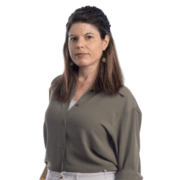
Yael Amitay is a computational biologist and PhD candidate, studying how the immune system responds to cancer. Her research focuses on spatial proteomics, cutting-edge technology that maps the location of dozens of proteins in tissue at high resolution. She combines computer vision and data science to analyze this complex data, aiming to predict melanoma recurrence and identify patients who may benefit from preventive treatment. Through her work, she hopes to deepen our understanding of both cancer and the immune system.

Yael hopes to deepen our understanding of cancer and the immune system.

Paul received a BA in psychology from Temple University’s Honors Program and a PhD from the University of North Carolina at Chapel Hill. He was a postdoctoral researcher at University College London, The Hebrew University of Jerusalem, and Yale University. Paul is from Philadelphia, Pennsylvania, and currently resides in Ramat Gan. He has volunteered at the Children’s Hospital of Philadelphia and as mentor for Científico Latino. Paul enjoys tennis, basketball, and searching for the best cortado at local coffee shops.

Yael earned her BSc in software engineering from the Technion – Israel Institute of Technology and completed her MSc at the Weizmann Institute of Science. Originally from Ashdod, she now lives in Rehovot with her partner. She currently volunteers by tutoring students displaced during the Iron Swords War. To relax, she enjoys drawing, reading, and travelling.

Dr. Paul B. Sharp is a cognitive scientist whose research investigates how we plan and why we worry. To do so, he develops models of how people determine when and what to plan for, which allows him to test the specific ways chronic worriers over-plan for potential threats. Paul hopes this program of research will explain core mechanisms of human intelligence and the precise ways that planning gives rise to anxiety.

Paul hopes to explain core mechanisms of human intelligence and the precise ways that planning gives rise to anxiety.

Paul received a BA in psychology from Temple University’s Honors Program and a PhD from the University of North Carolina at Chapel Hill. He was a postdoctoral researcher at University College London, The Hebrew University of Jerusalem, and Yale University. Paul is from Philadelphia, Pennsylvania, and currently resides in Ramat Gan. He has volunteered at the Children’s Hospital of Philadelphia and as mentor for Científico Latino. Paul enjoys tennis, basketball, and searching for the best cortado at local coffee shops.

Dr. Oded Padon is a computer scientist specializing in programming languages and formal verification. His research develops new techniques that apply formal mathematical reasoning to verify that complex software systems are free of bugs and meet their correctness specifications. His work aims to enhance automation in software verification and to make it widely accessible. His research also applies programming languages’ techniques to other domains such as quantum computing and machine learning.

Oded’s work aims to enhance automation in software verification and to make it widely accessible.

Oded received a BSc in physics and mathematics from The Hebrew University of Jerusalem, an MSc in environmental physics from Ben-Gurion University of the Negev, and a PhD in computer science from Tel Aviv University. He was a postdoctoral researcher at Stanford University and a senior researcher at VMware Research. Oded grew up in Ganei Tikva, and currently resides in Rehovot with his wife and two children. In his free time, he enjoys reading and spending time with his family.

Dr. Shilat Haim-Nachum is a trauma researcher, investigating the role different mechanisms play in psychopathological development following childhood trauma. Shilat’s work primarily examines negative self and public perceptions related to childhood traumatic experiences of abuse and neglect, such as shame, self-blame, and stigma. Her research aims to develop new cost- effective interventions to reduce trauma-related negative perceptions and increase openness to treatment among survivors of childhood trauma from diverse cultures.

Shilat’s research aims to develop new cost-effective interventions to reduce trauma-related negative perceptions and increase openness to treatment among survivors of childhood trauma from diverse cultures.

Shilat received a BA in educational counselling and English literature and a PhD from Bar-Ilan University as an Azrieli Graduate Studies Fellow. She was a postdoctoral researcher at Columbia University’s Department of Psychiatry. Shilat was born in Yavne and currently resides in Rehovot. She has been involved in volunteering with various trauma-exposed populations, including firefighters, veterans, and individuals with special needs. In her free time, she enjoys spending time with her family, reading, and travelling.