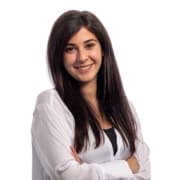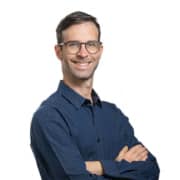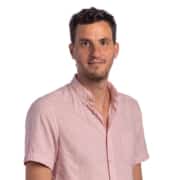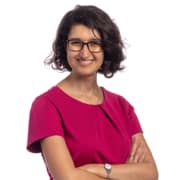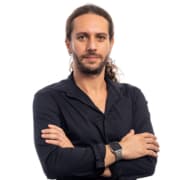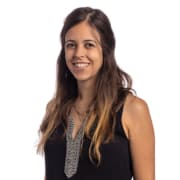
Gal Bitton is a political scientist in the direct PhD track in the School of Political Science, Government and International Affairs at Tel Aviv University under the supervision of Prof. Tal Sadeh.

Gal’s field of study is international political economy, and her main interests are global monetary and financial relations, currency internationalization, and cultural finance.

Gal developed a culture-based theory that seeks to examine the effect of cultural factors on policymakers’ financial decisions through macro (government policy) and micro (individual preferences) levels of analysis. Her findings demonstrate that in financial decision- making individuals have strong incentives to bias interactions toward in-group members while introducing indifference, hostility, or distrust toward out-group members. Hence, in-group favouritism decreases the cooperativeness and harmony that are essential for any functioning society; understanding the roots of cooperation, or lack thereof, is, therefore, of great significance.

Gal was born and raised in Kiryat Shmona and currently lives there with her two dogs. She has a BA and an MA in political science from Tel Aviv University. Gal teaches at both Tel Aviv University and Reichman University and provides academic assistance to undergraduate students from the Arab population. In the coming years, as part of the Azrieli Fellowship, Gal intends to use her academic skills and volunteering experience to help improve the welfare of citizens in Kiryat Shmona. In her free time, Gal loves practising yoga and playing board games.

Dr. Evgenia Mitsou is an Azrieli International Postdoctoral Fellow in the Department of Molecular Chemistry and Materials Science at the Weizmann Institute of Science under the supervision of Prof. Jacob Klein.

In the Soft Matter and Surface Forces Lab, Evgenia focuses on the study of lubrication under water in, especially, biological systems such as major joints.

She also aims to develop nanoscale formulations which will serve as both biolubricants and drug delivery systems. Her overall aim is to contribute to our understanding of the origins of friction- associated pathologies, such as osteoarthritis, and develop novel treatments to alleviate them.

Evgenia grew up in Athens, Greece. She studied biology at the University of Ioannina and completed her PhD in biotechnology from the same university in collaboration with the National Hellenic Research Foundation under the supervision of Prof. Aristotelis Xenakis and Prof. Haralambos Stamatis. She studied the development of biocompatible nanodispersions as hosts for bioactive compounds with therapeutic interest, such as antioxidants and enzymes for oral and intranasal administration. As part of her research, Evgenia collaborated with various research groups at, for example, the CBMN – University of Bordeaux, University of Parma, and University of Belgrade in the fields of colloidal science and drug delivery and was also involved in industrial-driven projects. Outside the lab, Evgenia loves travelling, learning new languages, and listening to good music, especially in live performances. She also enjoys participating in science communication activities, especially those designed for children.

Dr. Eugenio Garosi is an Azrieli International Postdoctoral Fellow in the Department of Middle Eastern and Islamic Studies at the University of Haifa under the supervision of Dr. Uriel Simonsohn.

Eugenio specializes in the social history of the early Islamic Empire, with an emphasis on the role of languages and scribal practices in constructing social identities.

The main focus of his work lies in early Islamic documents on papyrus, paper, parchment and ostraca. Unlike the later Islamic literary tradition and the narratives of non-Muslim denominations living under Muslim rule, these documents were not redacted with posterity in mind and thus offer a comparatively unbiased perspective on their environment. Eugenio’s current research engages with expressions of religious identities through the lens of Arabic, Greek, and Coptic everyday writings in seventh to tenth-century Egypt. He is planning to explore the relationship between onomastic patterns and other social identifiers and subsequently inject empirical insights, gained from thousands of original documents, into debates on the related processes of Arabization and conversion to Islam, during the crucial first centuries following the Arab conquests.

Eugenio was born and raised in Italy before moving to Germany to complete an MA in Arabic and Islamic studies at Ludwig Maximilian University of Munich (LMU). He then obtained a PhD in Arabic studies and ancient history from LMU and the University of Basel, researching two projects, “Change and Continuities from a Christian to a Muslim Society” and “The Arabic Papyrology Database,” under the supervision of Prof. Andreas Kaplony and Prof. Sabine Huebner. During postdoctoral fellowships at the Hebrew University’s Israel Institute for Advanced Studies and the University of Hamburg’s RomanIslam – Center for Comparative Empire and Transcultural Studies, Eugenio also explored the construction and negotiation of religious and cultural boundaries in pre-modern Islamicate societies. When not engaged in research, Eugenio enjoys reading, travelling, skiing, and going to the opera.

Dr. Eran Blacher is a new faculty member in the Alexander Silberman Institute of Life Sciences at the Hebrew University of Jerusalem.

Eran studies the gut–brain communication in aging and neurological disorders.

By integrating novel imaging methods, multi-omics techniques, advanced computational analyses, and clinical observations, he creates an interactive merging point between the realms of neuroscience, immunology, microbiome, and metabolism. As an Azrieli Fellow, Eran aims to achieve in- depth understanding of the intestinal processes affecting brain dysfunction that will support the development of better treatments, prolonged lifespan, and healthier aging.

Eran completed a BSc with distinction in life sciences and a PhD in neuroimmunology in the direct PhD track for outstanding students at Tel Aviv University under the supervision of Prof. Reuven Stein from the Department of Neurobiology. He studied the brain’s immune responses in cancer and Alzheimer’s disease and, in collaboration with Prof. Micha Fridman from the School of Chemistry, identified and tested a novel immune-metabolic modulator as a therapeutic approach to these conditions. His first postdoctoral position was in the laboratory of Prof. Eran Elinav in the Department of Systems Immunology at the Weizmann Institute of Science, where he was the first to study the role of the microbiome–gut–brain axis in the context of neurodegenerative diseases. For his findings in this field, Eran was awarded the Grand Prize in the inaugural NOSTER & Science Microbiome competition. He conducted a second postdoctoral training as a Marie Curie Fellow in the laboratory of Prof. Katrin Andreasson in the Department of Neurology & Neurological Sciences at Stanford University, where he studied maladaptive metabolism in aged immune cells and the gut– brain axis in stroke and aging. Eran grew up in Holon and enjoys reading literature, writing, hiking, and spending time with his spouse, Maya, and their two sons, Eli and Jordan.

Elad Horn is an architect and a PhD student in the Faculty of Architecture and Town Planning at the Technion – Israel Institute of Technology. His research in the Big Data in Architectural Research Lab (BDAR), under the supervision of Dr. Or Aleksandrowicz, combines the fields of architectural history and digital humanities.

Elad is examining Tel Aviv-Yafo during the 1980s, when Israel’s economy underwent rapid neoliberal restructuring and the city’s architectural style was significantly altered.

His specific interest is in how economic trends, especially those affecting construction and real estate development, helped generate new architectural idioms. To better understand the mechanisms that drive architectural change, Elad employs computational methods such as big data analysis and machine learning for historical research. At a time when cities are undergoing rapid development, Elad hopes to contribute to the academic and public discourse on built heritage and preservation.

Einav Gozansky is a PhD student in in the School of Psychological Sciences at the University of Haifa under the supervision of Prof. Hadas Okon-Singer and Prof. Irit Weissman-Fogel.

Her research combines knowledge from the fields of cognitive psychology, pain physiology, and data science.

She employs advanced machine learning methods to examine the effects of cognitive-emotional computerized trainings on experimental pain outcomes. In her research, Einav trains healthy individuals using different methods and examines changes in cognitive, emotional, and autonomic physiological factors following her interventions. Her research aims to enhance our understanding of basic pain modulation mechanisms and thus facilitate more personalized training interventions that address individual differences in pain perception. This line of research is based on Einav’s expertise in advanced analysis of connections between variables. Previously, she used modelling approaches to explore factors predicting the development of depression symptoms during the COVID-19 pandemic.

Einav grew up in Ramat Gan and currently lives in Haifa. She received her BA in psychology and cognitive sciences from Ben-Gurion University of the Negev and her MA in clinical neuropsychology from the University of Haifa. Einav is also interested in social and environmental activities and has volunteered in a number of social organizations, such as the Green Course, the Summit Institute, and a social development project in Mexico. In her spare time, she enjoys travelling both in Israel and abroad, cooking, yoga, and hanging out with friends.

Dr. Eduardo Arlé is an Azrieli International Postdoctoral Fellow in the George S. Wise Faculty of Life Sciences at Tel Aviv University under the supervision of Prof. Jonathan Belmaker.

His primary areas of research are invasion biology and nature conservation, but his interests extend to method development and programming.

Hundreds of species have migrated from the Red Sea to the Mediterranean Sea through the Suez Canal, establishing alien populations that can disturb the local environment. Understanding the dynamics driving biological invasions is crucial for controlling the spread of species already established and preventing the future introduction of new alien species. However, the methods currently available for predicting species distribution have severe limitations. Eduardo’s research uses the Mediterranean as a case study for developing new methods, best practices, and computational tools to advance invasion biology research and management.

Eduardo was born in Rio de Janeiro and has had a strong interest in observing and understanding nature since childhood. After obtaining a BA in international relations, he felt more drawn to biology and went on to complete a BSc in biological sciences and an MSc in neotropical biodiversity at the Federal University of Rio de Janeiro. He pursued his PhD at the German Centre for Integrative Biodiversity Research (iDiv) Halle-Jena-Leipzig, under the supervision of Dr. Carsten Meyer, where he worked on improving knowledge of alien species distribution by integrating data across scales. Apart from science, Eduardo enjoys travelling, learning languages, cooking, and eating delicious food

Dana Rubinstein is a PhD student in the Department of Jewish Thought at the Hebrew University of Jerusalem under the supervision of Prof. Benjamin Pollock.

Her research focuses on the extensive and largely unpublished collection of working papers by Martin Buber and Franz Rosenzweig which underlies their monumental Bible translation project.

By mining the depths of the Buber-Rosenzweig Bible and the dialogue surrounding it, Dana seeks to demonstrate the possibilities and limitations of Bible translation as a unique exegetical medium and to construct a hermeneutic method for using Bible translations as commentary.

Dana was born in Israel and grew up in Germany, Austria, and the United States. She received her BA in philosophy from Yale University and her JD from Columbia University. She subsequently worked as a litigator at Davis Polk & Wardwell in New York, where she specialized in corporate litigation and white-collar crime but also had the opportunity to work on pro bono asylum cases. She is the co-founder of Dapple, a mission-driven consumer products start-up which makes plant- based cleaners and personal care products for homes with children. In 2014, Dana made aliyah with her husband and four children and returned to academia. Completing her MA in jewish thought at the Hebrew University, she wrote her thesis on Nehama Leibowitz’s exegetical use of translations. In her free time, Dana enjoys reading, listening to music, and experimenting with new recipes and cocktails before unleashing her concoctions on unsuspecting guests.

Cheyn Lambert is an architect and MSc student in the Faculty of Architecture and Town Planning at the Technion – Israel Institute of Technology under the supervision of Prof. Alona Nitzan-Shiftan.

Her research seeks to identify structuralist and semiotic theories in the pedagogy of the Technion’s Faculty of Architecture and Town Planning between 1975 and 1994 through interviews with pedagogues and archived materials.

Through her research, Cheyn hopes to show how structuralist theories bridged the transition of the curriculum from modernism to postmodern teachings. As many of Israel’s leading architects were trained in this era, her research looks to contribute to our understanding of Israel’s current architectural environment.

Cheyn was born in Jerusalem. She grew up in a bilingual home in Canada and Israel and currently lives in Haifa. She received her BSc in design sciences and MArch from the Technion. Cheyn worked as a research assistant during her studies and today continues to develop her thesis- studio project on platforms for marginalized voices in Lod. In addition, she guides historical research projects as a teaching assistant. Having previously volunteered as a Hebrew teacher to immigrant children, she now volunteers as the faculty representative of graduate students, working to advance both the research and social lives of her colleagues while connecting them with one another. Her hobbies include creative experimental pursuits such as painting and crafts, reading, and piano playing.

Dr. Carlos Bravo-Laguna is an Azrieli International Postdoctoral Fellow in the Federmann School of Public Policy and Government at the Hebrew University of Jerusalem under the supervision of Prof. David Levi-Faur.

His research interests cover public policy and crisis management and the evolution of regulatory oversight across the OECD.

In particular, his primary area of research examines crisis networks with a focus on their performance during transboundary incidents. Carlos aims to link structural characteristics of crisis networks to policy outcomes by determining which conditions affect their ability to produce rapid and effective emergency reactions. He thus hopes to contribute to the definition of crisis networks and shed light on how network theory explains crisis management. Carlos is also looking to assess factors that impact the role and weight of EU actors in the governance of external crisis responses.

Carlos has a BA in translation and interpreting from the University of Granada and an MA in international relations from the Barcelona Institute of International Studies (IBEI). He completed his PhD in political and social sciences at the Pompeu Fabra University in Barcelona, exploring the role and weight of the EU in the management of external transboundary crises, and was subsequently a visiting research fellow at University of Konstanz, University of Tübingen and the Hebrew University of Jerusalem. He served as an events officer in the UACES Graduate Forum and is part of the coordination team of the UACES Research Network, RELATE (European Studies in a Relational Universe). His research has been published in various journals, including the Journal of Common Market Studies, the Journal of European Integration, Environmental Sciences Europe, and the Journal of Contingencies and Crisis Management. In his free time, Carlos likes running and hiking with friends. While he considers himself quite sociable, Carlos also enjoys spending quality time at home, reading books, watching films, cooking, or playing computer games.