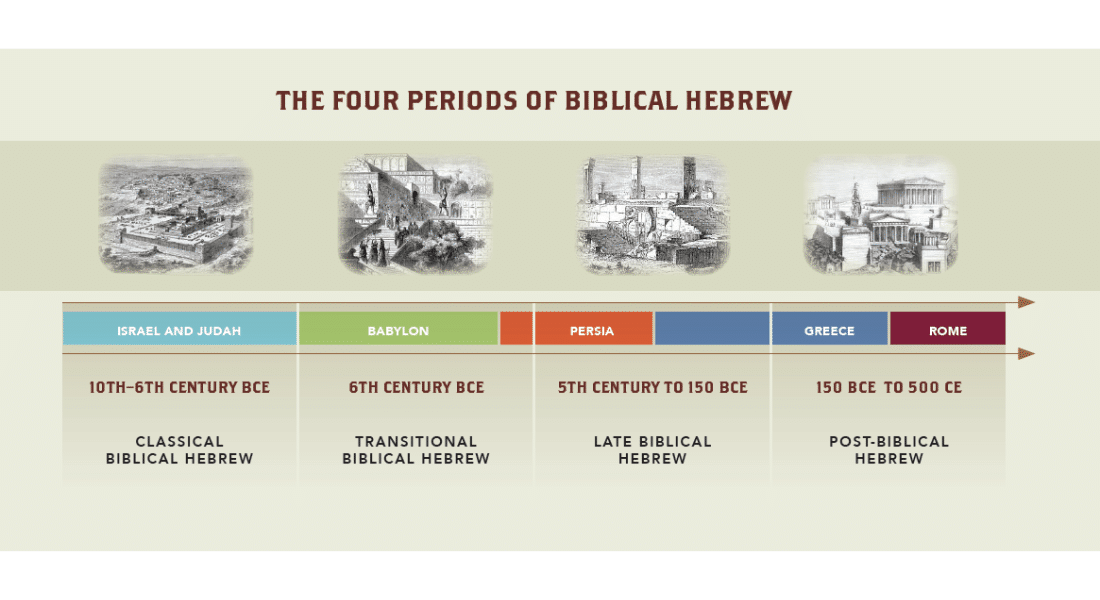

No book has captured the imagination as much as the Hebrew Bible. It is revered by believers, of course — but, even for secular readers, it is a remarkable work of narrative literature. For Jews, it’s a foundational text and cornerstone of their heritage. Yet many people don’t realize how much the Bible — and the language it was written in — has evolved over time.
“The Hebrew Bible is not a monolith and didn’t always look the way it looks now,” says Vladimir Olivero, a philologist who teaches Ancient Hebrew at Harvard University. “It was a product of many centuries of copying and using it. It was a text that was alive. Communities would adapt it to their needs. They were in dialogue with these texts.”
While the biblical authors may have been motivated by religious fervour, Olivero’s research is anchored in the down-to-earth world of texts and translations and languages. Much of his work involves dating specific passages in the Bible and other ancient texts. It may seem esoteric but has ramifications beyond the world of linguistics.
“This kind of analysis can help us better understand the history of ancient Israel,” Olivero says. “This is relevant for anyone interested in knowing more about the ancient world or, for those who are Jews, to know more about their roots and how ancient Israel developed across the centuries.”