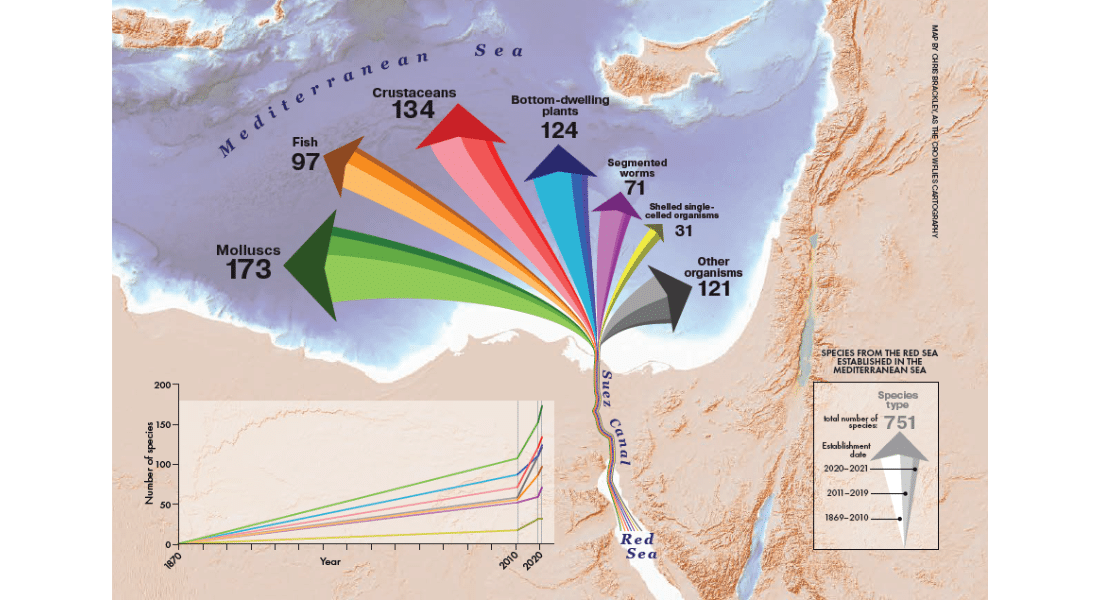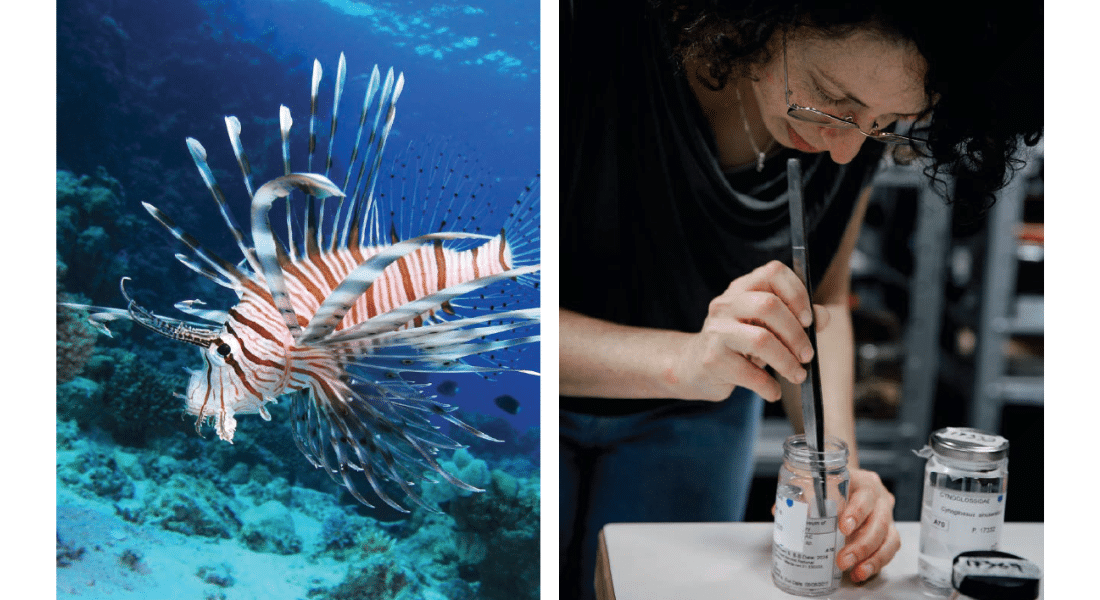
In 1869, the Suez Canal opened and the Mediterranean Sea changed forever. But no one really knows exactly how much it changed. The sea was once only connected to the Atlantic Ocean and Black Sea, but the opening of the Suez Canal connected it to the Red Sea and opened a highway for invasive species. Over the course of decades, various species of Red Sea fish, snails, jellyfish and crustaceans found a welcoming frontier, especially along the warm coastal waters of the eastern Mediterranean. Accurate baseline data from before the construction of the canal is scarce. Systematic catalogs of species and temperatures from that period are lacking. Now, 150 years later, climate change is transforming the Mediterranean, and ecologists like Eduardo Arlé are watching.
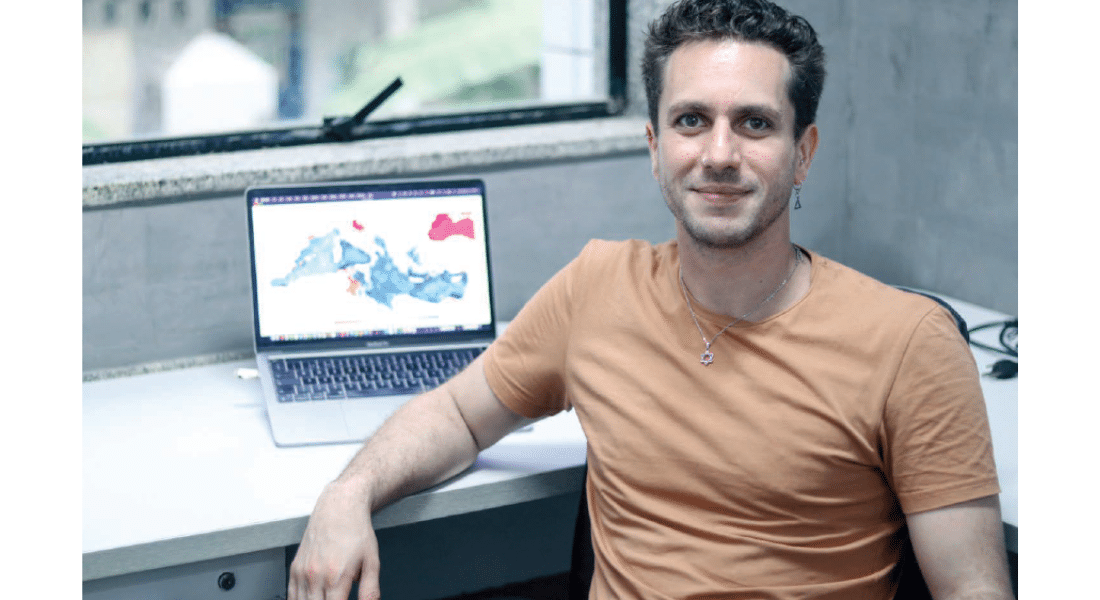
“Everyone talks a lot about landscape ecology,” says Arlé, a former Azrieli International Postdoctoral Fellow in the George S. Wise Faculty of Life Sciences at Tel Aviv University. “But seascape ecology is a younger and still developing field.”
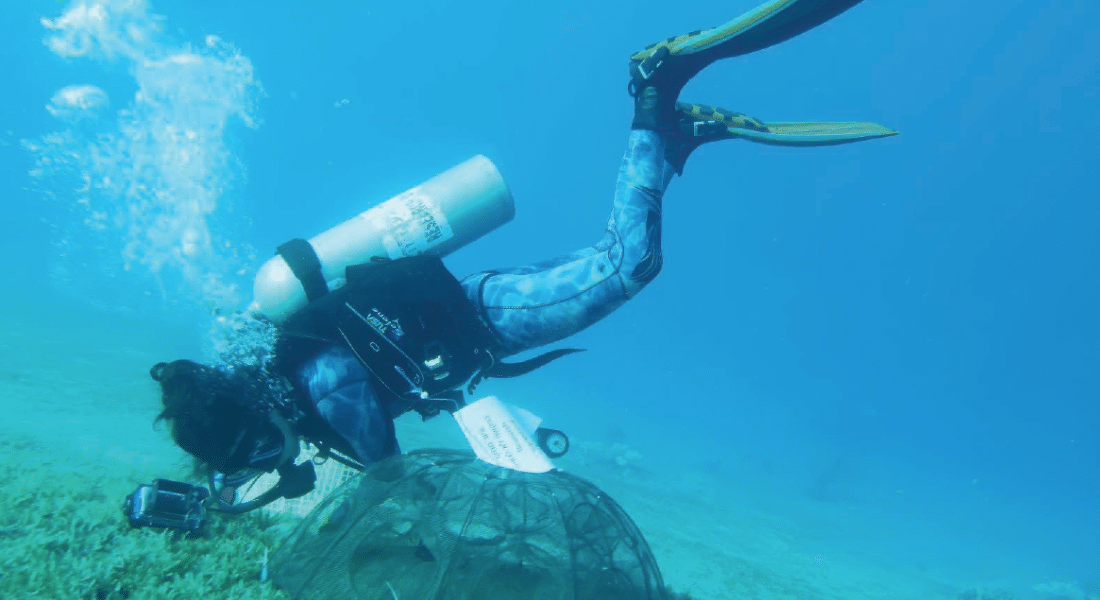
On land, ecologists look at the big picture of a landscape — rivers, forests, farms, towns — and study how life moves and interacts across the entire area. In the last couple of decades, scientists have brought that same geospatial awareness to the ocean, helped by advances in technology that allow real-time ocean monitoring and data collection. Thanks to satellite tracking and genetic analysis, for example, we know how sea turtles live within seascapes, feeding offshore in one country and nesting on beaches in another. That knowledge has led to conservation efforts that contributed to the recovery of some turtle populations.
Arlé’s focus on biological invasions into the Mediterranean from the Red Sea is more complex: he is trying to predict how alien species might use a novel seascape that is in the midst of change. Understanding tomorrow’s Mediterranean will help today’s policymakers make more informed environmental choices.
Studying the marine ecosystem is challenging, but the biological invasion of the Mediterranean is in urgent need of investigation. The region is a climate change hot spot, warming about 20 per cent faster than the global average. Warmer water holds less oxygen, which can lead to mass fish die-offs. As a result of climate change, the water is also becoming more acidic and, as evaporation rates rise, saltier — both of which can affect endemic species. Oysters have trouble forming shells in more acidic water, for instance, and saltier water can interfere with the reproduction of some marine animals. Add thriving alien species from the Red Sea — more than 600 species known as the Lessepsian migrants — with a preference for warm waters, and modelling the future becomes integral to managing the impacts of climate change.