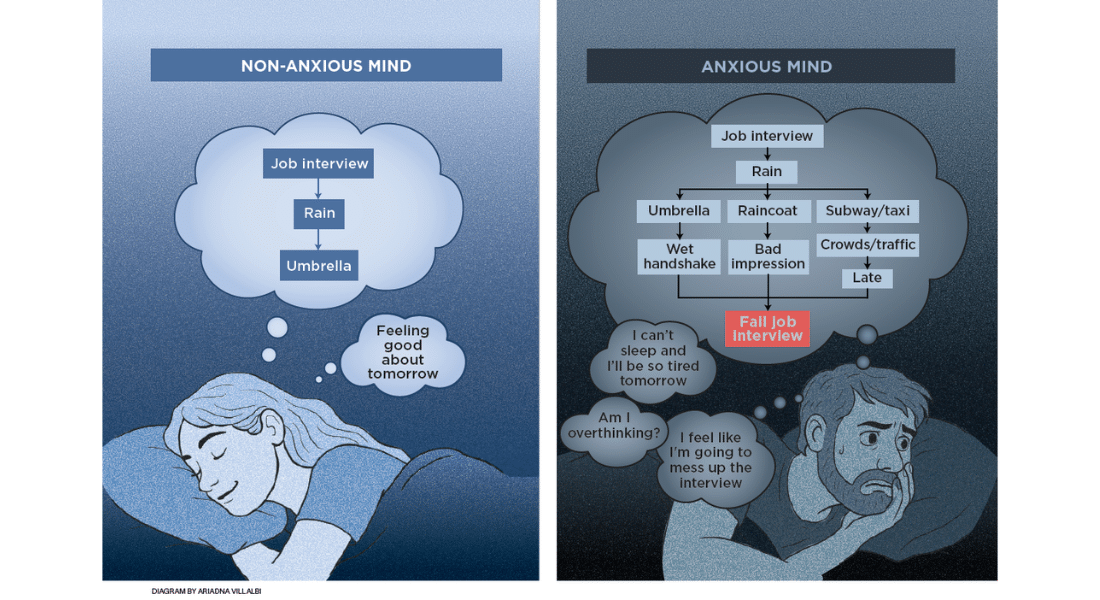

Two people check the weather report on the eve of their big job interviews and notice that tomorrow is likely to be cold and overcast. The first person makes a mental note to pack an umbrella and drifts off to sleep. The second leans an umbrella against the front door so he won’t forget it, then reconsiders and opts for a raincoat instead so he won’t have to juggle a dripping umbrella when he shakes hands with the interviewer. An hour later, he lies in bed, changing plans, deciding to call a taxi so he won’t have to walk to the subway. But what if he can’t find a taxi on time? What if there’s heavy traffic? Should he go back to the first plan and take the subway and an umbrella? Soon enough, an entire night’s sleep has been lost, and our poor interviewee is worse off than if he had never thought about the next day at all.
Welcome to the world of the worried, where every plan comes with a risk of obsessing over small problems that snowball into bigger ones, luring the sufferer into dead ends of anxiety. If this sounds familiar, then Paul Sharp has been thinking of you. Sharp, a cognitive scientist and senior lecturer at Bar-Ilan University, studies the mechanics of human thought, particularly how we plan, and how, when planning goes awry, it curdles into anxiety.