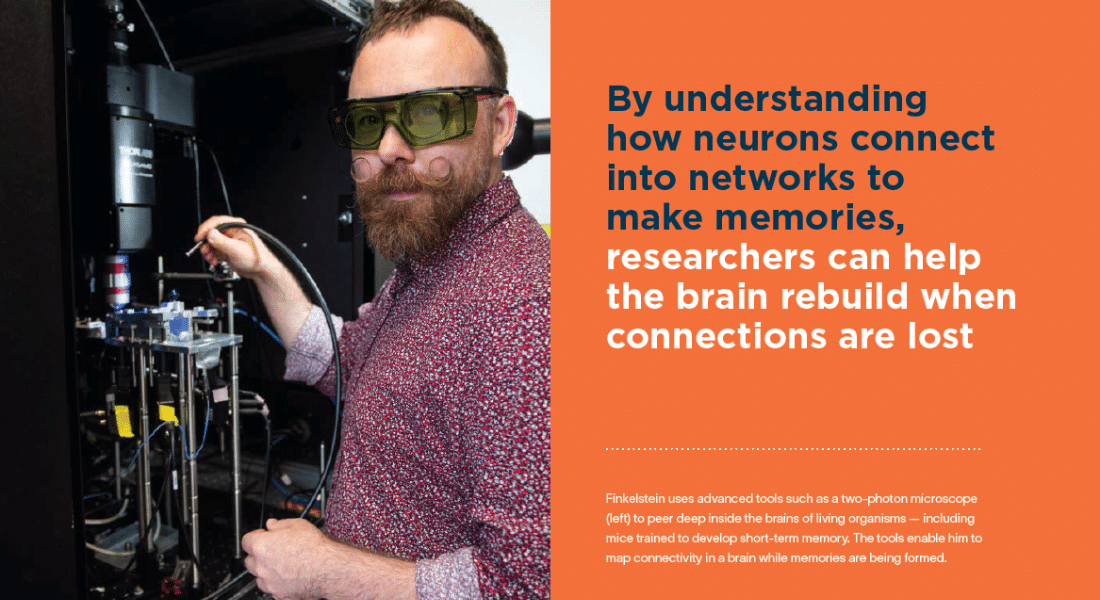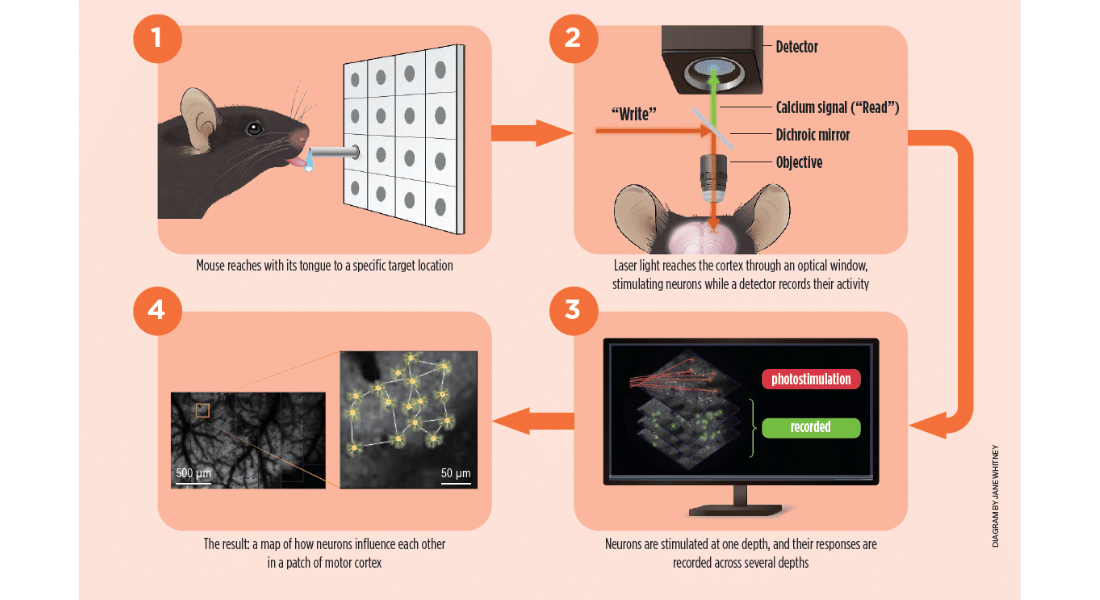
At the scale of half a centimetre, a mouse’s brain activity resembles a thunderstorm seen from low orbit, a constellation of flashes tracing illuminating patterns through the clouds of brain tissue. We know this because neuroscientist Arseny Finkelstein and his colleagues have offered us a glimpse into the brain using microscopes and neural imaging techniques that capture the activity of tens of thousands of neurons in the mouse brain. “In effect, we built windows into the brain that allowed us to visualize its activity at the resolution of individual cells,” Finkelstein says.
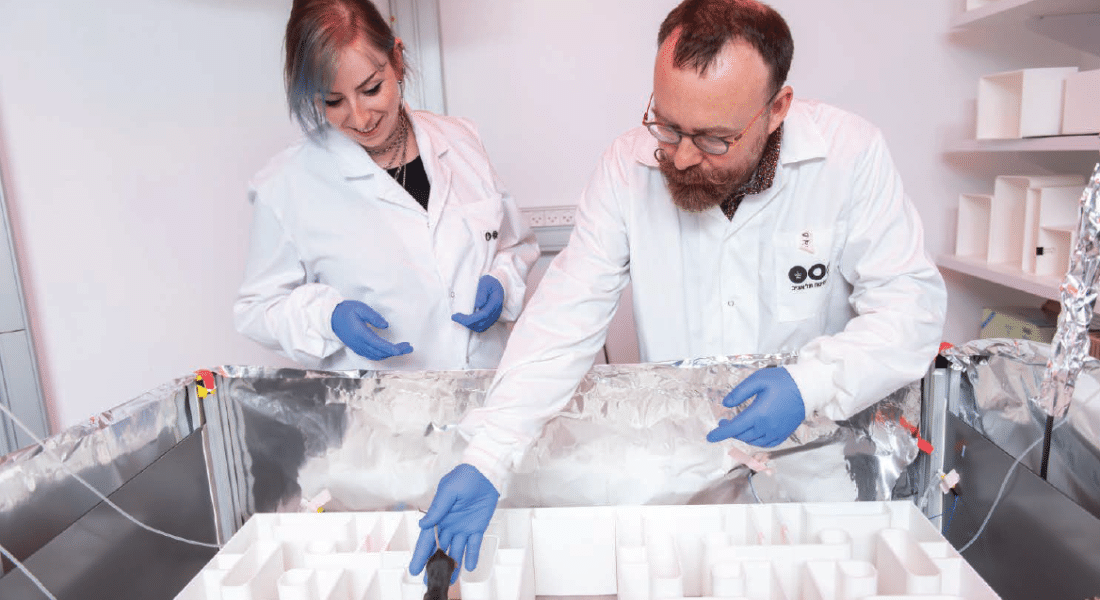
Finkelstein is an assistant professor in the Department of Neuroscience and Brain Disorders at Tel Aviv University and was an Azrieli Early Career Faculty Fellow in the 2021–2022 cohort. Neuroscientists like him devise ingenious techniques to discover how the brain’s network of cells makes decisions and forms memories. Thanks to these efforts, we can now watch enormous networks of neurons in mice as the animals search to locate rewards — enabling the mapping of connectivity during learning.
Humble though it may seem, studying these basic building blocks of brain connectivity in mice has enormous implications for our understanding of memory, identity and cognitive decline. With a better understanding of how neurons connect into networks to make memories, researchers can help the brain rebuild when those connections are lost.
Finkelstein’s fascination with memory dates to his childhood, when he revelled in the family’s history recounted by his grandparents. But it wasn’t only the memories and their contents that captivated him so much as the realization that those memories were encoded and retained physically for decades inside the human brain. “Essentially, we have this simulator in our mind that we can always return to and experience many alternative versions of our lives, both in the past and in the future,” he says.
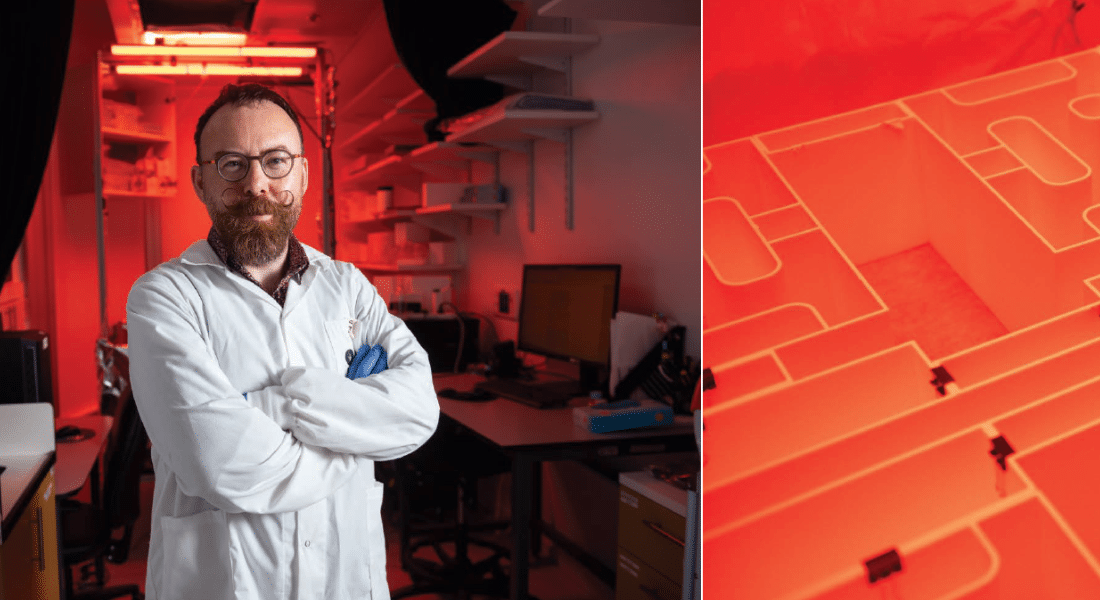
His journey into brain research began at the Weizmann Institute of Science, where he worked on his master’s degree, studying immune-based approaches to stroke and neurodegenerative disease. For his PhD, also at the Weizmann Institute, he joined Nachum Ulanovsky’s lab and shifted into systems neuroscience. There he uncovered how bats understand space in three dimensions. He then spent five years studying decision making as a postdoctoral fellow at Janelia Research Campus, part of the Howard Hughes Medical Institute in the U.S. In 2022, he joined Tel Aviv University, where he established his own lab.
Finkelstein credits the Azrieli Fellowship with crucial support at a pivotal point in his scholarly career. “The Azrieli Fellowship was instrumental in supporting the early days of my lab. It enabled me to concentrate on developing and expanding our approach to mapping memory formation and network changes during learning,” he says. “Given the highly interdisciplinary nature of neuroscience and memory research, interactions with fellow Azrieli scholars were especially enriching and led to valuable exchanges of ideas.”