Stemming the Red Sea Exodus

Can scientists predict which invasive species will establish themselves in the warming waters of the Mediterranean — before they arrive?

Photographs by Marcelle Deichev and Karoline Oliveira
February 23, 2026 By Jude Isabella
View PDF version

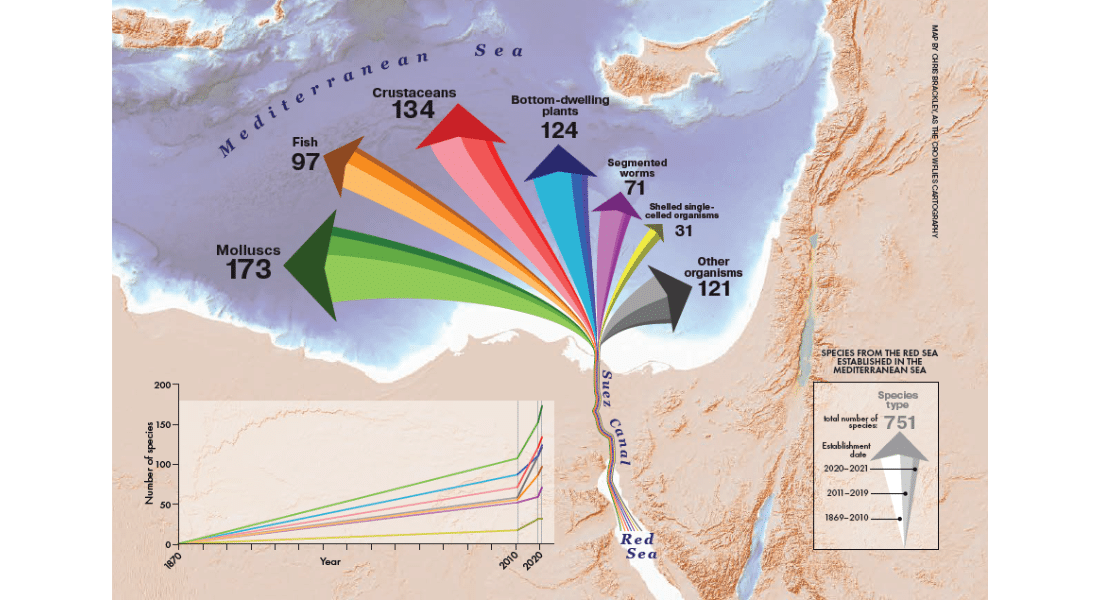
In 1869, the Suez Canal opened and the Mediterranean Sea changed forever. But no one really knows exactly how much it changed. The sea was once only connected to the Atlantic Ocean and Black Sea, but the opening of the Suez Canal connected it to the Red Sea and opened a highway for invasive species. Over the course of decades, various species of Red Sea fish, snails, jellyfish and crustaceans found a welcoming frontier, especially along the warm coastal waters of the eastern Mediterranean. Accurate baseline data from before the construction of the canal is scarce. Systematic catalogs of species and temperatures from that period are lacking. Now, 150 years later, climate change is transforming the Mediterranean, and ecologists like Eduardo Arlé are watching.

“Everyone talks a lot about landscape ecology,” says Arlé, a former Azrieli International Postdoctoral Fellow in the George S. Wise Faculty of Life Sciences at Tel Aviv University. “But seascape ecology is a younger and still developing field.”

On land, ecologists look at the big picture of a landscape — rivers, forests, farms, towns — and study how life moves and interacts across the entire area. In the last couple of decades, scientists have brought that same geospatial awareness to the ocean, helped by advances in technology that allow real-time ocean monitoring and data collection. Thanks to satellite tracking and genetic analysis, for example, we know how sea turtles live within seascapes, feeding offshore in one country and nesting on beaches in another. That knowledge has led to conservation efforts that contributed to the recovery of some turtle populations.

Arlé’s focus on biological invasions into the Mediterranean from the Red Sea is more complex: he is trying to predict how alien species might use a novel seascape that is in the midst of change. Understanding tomorrow’s Mediterranean will help today’s policymakers make more informed environmental choices.

Studying the marine ecosystem is challenging, but the biological invasion of the Mediterranean is in urgent need of investigation. The region is a climate change hot spot, warming about 20 per cent faster than the global average. Warmer water holds less oxygen, which can lead to mass fish die-offs. As a result of climate change, the water is also becoming more acidic and, as evaporation rates rise, saltier — both of which can affect endemic species. Oysters have trouble forming shells in more acidic water, for instance, and saltier water can interfere with the reproduction of some marine animals. Add thriving alien species from the Red Sea — more than 600 species known as the Lessepsian migrants — with a preference for warm waters, and modelling the future becomes integral to managing the impacts of climate change.
Share this article
The opening of the Suez Canal created a highway for animal and plant species from the Red Sea to establish themselves in the Mediterranean. A map shows the scale and pace of the invasion in three time periods, with a gradual increase followed by an acceleration in 2010. A legend illustrates the total number of species established over the periods.

Raised in a small Brazilian mountain city, Arlé completed his doctorate at the German Centre for Integrative Biodiversity Research, where he studied alien species distributions. In 2022, he joined the Marine Ecology and Biodiversity lab at Tel Aviv University as a postdoctoral researcher and computer modelling expert. The lab is headed by Jonathan Belmaker, a professor at the School of Zoology.

Unlike applied ecologists who work directly in the field, Arlé spends most of his time with statistics and algorithms to explore future scenarios. He uses a traditional method, ecological niche modelling, to predict where a species can safely live as conditions change. But a model is only as good as the data: By nature, models are incomplete since they rely on what scientists already know about any one species, such as its thermal tolerance and other parameters.

To improve modelling predictions, Arlé is exploring ways to expand what we know about a particular species. One advance is the cumulative niche approach, an idea he began work on shortly before his postdoc. The idea is to measure how complete the collected data is on any given species and its ideal environment, or its “niche.” To do that, Arlé tracks the various environments a species inhabits, with each new environment offering more information on where it thrives. The data feeds into a “niche curve,” a way of visualizing how well a species fares across different environments. If the curve keeps growing, a species will continue to thrive in new environments. If the curve levels off, a clearer picture emerges of the limits where a species can live.

Still, the method isn’t perfect. Much of Arlé’s efforts now are focused on understanding when and why some of those methods don’t work. “The problem with invasion biology,” Arlé says, “is that ideally we want to be able to predict the invasions before they happen.” But predictions are impossible when ecological data for most species is lacking. In some ways, though, there’s real-world data from the Lessepsian migration that’s helpful since so many Red Sea species have adapted in unexpected ways. The lionfish is a good example: as an invasive species, it has become an eating machine.

“The problem with invasion biology is that ideally we want to be able to predict the invasions before they happen,” says Arlé. But predictions are impossible when ecological data for most species is lacking.”

Dissect lionfish from the Red Sea, Arlé says, and you’ll notice they don’t have a lot of fat. “When they arrive in the Mediterranean, lionfish start eating lots of fish and they keep eating. They’re really overfed,” he says. Dissect an invasive lionfish and you’ll find a thicker layer of fat.

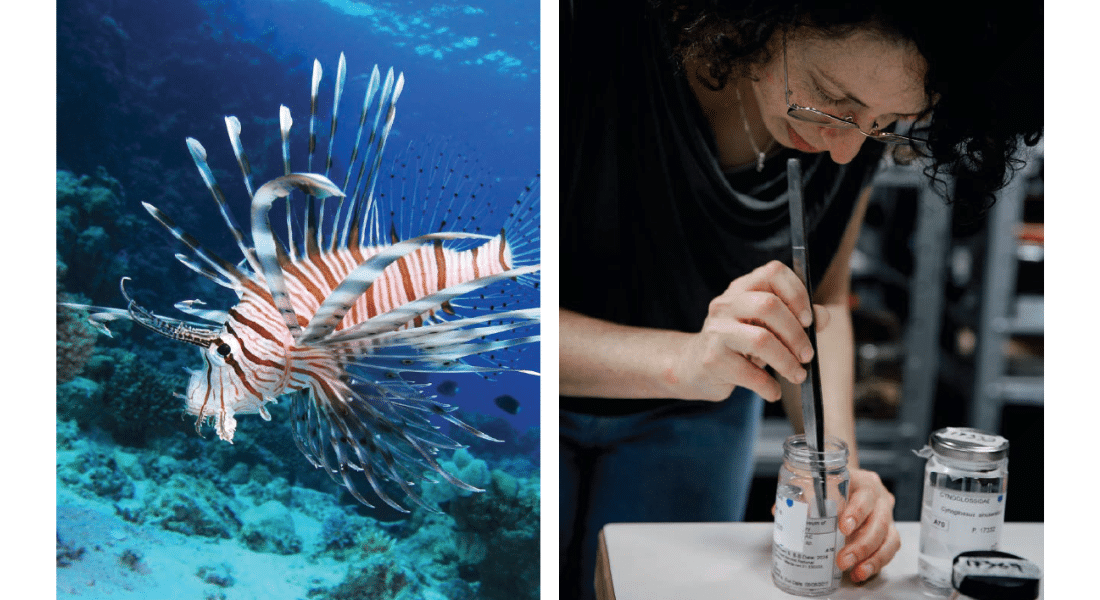
When an Israeli trawler caught a lionfish in 1991 off the country’s west coast, it was an oddity. It was only years later, in 2012, when researchers documented the fish’s presence for the second time in the eastern Mediterranean. Since then, this colourful, garnet-striped venomous spiny fish with a high tolerance for heat has expanded its range rapidly, likely helped by warming waters and more ships bringing alien species to the sea.

In hindsight, lionfish exemplify a pattern noticeable with other invasives: They’re not fussy eaters. Dietary generalists are often successful invaders. For Arlé, identifying these patterns helps create more useful models.

Jonathan Belmaker has seen Arlé’s work up close and is impressed with his approach. “There are a lot of people who uncritically use these [readymade] models, but Eduardo is really trying to understand how good they are and when to use them,” he says. “This is a very important step to truly understand the long-term impact of these invasive species.”

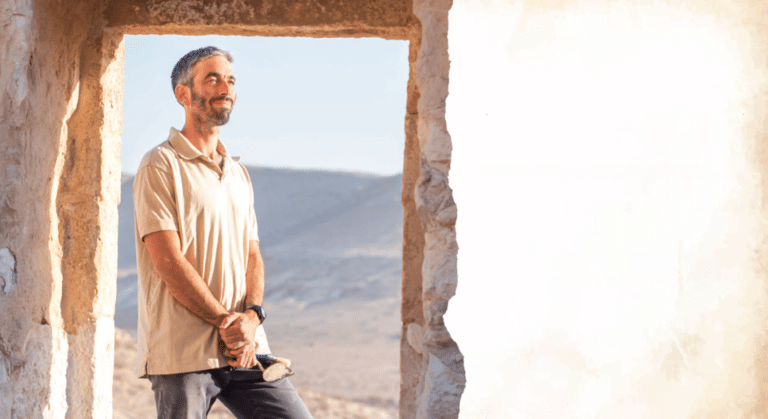
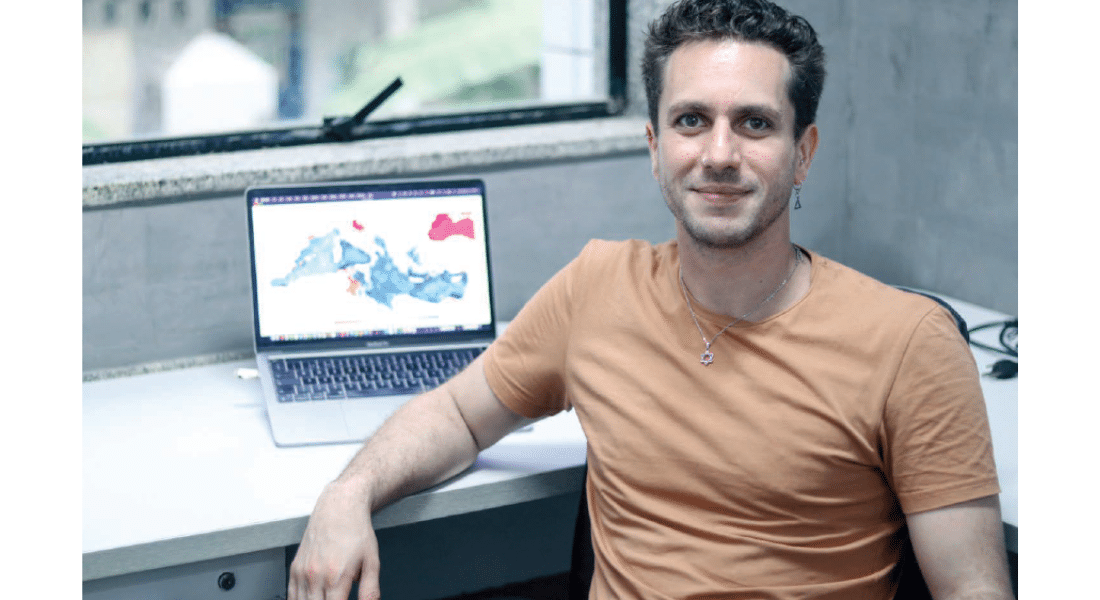
A former Azrieli International Postdoctoral Fellow, Eduardo Arlé focuses on modelling where marine species can safely live as conditions change. He’s trying to improve these models by tracking the various environments each species inhabits.

For Arlé, creating a useful model of the future Mediterranean hinges on understanding what he doesn’t know. Questions always arise. For instance, early life stages of marine organisms are often understudied. It’s not enough to consider the needs of adult fish; the success of their larvae and juvenile stages may depend on different physiological constraints and features within a habitat. This time period is even more difficult to model, since the early life stages of most fish are like encrypted messages. Studying them requires specialized tools and immense effort. So, while Arlé is occupied with heady questions of “what if,” others in the Belmaker lab venture into the field to tease out real-world data from the ocean itself.

Some of these researchers conducted a two-year study to collect and identify fish larvae from the eastern Mediterranean. For the study, each month a research vessel leased by Tel Aviv University dragged a net to capture specimens at various depths and recorded temperature, salinity and other information from the water column. Over the course of multiple 10-hour days, the team manually sorted out the larvae from other marine material.

“Ultimately, the goal of the research by Arlé, Lazarus and others in the Belmaker lab is to provide enough information to make informed decisions on marine protected zones”
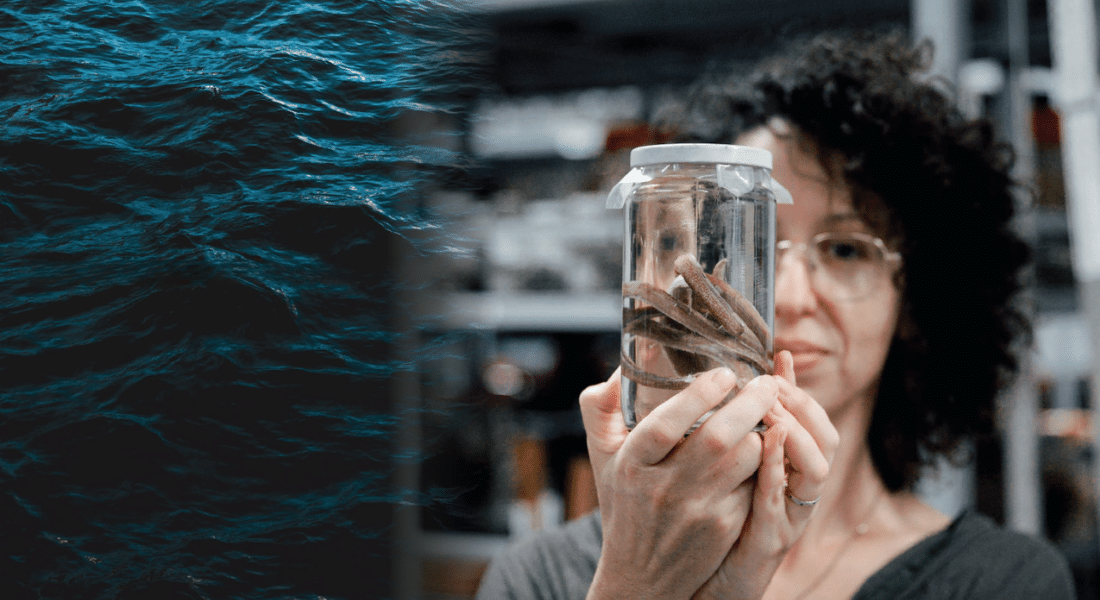
Invasive lionfish thrive in the warm waters of the Mediterranean, where they develop a substantial layer of fat, showing that, like many other invasive species, they are not fussy eaters. In their original Red Sea habitat, they are much leaner. Lazarus studies how the larval stage influences fish communities.

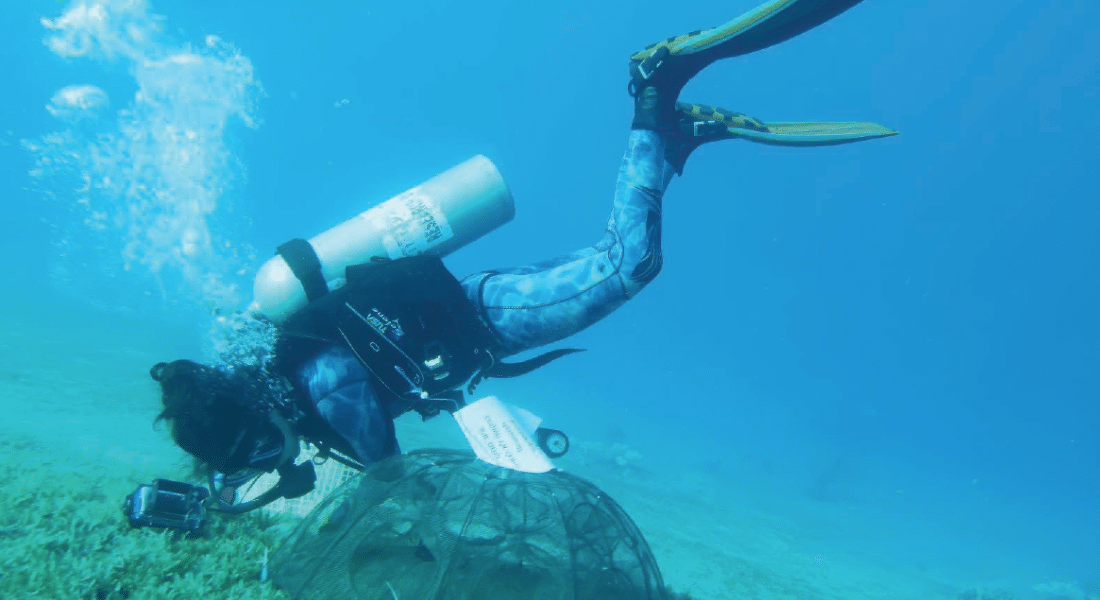
Through observations, photography and genetic analysis, the research team and colleagues from The Hebrew University of Jerusalem and Tel-Hai Academic College identified larvae and fish across multiple species and at the species level. While the data crunching around how temperature affects larval and adult stages is not ready to be shared, graduate student and former Azrieli Graduate Fellow Mai Lazarus took on the task of analyzing similarly unique data collected in the Red Sea, to ask how the larval stage influences the diversity of adult fish communities in a coral reef.

Lazarus found that larval diversity sets the baseline for adult diversity, but that post-larval processes, like predation or competition, filter out certain species more than others. For example, larvae of small plankton-eating fish persist better than large species with a different diet, even though those bigger fish release more larvae.

The finding was unexpected. Lazarus compares it with a tropical forest ecosystem, which has a wider diversity of mature trees than what the seeds and saplings promise. “We know so much about trees, as seedlings, then saplings, then adults. We can go out into the field and sample them and return again and again,” she says. Fish are far more elusive. “The marine world has lagged behind because it’s so hard to collect quantitative data of early life stages of multiple species that are constantly moving.”

Diving deep into her underwater “lab,” Lazarus examines traps used to capture juvenile fish in seagrass habitat, used to identify and count species. “We know much less about the ecology of juveniles and almost nothing about larval ecology.”

The larval study was a satisfying project with concrete results, and it feeds into Lazarus’s larger research goal to integrate early life stage information into ecological assessments and better understand fish communities. How larvae, juveniles or adults use or tolerate a habitat may vary. “We know much less about the ecology of juveniles and we know almost nothing about larval ecology,” Lazarus says.

By literally diving into the marine world, she’s depositing knowledge into the fish data bank. As part of her doctoral studies, she surveyed coral reefs looking for juveniles and has already revealed new information. “Mai is finding that habitats we didn’t even think were important are very important — the cobble beds for example, that allow juveniles to hide,” Belmaker says. The juvenile fish that emerge from cobble substrate move on to the reef as adults.

Ultimately, the goal of the research by Lazarus, Arlé and others in the Belmaker lab is to provide enough information to make informed decisions on protected zones. Israel has six marine reserves in the Mediterranean Sea, representing only 4 per cent of its territorial waters. Belmaker dives them regularly and says they teem with life within their boundaries, and this diversity spills over into the surrounding areas. Keeping them healthy and creating more protected areas means researchers need trustworthy predictions.

That’s the big payoff with Arlé’s research. Once there are robust models, the Mediterranean can be mapped to show the areas that are important for preserving native species and preventing the spread and introduction of aliens.

For now, Arlé will continue modelling the sea from a three-dimensional perspective, watching for the clues that surface.

Subscribe to our newsletter

* indicates required

All fields are mandatory.