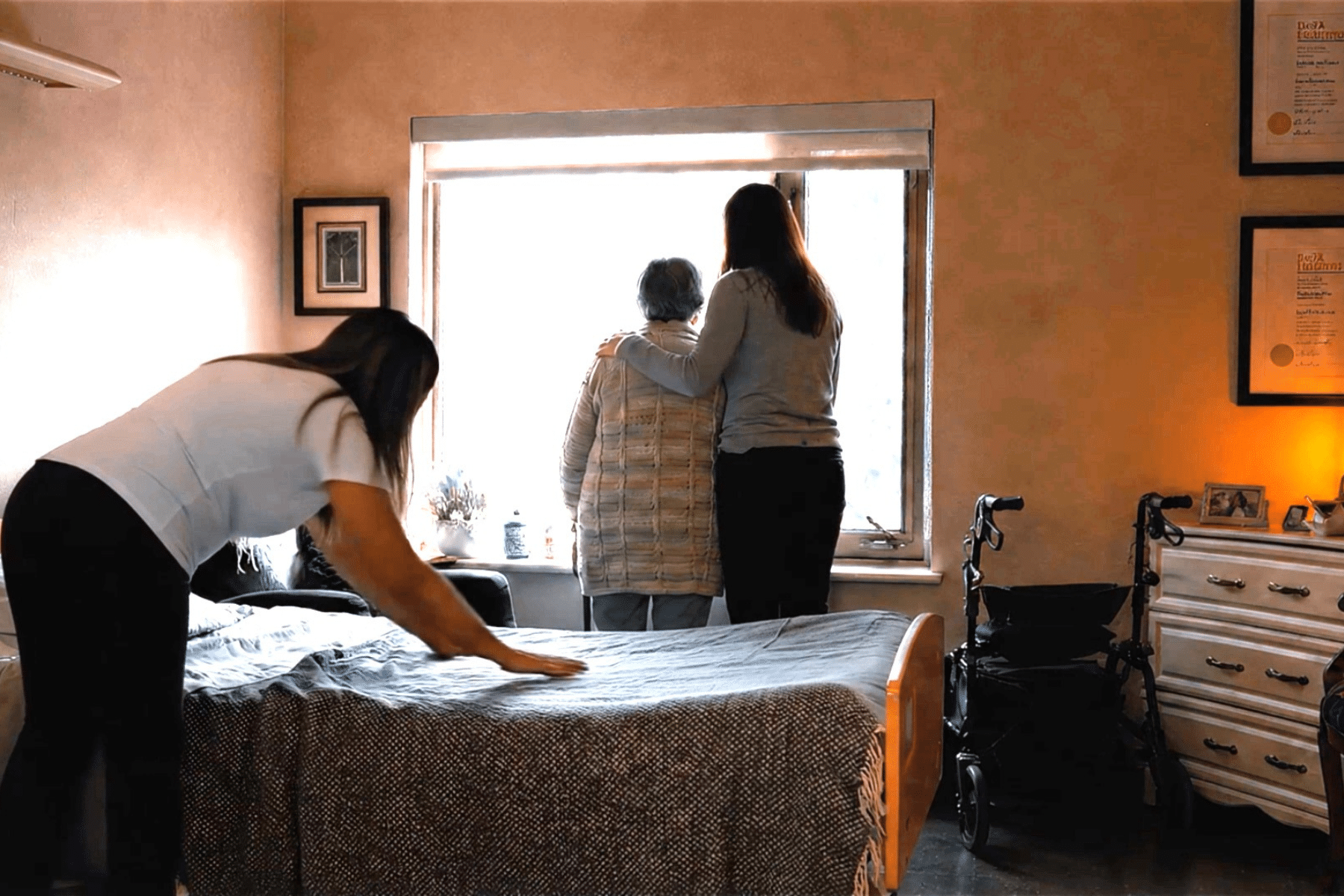
A man had been pacing since morning. At 61, he had been living with advanced frontal lobe dementia for three years. Language had mostly disappeared. What remained were fragments: an occasional “no,” a sudden cry and restless movement from one end of the room to the other. Stillness rarely lasted more than a few seconds.
During a long shift at a care home in New Brunswick, a nurse paused in the doorway of his room and tried something different. She started to play some music.
The song was Country Road from an album by Room 217, a Canadian organization transforming how care is delivered through music. It was not part of a prescribed clinical intervention or a formal therapy session. It was a simple act of care informed by her Room 217 training that encouraged caregivers to use music as a way of reaching people when words no longer could.
He stopped pacing. Then, slowly, he began to move in a small circle, something the nurse had never seen him do before. When he resumed walking, his pace had softened. The urgency was gone. After a few more songs, she guided him toward a chair.
He sat for three full songs, and remained there, tapping his foot lightly to the rhythm. He had not sat still for more than a few seconds in months.
“It brought me to tears,” the nurse later recalled.
Moments like this are at the heart of MUSIC CARE by Room 217, a program that uses music to improve health and well-being.
With support from the Azrieli Foundation, Room 217 has expanded its ability to train caregivers, educators, musicians and health professionals across Canada to integrate music into everyday care. Through the Foundation’s Azrieli Music, Arts and Culture Centre and the Canadian Centre for Caregiving Excellence, the organization is helping reshape care environments by recognizing music not as an add-on activity but as an essential tool for human connection.
The approach is both practical and deeply human. Unlike music therapy, which operates within a clinical framework, music care is designed to be accessible to everyone. A personal support worker humming during a bedside transfer. A hospice volunteer offering a familiar song in place of conversation. A teacher reaching for rhythm when language fails. A musician playing music connected to a person’s memories, identity or sense of self.
These interventions are often small and improvised, woven into the ordinary flow of daily life. Yet their impact can be profound.