Ethan Schoales is in his second year at York University and learning how to “adult,” just like most students. At 23, he lives in residence, manages his own schedule and is planning for his future.
Schoales is also autistic. He sometimes speaks more quickly or quietly than others, and when he isn’t understood, it can lead to frustration on both sides. “It’s just that [people] aren’t used to my way of talking,” he says.
Learning communication techniques, like rephrasing or seeking clearer instructions, is part of what Schoales took away from the Employment Pathways program at Toronto’s Holland Bloorview Kids Rehabilitation Hospital. With funding from the Azrieli Foundation, the program gives young people with autism and other physical, intellectual or neurodiverse conditions early work experience to build independence and confidence in adulthood.
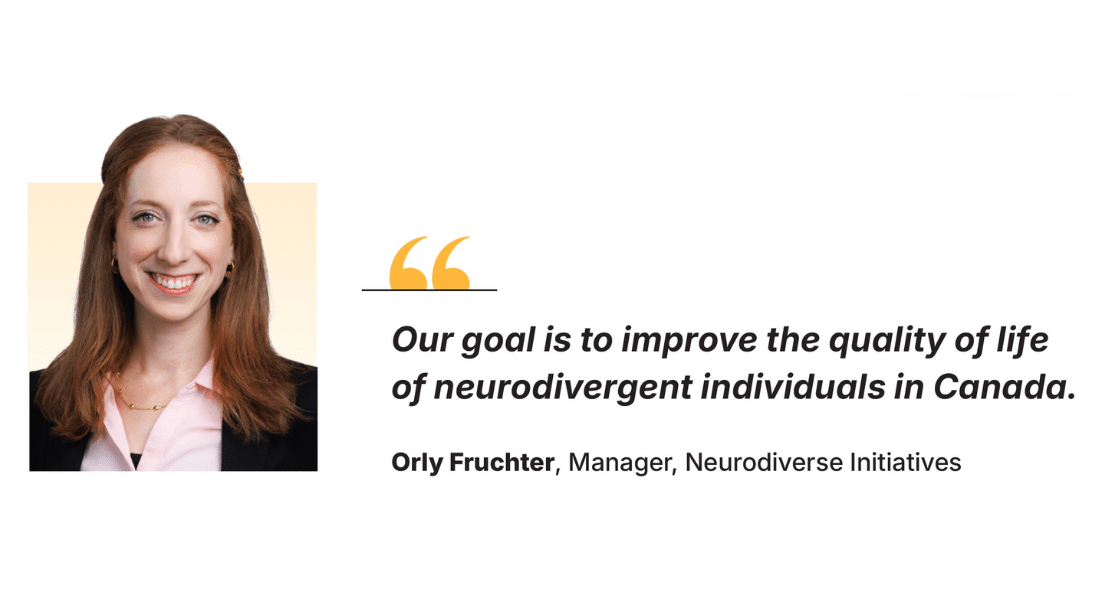
“Our goal is to improve the quality of life of neurodivergent individuals in Canada,” says Orly Fruchter, Manager of Neurodiverse Initiatives at the Azrieli Foundation. “We want to create real change, and to do that, we need to address systemic challenges through sustainable, replicable solutions.”
Access for all
Those challenges start with getting in the door. Workplaces are rarely designed with neurodiversity in mind. They often come with cultural norms and unspoken rules about how to speak, how to present yourself and how to fit in. Those who communicate differently are often screened out of job opportunities before they even get a chance to prove their skills. This contributes to the employment gap—just 26 per cent of Canadians with autism, ADHD, intellectual disabilities, dyslexia and other neurodivergent conditions are employed, compared to 59 per cent of those with other disabilities and 80 per cent of those without a disability.
“The biggest barrier is stigma and bias,” explains Fruchter. “Oftentimes, neurodivergent individuals are not seen for their abilities. They are seen for their disabilities.”
Accessibility sits at the heart of the Foundation’s work, rooted in Jewish teachings that every person is made in God’s image and has inherent worth. “This work is not a nice-to-have. It is our responsibility,” Fruchter adds.
Early employment training is one way the Foundation puts those values into action, supporting programs designed to let young people try different career roles and learn what suits them, and remove the obstacles that keep them from reaching their potential.
Through Employment Pathways, teens work with coaches, parents and peers to build the skills they need. That could look like learning how to ask for written instructions instead of verbal ones, creating a video resumé instead of relying on a traditional interview, or breaking a task down into clear steps.
But none of that work is possible without sustained funding, and that’s where many programs get stuck in a Catch-22 of sorts. Without funding, there’s no program. Without a program, there’s no proof it works. And without proof, there’s no funding.
The Foundation’s support helped to break that cycle, says Carolyn McDougall, Employment Pathways Manager. Notably, McDougall’s team was given the resources and backing they needed to track outcomes, measure impact and build tools others can use. That includes implementation guides so program models can be replicated and an online hub for employers on how to work with people with disabilities. They’ve also co-created a tool kit with 12 healthcare and employment organizations across Ontario on how to hire, train, accommodate and retain employees with disabilities.
“The Foundation values knowledge creation and knowledge mobilization and sees that as a really important piece to go along with actual program delivery,” says McDougall. “This has been transformational.”
Off to work
Through the team’s research, Holland Bloorview estimates a return of 600 to 700 per cent could be realized if the government invests $16,000 per participant in early employment programming. That return would, over a person’s working life, come from higher rates of employment and income taxes paid, reducing costs to social service systems.
“Hiring neurodiverse people is not charity. It’s a sustainable labour force pipeline for people who are trained, willing and ready to work,” says Laura Bowman, Project Manager for Research and Evaluation at Employment Pathways.
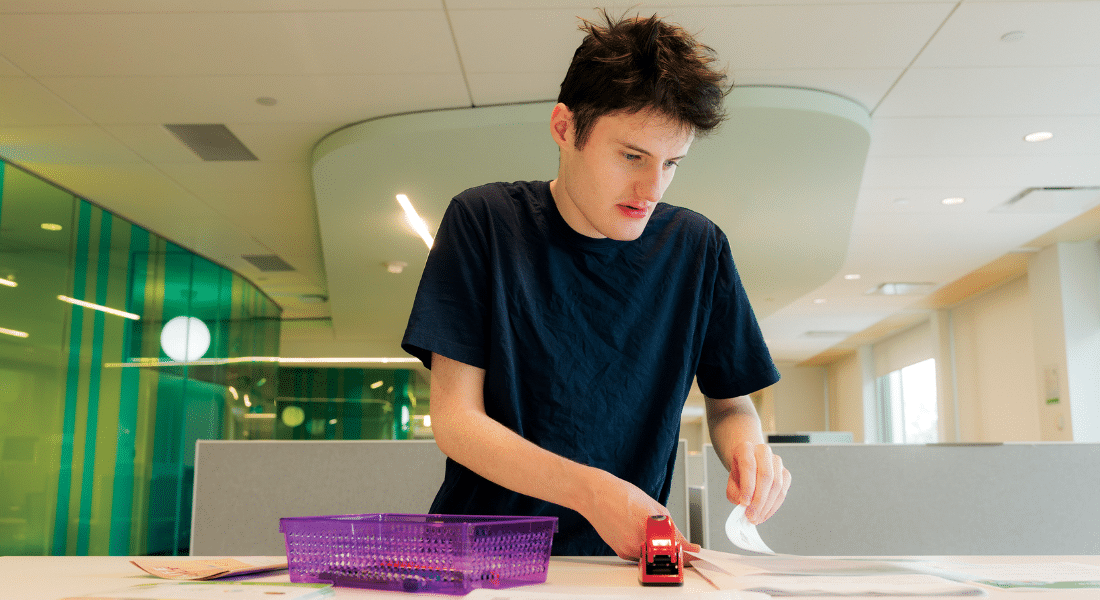
Schoales started with Employment Pathways back in high school, learning data entry and filing, before moving on to other roles, both paid and volunteer. Now he’s thinking about graduate school and a potential career in library sciences.
Asked what he would want employers to know about hiring someone like him, Schoales doesn’t hesitate. “Don’t underestimate them.”


 Common ground