When a young researcher is given the freedom to chase a bold idea, the ripple effects can reach far beyond the lab. That spirit sits at the heart of the Azrieli Foundation’s support of the CIFAR Azrieli Global Scholars program, a launching pad for early‑career scientists who are ready to push boundaries and reimagine what’s possible in their fields.
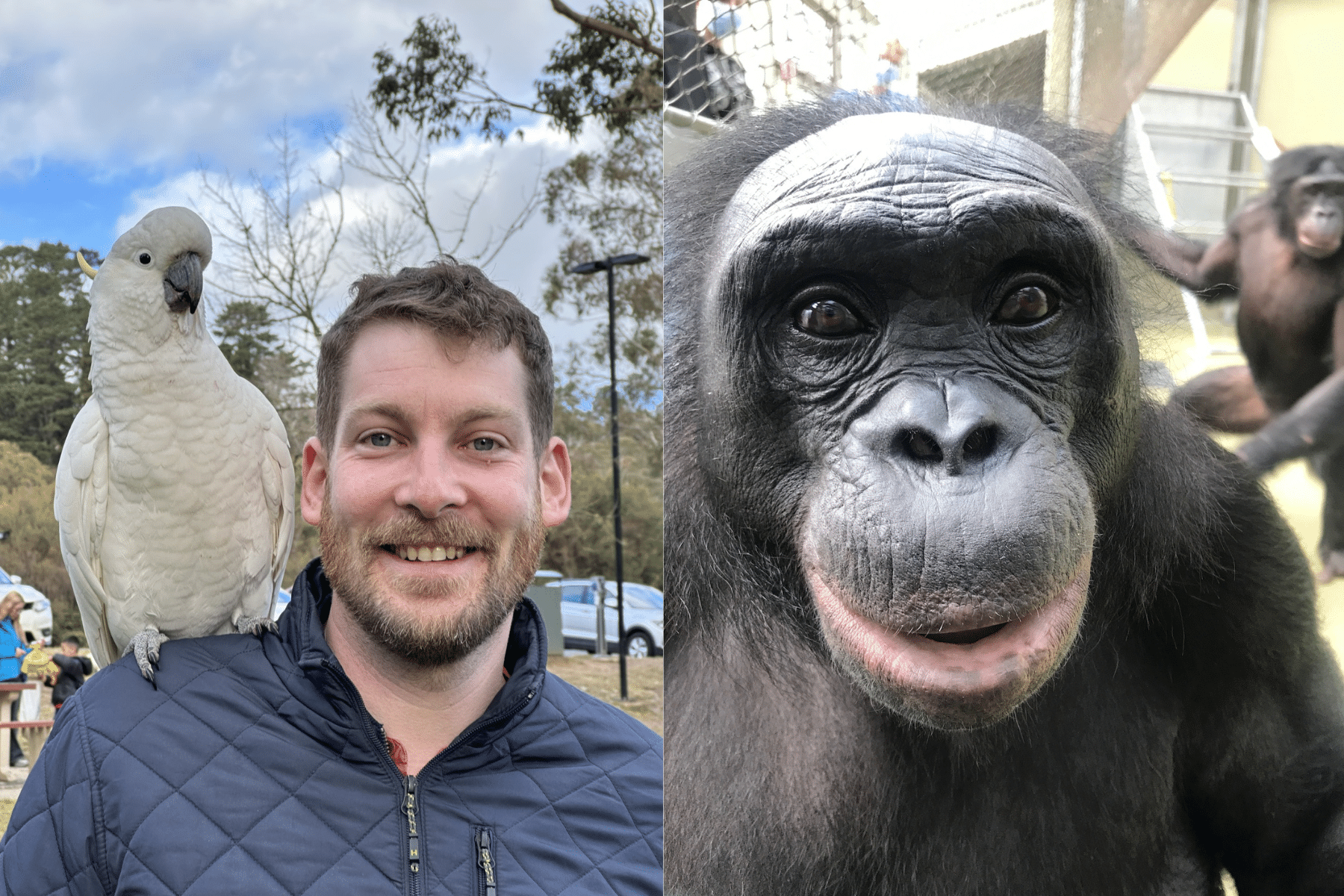
One of those researchers is Dr. Chris Krupenye, a CIFAR Azrieli Global Scholar alumnus whose work is helping us understand something both ancient and deeply human: imagination. It’s a skill we often take for granted, yet recent discoveries suggest it’s not ours alone.
A window into ape imagination
Dr. Krupenye’s research focuses on how animals think and how cognition evolves. As an Assistant Professor at Johns Hopkins University and Director of the Social and Cognitive Origins group, he studies the mechanisms that allow humans and other species to navigate social life, from predicting others’ behaviour to reading subtle cues in shifting group dynamics.
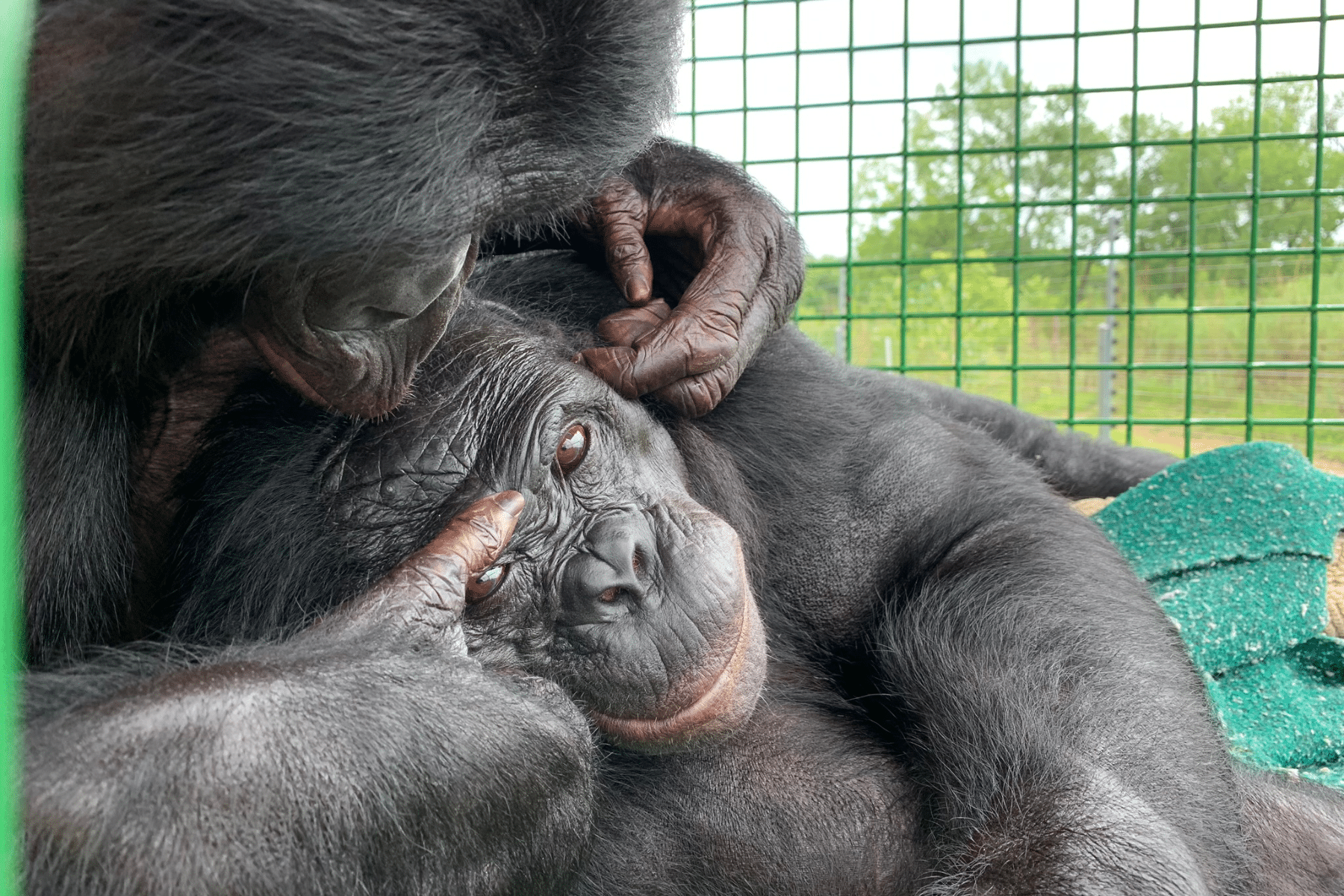
Chris’ new Science study centers on Kanzi, a bonobo who joined researchers in a playful “tea party.” Scientists pretended to pour imaginary juice into two cups, then “emptied” one. When asked where the juice was, Kanzi picked the cup that still “held” pretend liquid at rates above chance. Follow‑up tests showed he could distinguish real juice from pretend juice, and he also tracked imaginary grapes in a similar setup. Together, the results suggest an ape can follow along a shared make-believe scenario and hold in mind imaginary objects, meaning that imagination may stretch far deeper into our evolutionary past than expected.
Dr. Krupenye and his co‑author describe these experiments as evidence that ape minds can go beyond the here and now. The team reports that Kanzi could track pretend objects while also distinguishing them from reality, a hallmark of imagination in early human development.