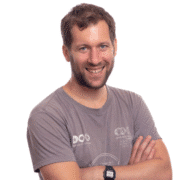
Dr. Daniel Fuks is an archaeobotanist, studying plant remains retrieved from archaeological excavations to reconstruct ancient agriculture and landscapes. His current focus is on sites from the first millennium CE in southern Israel, to explore the significant agricultural changes and related social and economic developments of that era. Ultimately, this research contributes long- term perspectives on food security, biodiversity, climate change, and globalization.

Daniel’s research contributes long-term perspectives on food security, biodiversity, climate change, and globalization.

Daniel completed a BA and BSc at the University of Pittsburgh, an MA and PhD at Bar-Ilan University, and a postdoc at the University of Cambridge. He is also the founder of the Crop History Consortium—a multi-disciplinary research group focused on geographic and evolutionary trajectories of crop plants across the Middle East and Mediterranean. Daniel lives with his wife and children on a moshav in the northwest Negev where he has volunteered to tutor youth at risk. He is passionate about sustainability, capoeira, and jazz.
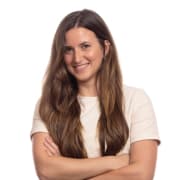
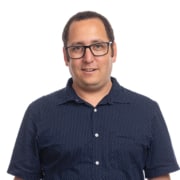
Dr. Idan Frumkin is a molecular biologist who studies how living things change over time. He explores how nature creates new cellular functions in bacteria and viruses by creating novel genes. Using both laboratory experiments and computer analysis, Idan investigates how these newly evolved genes help species adapt to different environments and challenges. This research can lead to improvements in drug development and help create better industrial processes using specially designed cells.

Idan’s research can lead to improvements in drug development and help create better industrial processes using specially designed cells.

Idan earned his BSc in life and medical sciences from Tel Aviv University and his PhD from the Weizmann Institute of Science as an Azrieli Graduate Studies Fellow. He completed his postdoctoral research at MIT. Idan currently lives in Tel Aviv with his spouse. He is dedicated to teaching and mentoring the next generation of scientists. In his free time, Idan enjoys reading science fiction and fantasy, listening to podcasts on Israeli and American politics, and spending time with his family.

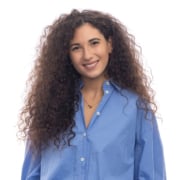
Dr. Shany Danieli is an astrophysicist, investigating galaxies to uncover the nature of dark matter—an enigmatic substance thought to comprise over 80 per cent of the universe’s matter. She uses cutting-edge telescopes to study galaxies far fainter than the night sky. Though challenging to discover, these galaxies offer a nearly unobstructed view of their dark matter skeletons, revealing the interplay between dark and visible matter and providing insights into the universe’s origins. Shany is spearheading next- generation searches using the most advanced astronomical surveys.

Shany is investigating galaxies to uncover the nature of dark matter and spearheading next-generation searches using advanced astronomical surveys.

Shany received her BSc in physics from Tel Aviv University and her PhD from Yale University. She was a NASA Hubble Fellow and a Carnegie-Princeton Fellow at Princeton University. Originally from Holon, she returned to Israel after 11 years in the United States and now lives in Tel Aviv with her husband and two children. Shany loves spending time with her family and friends, travelling, meeting new people, reading, sports, food, and fashion

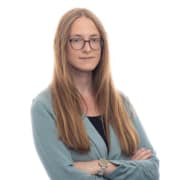
Dr. Shachar Carmeli is a mathematician specializing in homotopy theory, which examines the properties of shapes that remain unchanged under slight alterations. He studies commutative ring spectra, which extend the concept of algebraic rings—mathematical structures with specific addition and multiplication rules. He also works in chromatic homotopy theory, a field that addresses complex problems in homotopy theory by organizing them into different levels based on repeating patterns. His work has contributed to recent breakthroughs in several open problems in this field.

Shachar’s research deepens our understanding of fundamental mathematical structures, contributing solutions to longstanding open problems in the field of homotopy theory

Shachar earned a BSc in mathematics from Tel Aviv University, and an MSc and PhD in mathematics from the Weizmann Institute of Science. He worked as a postdoctoral researcher at the University of Copenhagen. Originally from Abirim, Shachar now resides in Kibbutz Na’an. During his studies, he volunteered several times in a summer camp for adults with cerebral palsy, organized by the ILAN Association. In his free time, Shachar enjoys practising Thai boxing, hiking in nature, and spending quality time with his family.

Dr. Rotem Botvinik Nezer is a cognitive neuroscientist, studying how beliefs and expectations are formed and changed, and how they impact our minds and bodies. Her research mainly focuses on the placebo effect—how even inactive treatments can influence health. She studies how and when the placebo effect works for different people, aiming to integrate these findings into clinical practice to enhance the effectiveness of active treatments.

Rotem studies how and when the placebo effect works for different people, aiming to integrate these findings into clinical practice to enhance the effectiveness of active treatments.

Rotem holds a BSc in biology and psychology, with a focus on neuroscience, and a PhD in neuroscience from Tel Aviv University. She completed her postdoctoral research at Dartmouth College. Rotem currently resides in Sho’eva, a moshav west of Jerusalem. Rotem has volunteered in various roles, including working with disabled children, mentoring students, assisting Holocaust survivors, and co-leading a group of Israeli neuroscientists and psychologists abroad. In her free time, she enjoys spending time with her family, hiking, playing basketball, scuba diving, and making and eating ice cream.

Dr. Gilad Barshad is a molecular biologist and genomicist. The genome is the complete set of DNA, containing all genes and instructions for when and where to express them. Gilad studies how non-coding regions of the genome, that is, the DNA that is not contained in genes, influence gene expression, or how genes are turned on. He examines changes across species and during early embryonic development—the initial phases after fertilization— using advanced genomic and computational tools to identify factors that affect gene expression. His research contributes to our understanding of “what makes us,” with implications for disease diagnostics and human health.

Gilad’s research contributes to our understanding of “what makes us,” with implications for disease diagnostics and human health.

After serving as a senior sergeant in the IDF’s Paratroopers Brigade, Gilad earned his BSc and PhD in life sciences from Ben-Gurion University of the Negev. He completed his postdoctoral training at Cornell University. Originally from northern Israel, Gilad now lives in Nofit with his wife and three children. In his free time, he enjoys reading, swimming, running, and spending time with his family.

Dr. Alessandra Sivo is an organic chemist and postdoctoral researcher in the field of sustainable organic synthesis. Her research focuses on a class of versatile catalysts—substances that enable a chemical reaction— known as polyoxometalates. These are activated by electricity, rather than relying on oxidizing or reducing chemicals to supply electrons, enabling cleaner and more efficient chemical synthesis. Alessandra is spearheading progress in organic electrocatalysis, designing polyoxometalate catalysts that pave the way for innovative unconventional synthetic methods and more sustainable industrial processes.

Alessandra is spearheading progress in organic electrocatalysis, designing polyoxometalate catalysts that pave the way for innovative unconventional synthetic methods and more sustainable industrial processes.

Alessandra received her MSc in medicinal chemistry from the University of Bari Aldo Moro and her PhD from the Politecnico di Milano. Originally from Southern Italy, she recently moved to Rehovot. She is a member of the Student Council at the Weizmann Institute of Science, actively contributing to the academic community. In her free time, Alessandra enjoys travelling, reading, and engaging in sports.

Dr. Anja Reusch is a postdoctoral researcher in the field of information retrieval (IR), the science behind search technology. Her work aims to improve a neural network–based approach to search known as generative IR. She focuses on developing interpretability methods—techniques that model the decision-making process of neural networks to understand how these systems work internally and what they learn during training. The goal of her research is to make search systems faster and more efficient.

Anja investigates the inner workings of a neural network- based approach to search, making search systems faster and more efficient.

Anja earned her combined BSc and MSc and her PhD in computer science from the Technical University of Dresden. She is originally from a small town between Berlin and Leipzig, Germany, and lives now in Haifa with her partner. She served on the executive board as the treasurer of a local student association at TU Dresden and organized several events for computer science students. Having spent a semester each in Japan, China, Singapore, and Israel, Anja enjoys exploring different cultures and learning new languages.

Dr. Eugenia Pyurbeeva is a theoretical physicist and postdoctoral researcher working at the intersection of quantum mechanics, thermodynamics, and electronics. Her research focuses on harnessing quantum effects for future everyday technology and exploring how cutting-edge electronic technologies can help answer fundamental questions about how our daily experiences arise from the laws of quantum mechanics.

Eugenia’s research focuses on harnessing quantum effects for future everyday technology and exploring how cutting-edge electronic technologies can help answer fundamental questions about how our daily experiences arise from the laws of quantum mechanics.

Eugenia completed her undergraduate studies at the Moscow Institute of Physics and Technology and received her PhD from the Queen Mary University of London. Born in Moscow, Russia, she spent many years living in London before relocating to Jerusalem for her current position. She is passionate about extracurricular education in physics and has volunteered in after- school clubs and authored multiple problems for math Olympiads. In her free time, she enjoys solving puzzles of all sorts, hiking, writing fiction, listening to classical music, and playing the violin.

Dr. Zuzana Osifová is a postdoctoral researcher who aims to uncover the undescribed behaviour of proteins at physiological concentrations—in other words, how proteins fold and interact within the human body. She employs the strong magnetic field of nuclear magnetic resonance spectroscopy, a non-destructive analytical method that enables us to study chemical structures, including large proteins. Understanding proteins’ structure and folding can help design and target new drugs against diseases related to misfolded proteins, such as Parkinson’s disease.

Zuzana’s research can help design and target new drugs against diseases related to misfolded proteins, such as Parkinson’s disease.

Zuzana completed her MSc and PhD in organic chemistry at Charles University. Originally from Prague, Czechia, she currently resides in Rehovot. She co- authors the educational NMR-Challenge.com project, which educates newcomers in magnetic resonance. Her article on anorexia nervosa won the Science Communication Prize of the Biochemical Society, and she dedicated half of the cash prize to a charity that helps people with eating disorders. Zuzana loves science communication, reading, and writing.