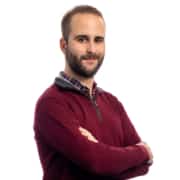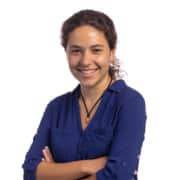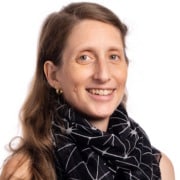
Aviv Orner is a PhD student in the Seymour Fox School of Education at the Hebrew University of Jerusalem under the supervision of Prof. Adam Lefstein and Dr. Hadar Netz from Tel Aviv University.

She is interested in the connections between language, gender, and sexuality as expressed in public spaces, traditional and social media, and, especially, educational contexts.

Her research focuses on gender equity in classroom discourse in Israeli primary schools. She examines how gender equity can be promoted by developing criteria for interpreting and measuring gender bias in classroom discourse, designing new practices to reduce gender bias (together with teachers in the field), and examining the outcomes and implications of these interventions. She believes her research will contribute to our understanding of the mechanisms of gender inequality in the crucial arena of education and help rectify these inequalities both in the classroom and on the societal level.

Aviv completed her BA in Hebrew linguistics and communication at Oranim College of Education, where she was the head of the student union and a board member of the National Union of Israeli Students. She also worked as a Hebrew teacher in middle school. She completed an MA in the Program for Multilingual Education at Tel Aviv University, where she began researching language and gender in classroom discourse. For as long as she can recall, Aviv has been involved in social and educational activism. She was the president of the student council in high school and a youth movement counsellor, completed a year of community service before her military service, and served in the IDF Education Corps. In her free time, Aviv enjoys travelling, learning about new places, cultures, and people, and attending concerts, theatre, and art exhibitions.

Avital Wagner is a PhD student in the Department of Chemistry at Ben-Gurion University of the Negev under the supervision of Azrieli Early Career Faculty Alum Dr. Benjamin Palmer.

Her research focuses on the formation and crystallization pathways of biogenic guanine crystals.

In nature, the assembly and morphologies of these crystals are exquisitely controlled to create different optical phenomena associated with animal coloration and vision. However, almost nothing is known about how organisms make the crystals themselves. Avital follows the morphogenesis of guanine crystals in model organisms during development using cryogenic scanning and transmission electron microscopy and synchrotron x-ray diffraction methods. Her aim is to adapt the strategies used by organisms to the laboratory and develop new green routes for making the artificial molecular crystals used in optics, pharmaceuticals, and other fields.

Avital grew up in Rehovot and currently lives in Be’er Sheva. While growing up, Avital was a competitive swimmer on the Maccabi-Weisgal- Rehovot team. She did her military service as a chemistry and materials lab assistant in the Technology and Maintenance Corps. While completing her BSc and MSc degrees in materials engineering at Ben-Gurion University, she actively participated in tutoring and mentoring students and organizing enrichment activities. Avital’s MSc studies centred on optical properties of doped ceramics, and she has multiple publications resulting from her research. In her spare time, Avital enjoys reading books, playing word games, spending time with family and friends, and hiking around the Negev desert.

Anna Uzonyi is a PhD student in the Department of Molecular Genetics at the Weizmann Institute of Science under the supervision of Prof. Schraga Schwartz.

Her research focuses on understanding the role of chemical modifications of RNA nucleotides.

Of central importance to Anna’s research is deciphering how RNA structure determines the deposition of the RNA modification inosine, which is involved in the immune response to viral infections and plays a role in autoimmune diseases. In an additional research project, Anna is assessing how another modified RNA base regulates the lifespan of RNA molecules, using both experimental methods and computational analysis. Anna hopes that her research will lead to a better mechanistic understanding of RNA modifications and consequently help the development and improvement of RNA-based therapeutics.

Anna was born and raised in Budapest, Hungary. During high school, she had the opportunity to learn university-level biology and experimental methods and participate in national and international science competitions, including the International Biology Olympiad in Switzerland and Indonesia. She moved to Munich, Germany for her undergraduate studies in molecular biotechnology. During her studies, Anna completed several research internships abroad: she studied protein translation at the Weizmann Institute in Israel, influenza virus in Oxford, ovarian cancer in Singapore, and non- coding RNAs in Germany. She moved to Israel to pursue her MSc in life sciences in the Weizmann Institute and stayed for subsequent PhD research. In her free time, Anna enjoys travelling, hiking, and sports activities. She likes reading fantasy and science fiction novels and is enthusiastic about cooking, baking, and cake decoration. In addition, Anna enjoys debating and has participated twice in the European Universities Debate Championship.

Dr. Anat Arzi is a new faculty member in the Department of Medical Neurobiology and the Department of Cognitive and Brain Sciences at the Hebrew University of Jerusalem.

Her research combines basic and clinical neuroscience to answer how we process the world under loss of consciousness.

Anat’s work focuses on two central unconscious states: natural loss of consciousness during sleep and pathologically altered consciousness following brain injuries. By recording diverse aspects of brain–body activity, her goal is to shed additional light on principles underlying the ability to process the world around us unconsciously. As an Azrieli Fellow, Anat will investigate the neurophysiological processes underlying consciousness recovery in patients with severe brain injuries and develop new methods to detect consciousness and predict recovery in brain-injured patients.

Anat completed her PhD in neurobiology in the lab of Prof. Noam Sobel at the Weizmann Institute of Science. During her doctoral studies she harnessed the unique characteristics of olfaction to study the processing, learning, and memory of unperceived stimuli in wakefulness and sleep and discovered that, in contrast to previous notions, humans can learn novel information during sleep. In her postdoctoral work, she pursued the investigation of unconscious brain abilities and limits in the labs of Prof. Tristan Bekinschtein at the University of Cambridge and Prof. Jacobo Sitt at the Paris Brain Institute. She developed an innovative approach for consciousness detection, demonstrating that olfactory sniffing can serve as a biomarker for consciousness recovery in brain-injured patients. Anat lives with her spouse, Gadi, and their daughter, Naomi, and enjoys poetry, French patisserie, and yoga.

Anat Horowitz Harel is an architect and MA student in the Azrieli School of Architecture at Tel Aviv University under the supervision of Prof. Talia Margalith.

Her research aspires to increase the participation of children in city planning processes, thus grounding their right to the city.

Anat looks at the case of Israel from an international lens, and her ensuing comparative research contributes to the scholarly literature in Hebrew about children’s right to cities. Her research uses qualitative methods including in-depth interviews with professionals in the field, assessments of fieldwork conducted by various initiatives looking to change children’s right to the city, and analyses of materials and products from relevant processes. Anat hopes that her research will help raise the awareness of Israeli planners and architects regarding the perspective of children on the use of the city and establish operative policy directions to promote built environment education (BEE) for children, thus deepening children’s knowledge of the urban environment.

Anat was born in Jerusalem and currently lives in Ramat Gan with her spouse and two daughters. She received her BArch in architecture and town planning from the Technion – Israel Institute of Technology. Over the last 15 years, she has engaged in planning policy, strategic planning, and environmental planning in civil society organizations and now works as an expert in the field of sustainable public space at the Israeli Green Building Council. As part of her ongoing voluntary work, Anat represents the Israel Association of Architects and Urban Planners in the UIA Architecture and Children Work Program. In her free time, Anat likes to wander around cities in Israel and throughout the world.

Amit Manor Armon is a PhD student in the Schulich Faculty of Chemistry at the Technion – Israel Institute of Technology under the supervision of Prof. Charles Diesendruck.

Amit’s research focuses on a new methodology for the design and synthesis of kinetically stable quaternary ammonium (QA) salts for renewable energy applications.

Electrochemical devices, such as fuel cells and flow batteries, are seen as game- changing opportunities for the storage and conversion of green energy. QA are embedded in anion exchange membranes which are, in terms of lifetime, the limiting component in these devices. By modelling different degradation pathways and varying electronic and steric parameters, Amit aims to identify the QA weak spots, synthesize new “hits,” and test their stability experimentally. Her unique approach of modelling prior to synthesis will allow for better understanding of the structure–property relationships in bottom-up QA design, hopefully promoting their implementation in the green energy field.

Amit was born and raised in Haifa, where she currently lives with her husband and daughter. Her academic path started in high school when she enrolled in the Technion Archimedes chemistry program. After five years of military service as, mostly, an intelligence officer, she returned to the academic world, completing her BSc in chemistry and art history at the Hebrew University of Jerusalem, where she also pursued her MSc in chemistry under the supervision of Prof. Ori Gidron. In her free time, Amit enjoys hiking with her family and horseback riding.

Dr. Alla Marchenko is an Azrieli International Postdoctoral Fellow in the Department of Sociology and Anthropology at the Hebrew University of Jerusalem under the supervision of Prof. Nurit Stadler.

Her area of research is Hasidic pilgrimage in contemporary Ukraine, specifically the growing female presence at the Hasidic shrines.

She surfaces the role of women in religious communities and activities and the possibility of belonging to a traditional religious community, on the one hand, and taking an active social position, on the other. Alla hopes that her research will have positive impact on the development of cross-cultural bridges between local communities and international visitors to the Hasidic shrines in Ukraine.

Alla was born in Uman, Ukraine, which, as the most visited Hasidic shrine in Europe, shaped her curiosity on the topic. After obtaining a BA, an MA, and a Candidate of Sciences in sociology at Taras Shevchenko National University of Kyiv, Alla moved to Warsaw. She completed her PhD in the Institute of Philosophy and Sociology at the Polish Academy of Sciences under the supervision of Prof. Sławomir Kapralski, focusing on the effects of Hasidic pilgrimages on the local frames of memory in Polish and Ukrainian towns. She has also taken part in numerous educational and research projects aimed at making local cultural heritage visible, with an emphasis on Jewish heritage (e.g., the EU project ReHerit – Common Responsibility for Common Heritage and the POLIN Museum of the History of Polish Jews). In addition to research, Alla likes exploring museums and participating in guided tours connected with local history. She enjoys sports, especially yoga and Pilates, and writing poems, short stories, and reviews of books and places she has visited.

Dr. Alexios Stamatiadis-Bréhier is an Azrieli International Postdoctoral Fellow in the Department of Philosophy at Tel Aviv University under the supervision of Dr. David Mark Kovacs.

His work focuses on the metaphysics of explanation and meta-ethics and their intersection.

In meta-ethics, Alexios is interested in moral naturalism, normative explanation, and the nature of moral principles; more broadly, he also researches metaphysical grounding and the metaphysics of non-causal explanation. In his current research, he plans to explore a neo- Humean theory on the metaphysical foundations of pure moral principles (such as the principle of utility or the Kantian categorical imperative).

Alexios was born in Athens, Greece. He completed his BA and MA in the history and philosophy of science at the National and Kapodistrian University of Athens. He obtained his PhD from the University of Leeds where, under the supervision of Prof. Pekka Väyrynen and Dr. Jack Woods, he researched multiple aspects of contemporary moral metaphysics, such as the nature of normative explanation and its relationship to scientific explanation. When not researching, Alexios enjoys cooking and practising Brazilian jiu-jitsu.

Dr. Alexander Duthie is an Azrieli International Postdoctoral Fellow in the Physics Department at Ben-Gurion University of the Negev under the supervision of Dr. Yevgeny Bar Lev.

His research interests concern the fundamental behaviour of matter on the smallest length scales.

This involves using mathematical and computational tools to understand the behaviour of vast numbers of strongly interacting particles and the often surprising and beautiful collective behaviour that can result. Realizing and manipulating these novel phases of matter is an important step toward a fully-fledged quantum computer in the future. As an Azrieli Fellow, Alexander is planning to explore how the presence of disorder can inhibit systems from reaching thermal equilibrium of their own accord (so-called “many- body localization”) with a potential application in the development of quantum memory devices. His interests also extend to quantum information science and quantum computing – fields which lie at the forefront of the development of next-generation technologies.

Alexander was born in the UK and obtained an undergraduate in natural sciences from Cambridge University. He then completed his DPhil in theory and modelling in chemical sciences at Oxford University under the supervision of Prof. David Logan. His research focused on single-particle systems, which lie on the border between disorder and order, such as quasiperiodic models, and he developed a theoretical framework for understanding their electronic properties. In his spare time,

Alexander enjoys running, cycling, rock climbing, reading, and travelling.