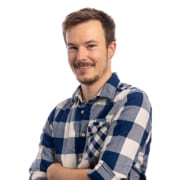
Dr. Maximilian Knott is an Azrieli International Postdoctoral Fellow in the Sagol School of Neurosciences at Tel Aviv University.

Under the supervision of Prof. Oded Rechavi, he is investigating the impact of small RNAs on genomic integrity and mutagenesis.

Small RNAs have been identified as site-specific regulators of chromatin organization and accessibility in response to environmental stimuli. The fidelity of DNA repair mechanisms has been shown to vary among different chromatin states, leading Maximilian to claim that temporally limited small RNA-mediated adaptation to environmental change might be genetically hardwired by mutations of the genome. This has tremendous implications for evolution as well as for tumorigenesis and chemoresistance of cancer.

Maximilian was born and raised in Munich. He studied medicine at Ludwig Maximilian University of Munich (LMU) and the University of Queensland. He completed his MD thesis under the supervision of Prof. David Anz and focused his research on the interplay of the immune system and solid tumours with special focus on immune-evasion of tumour cells. During his residency in surgical pathology, he proceeded to study tumour-specific oncogene-enhancer interactions and their therapeutic potential in pediatric soft tissue tumours at LMU’s Institute of Pathology under the supervision of Prof. Thomas Gruenewald. Besides his research, Maximilian participates in the Skype a Scientist program and enjoys literature, poetry, and travelling with friends.

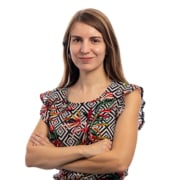
Dr. María del Carmen Marín Pérez is an Azrieli International Postdoctoral Fellow in the Faculty of Biology at the Technion – Israel Institute of Technology under the supervision of Prof. Oded Béjà.

Her main area of research is rhodopsins. Many organisms sense light using rhodopsins, photoreceptive proteins containing a retinal chromophore.

Her host laboratory recently found a previously uncharacterized rhodopsin family dubbed bestrhodopsins. Bestrhodopsins are found in marine unicellular algae and have unprecedented architecture. In her current research, María aims to further characterize this recently detected bestrhodopsin family and to examine the interplay between architecture and role. She will use various OMICS (genomics, metagenomics, transcriptomics, and metatranscriptomics) to search for hidden rhodopsin architectures. She hopes that the new advances and knowledge will have significant direct and indirect influence on the fields of optogenetics and rhodopsins.

María was born in Quesada, Spain. She studied for her BSc in chemistry at the University of Jaén and her MSc in the characterization of chemical systems at the University of Alcalá. She then completed her PhD in chemical and pharmaceutical sciences at the University of Siena under the supervision of Prof. Massimo Olivucci. After years of training in computational chemistry and several collaborations with well- known biophysics groups around the world, María became interested in the biophysics characterization of photoreceptors and thus became an interdisciplinary researcher. For this reason, she moved to Tokyo to work with Prof. Keiichi Inoue, supported by the Japan Society for the Promotion of Science. Outside the laboratory, María has had a professional career as a rugby player. She also loves photography and travelling around the world.

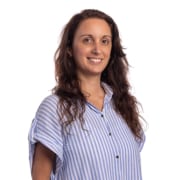
Dr. Maayan Cohen is an Azrieli International Postdoctoral Fellow in the Department of Sociology and Anthropology at Tel Aviv University under the supervision of Dr. Michal Kravel-Tovi.

She is also a postdoctoral affiliate in the Department of Industrial Engineering under the supervision of Prof. Eran Toch. As an anthropologist, Maayan’s research explores the production of culture, values, and ideas.

In her current research she is planning to employ ethnographic methods to examine the different values that shape the production of AI-infused technologies. She hopes that this work will contribute to our understanding of the deep connection between computational reason and human work, inform normative debates on AI ethics, and promote the development of ethical engineering pedagogies.

Maayan was born in Tel Aviv, and commenced her BA in Tel Aviv University’s Multidisciplinary Program in the Arts at the age of fifteen. She later joined its Adi Lautman Interdisciplinary Program for Outstanding Students, where she earned her MA in the Department of Sociology and Anthropology. She was chosen as one of the two inaugural Israeli Rhodes scholars and completed her DPhil in anthropology at the University of Oxford under the supervision of Dr. Dace Dzenovska. Her doctoral research focused on the ethical and political dimensions of film production in Israel. While at Oxford, Maayan worked in the Rhodes Artificial Intelligence Lab (RAIL), which she co-directed from 2019 to 2020. In her free time, Maayan enjoys travelling, dancing, and spending time at the beach with family and friends.

Liat Ariel is a PhD student in the Seymour Fox School of Education at the Hebrew University of Jerusalem under the supervision of Prof. Tal Gilead.

Liat’s field is the philosophy of education, and she focuses on the characteristics of the post-truth era and the challenges they bring to education for democratic citizenship in post-truth societies.

She is particularly interested in the extent to which existing democratic theories and pedagogies remain relevant to the education of future citizens who will need to become the gatekeepers of democracy in a post-truth world. Liat hopes that her findings will provide practical implications for education for democracy and serve as a starting point for constructing a new pedagogy for citizenship and democratic education that will protect and promote the democratic values of freedom, justice, peace, and equality in light of the threats posed by the post-truth era.

Liat was born and raised and currently lives in Nahariya. Throughout her life, she has worked and volunteered in diverse educational settings with children and youth from disadvantaged backgrounds. She completed her BA in special education and English language and literature at the University of Haifa. She was awarded a Fulbright Scholarship and studied for an MA in cultural and educational policy studies at Loyola University Chicago. As an English teacher, Liat is eager to generate a change in the Israeli educational system; she dreams of bringing philosophical educational theories into practice and thus reduce the gaps between the academic and practical fields of education. Liat is also an educational entrepreneur and initiated Fly High, a program which encourages disadvantaged youth to achieve a full matriculation certificate in English and aims to make English literacy accessible for underprivileged youth in the periphery. In her free time, Liat enjoys writing, exercising, and travelling with her family.

Katarzyna Młodzikowska-Pieńko is an Azrieli International Postdoctoral Fellow in the Schulich Faculty of Chemistry at the Technion – Israel Institute of Technology under the supervision of Prof. Renana Gershoni-Poranne and Azrieli alum, Prof. Graham de Ruiter.

Her research focuses on the design of new organometallic catalysts by employing computational chemistry to obtain an understanding of their fundamental electronic properties.

Modern catalysts based on noble metals are extremely efficient but are also rare, expensive, and toxic. The continuous push toward sustainability has led to a renaissance in the use of earth-abundant metals in catalysis. Katarzyna is probing the relationship between the aromatic character that evolves during the catalytic cycle and the performance of the catalyst in the hopes that this research will enable the design of new sustainable and environment-friendly catalysts.

Katarzyna was born in Poland and obtained an MSc in pharmacy from the Medical University of Warsaw. After working briefly as a pharmacist, she pursued her PhD under the supervision of Prof. Bartosz Trzaskowski in the Centre of New Technologies and the Faculty of Chemistry at the University of Warsaw. During her PhD, she applied computational chemistry tools to investigate the properties of ruthenium catalysts. When not researching, Katarzyna is a plant- lover and enjoys reading. She is also a sports enthusiast and regularly practices yoga, running, and swimming.

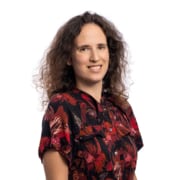
Dr. Karma Ben Johanan is a senior lecturer in the Department of Comparative Religion at the Hebrew University of Jerusalem.

She is a historian of late modern Christianity and Jewish–Christian Relations, specializing in how conservative religious communities interact with each other and negotiate their traditions in changing political and cultural settings.

As an Azrieli Fellow, Karma will research the global Roman Catholic discourse on Mission and evangelization in light of secularization processes and postcolonial critique.

Karma completed her PhD in the Zvi Yavetz School of Historical Studies at Tel Aviv University. She was a Fulbright postdoctoral scholar at the University of California, Berkeley, and a postdoctoral fellow at the Polonsky Academy for Advanced Studies in the Humanities and Social Sciences at the Van Leer Jerusalem Institute. Subsequently, she was engaged in research and teaching positions at the Pontifical Gregorian University in Rome, the Fondazione per le Scienze Religiose Giovanni XXIII in Bologna, and the Forschungskolleg Humanwissenschaften in Bad Homburg. In 2019, Karma was appointed the first chair of Jewish–Christian relations in the Faculty of Theology at Humboldt-Universität zu Berlin, where she served until the summer of 2022. Karma’s book, Jacob’s Younger Brother: Christian–Jewish Relations after Vatican II (Tel Aviv University Press, 2020), won the Shazar Prize for Research in Jewish History in 2021. Karma is an associate editor for the journal Political Theology. When not engaged in research, Karma can be found with her children, Lavi, Boaz, and Dror.

Irene Unterman is an MD student in the Faculty of Medicine at the Hebrew University of Jerusalem and a PhD student in the Department of Developmental Biology and Cancer Research (IMRIC) at the Institute for Medical Research Israel–Canada. She is co-supervised by Prof. Benjamin P. Berman (IMRIC) and Prof. Benjamin Glaser (Hadassah Medical Center).

Her research focuses on DNA methylation, a chemical modification informing cell identity and function. She is developing novel computational tools to analyze methylation sequencing.

These tools correct cell composition differences and infer methylation changes in individual cell types. By applying them to pancreas samples from diabetic and healthy individuals, Irene aims to expose the genetic underpinnings of type 2 diabetes. She hopes to improve current methods for identifying the origin of DNA molecules in blood samples and contribute to cancer screening.

Irene was born in Jerusalem, where she currently lives with her husband, Ido, and their dog, Nimbus. She became fascinated with science while pursuing a high school matriculation project at the Hebrew University supervised by Prof. Hermona Soreq. Her experience as a community first responder led her to the field of medicine. During her army service, she served in the 8200 intelligence unit and participated in the Atidim program, tutoring high school students from underprivileged backgrounds in STEM. Following her discharge from the army, she helped children with special needs at Alyn (a hospital for children with a wide range of congenital and acquired conditions) and worked as a research assistant for Prof. Yuval Tabach. She completed her BSc in medicine at the Hebrew University and embarked on a joint MD-PhD program. In her spare time, Irene enjoys hackathons, where she learns coding skills and works with her team on real-life problems. She is also a certified Pilates instructor and especially enjoys working with the elderly.

Inbal Tamir is an MA student in the Azrieli School of Architecture at Tel Aviv University under the supervision of Dr. Roy Kozlovsky.

Her research deals with the field of industrial heritage conservation, specifically, factories built between the 1950s and 1970s in Israel’s development towns.

Inbal aims to reveal their architectural, social, and economic value and assess which buildings are worthy of conservation. Given that many factory buildings, both in Israel and across the world, have been abandoned, Inbal hopes that her research will raise awareness of the potential of conservation and adaptive reuse of industrial buildings. She also hopes that her exposure of the development towns’ industrial architecture will encourage their reuse, development, and urban renewal.

Inbal was born in Jerusalem and currently lives with her spouse in Tel Aviv. She obtained a BArch from the Faculty of Architecture and Town Planning at the Technion – Israel Institute of Technology, during which she studied at the Polytechnic University of Turin, Italy. In Turin, she was exposed to the fascinating world of building conservation and successful examples of buildings that had undergone adaptive reuse, including the actual Faculty of Architecture building where she was studying which had previously served as a Fiat factory. After completing her undergraduate studies, Inbal worked in architecture firms in Hamburg and Tel Aviv. In her spare time, Inbal likes travelling, discovering new cities and cultures, hiking, cycling, and attending live music concerts.

Dr. Hermann Prodjinoto is an Azrieli International Postdoctoral Fellow in The Robert H. Smith Faculty of Agriculture, Food and Environment at The Hebrew University of Jerusalem under the supervision of Prof. Menachem Moshelion.

He is studying the physiological and functional phenotyping of aquaporins in the regulatory mechanism of the drought tolerance of tomatoes.

Aquaporins are the main channels for the transport of water and are involved in drought recovery; however, their involvement in the drought response of tomatoes remains unclear. Hermann therefore plans to unravel aquaporins’ functions by using the simple and efficient genome editing system, CRISPR-Cas9, as a way of improving our understanding of how to improve drought resistance in tomatoes.

Hermann was born and raised in Benin. He completed a BSc in natural sciences at the University of Abomey-Calavi and an MSc in vegetable and microbial biotechnologies at the Cheikh Anta Diop University of Dakar. After working as a research assistant, he moved to Belgium where he completed his PhD in agronomic sciences and bioengineering at the Catholic University of Louvain’s Earth and Life Institute under the supervision of Prof. Stanley Lutts and Prof. Christophe Gandonou. In his research, Hermann highlighted the response strategies of African rice (Oryza glaberrima) to salinity while distinguishing the effects of both the osmotic component and the ionic component of salt stress on cultivars with different mean levels of salt resistance. In addition to research, Hermann enjoys various sporting activities including running and karate.

Dr. Gwenaël Ferrando is an Azrieli International Postdoctoral Fellow in the Raymond & Beverly Sackler School of Physics and Astronomy at Tel Aviv University under the supervision of Prof. Amit Sever.

Gwenaël’s work deals with theoretical problems in high energy physics, particularly models for which an exact analytic solution is believed achievable.

Gwenaël hopes to gain insights into more general issues, such as non- perturbative aspects of quantum field theory or the so-called AdS/CFT correspondence. The latter is a promising conjecture that certain quantum field theories are equivalent to some string theories, which are themselves the best candidates for theories of quantum gravity.

Gwenaël was born in France and studied at the École normale supérieure in Paris where he obtained undergraduate degrees in both physics and mathematics and a master’s degree in theoretical physics. He then went on to complete a PhD under the joint supervision of Prof. Vladimir Kazakov at the École normale supérieure and Dr. Didina Serban at the Institut de Physique Théorique in Saclay. In his free time, Gwenaël enjoys reading, watching movies, hiking, and travelling.