Brain trust

A collaborative approach to neuroscience is starting to produce results no single lab could achieve alone

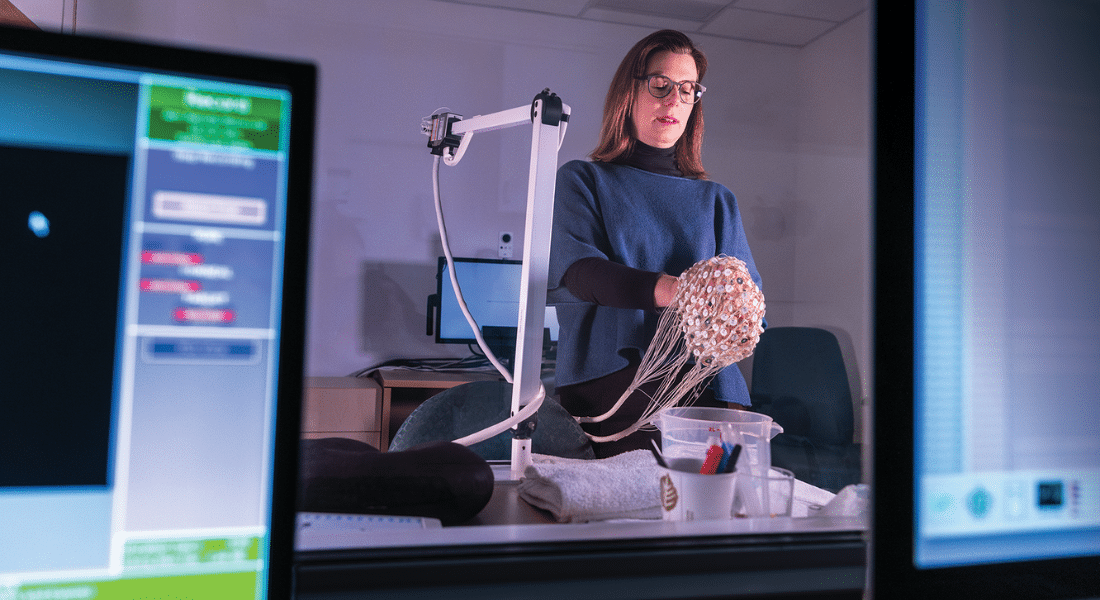
Sarah Lippé, PhD, Neuropsychologist, Professor, University of Montreal; Canadian Research Chair, Pediatric Neurodiversity; Scientist, CHU Sainte-Justine. Photography: Dominic Blewett

Long before she took over leading the Azrieli Foundation, Naomi Azrieli’s commitment to neuroscience was personal. Her brother was born with a genetic neurodevelopmental disorder later identified in the 1980s as Fragile X.

Fragile X is the leading genetic cause of autism and affects roughly 1 in 4,000 men and 1 in 6,000 women.

By the early 2000s, with advances in molecular and genetic science taking off, she saw an opportunity to support research into her brother’s condition, which often results in intellectual disabilities and delayed language and motor development.

People with neurodevelopmental disabilities are frequently overlooked in research and supports, a reality Azrieli has long been determined to change. “We’re interested in funding innovative research through the lifespan that can be translated into treatment and therapies for patients,” she says.

Over the years, the Foundation has helped to build a network of leading researchers to do just that. “We’re at a really exciting point,” Azrieli says. “The basic understanding of neurodevelopment has taken off, and we’re finally starting to open up that black box. I’m proud our foundation has played a meaningful role in making that possible.”

Here are some of the leaders in neuroscience the Foundation supported in 2025.

The Trailblazer

Dr. Sarah Lippé was a young researcher studying epilepsy when a radio program about a young boy with Fragile X syndrome changed the course of her career. Leading theories about how the disorder affects brain development had largely been tested on animals. She realized her expertise in electroencephalography (EEG), a non-invasive test used to measure the brain’s electrical activity, could help change that.

At Sainte-Justine University Hospital in Montreal, her team identified brain biomarkers that reflect the severity of each mutation’s effects on brain development and function.
The Azrieli Foundation funded two of Lippé’s clinical trials—one focusing on Fragile X, the other on Autism Spectrum Disorder—which used EEG to track biomarkers and determine whether drugs could modify participants’ brain activity and behaviour.

The Azrieli Foundation’s funding was essential to making it all possible, says Lippé. “It gave us the liberty to focus on the science and the wellness of families.”

The Pioneer

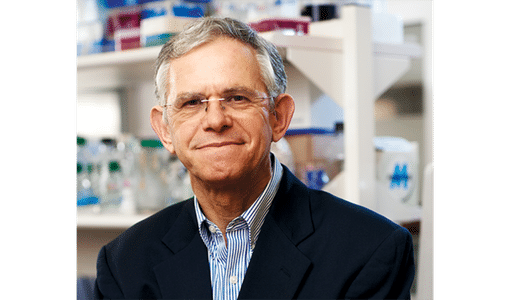
Most genetic disorders occur when the body makes an abnormal protein. The one responsible for Fragile X syndrome is missing because the gene that encodes it is switched off. Israeli stem cell expert Dr. Nissim Benvenisty has generated multiple disease models focusing on Fragile X and trying to turn that gene back on.

He recently coined the term “gene-silencing disorders” in Nature Genetics to describe a category that groups Fragile X with other conditions that share the same mechanism. The concept points to a new treatment path focused on reactivating the gene rather than replacing it. Benvenisty’s lab used stem cells to generate genetic models for Fragile X and screen drug candidates that could modify the condition. He believes effective treatments could arrive within the next decade and credits the Azrieli Foundation with making the work possible. “It’s a different type of foundation,” he says. “It has a vision that allows the research to flourish.”

Nissim Benvenisty, MD, PhD, Director, Azrieli Center for Stem Cells and Genetic Research
The Builders

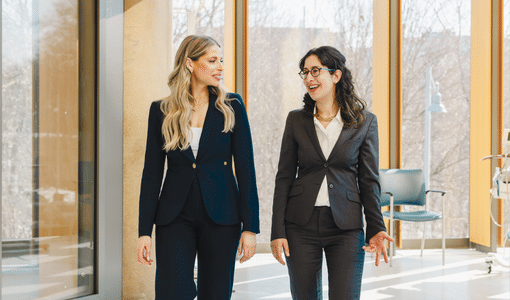
When it comes to studying medicine, Dr. Sara Mitchell never wanted to pick a lane. She had always been fascinated by the relationship between the brain and mind, but didn’t want to choose between neurology, psychiatry or some other specialty. “I just wanted to go to brain school,” she says, laughing.

In 2019, with funding from the Azrieli Foundation, she helped launch the Brain Medicine Fellowship Program at the University of Toronto. The program brings physicians from different brain-related specialties together to rethink how they approach complex cases. Its first fellow, Dr. Sarah Levitt, didn’t just complete the program, she went on to help shape it. “As a team, we learned to embrace different perspectives in an extremely productive way,” Levitt says. “You don’t always see that in every area of medicine because people are so focused on their small piece of the puzzle.”

Over the next few years, Mitchell and Levitt built the program into a fully accredited fellowship that now trains five to eight physicians annually. The competency-based program teaches doctors to move between neurology, psychiatry and more, in ways traditional training rarely allows. The affiliated Brain Medicine Clinic gives the model a clinical home, where complex cases are assessed collaboratively rather than in isolation, and it was a finalist for the Ontario Health Innovation Award in 2025. “This innovative model would have been impossible without the Azrieli Foundation,” Mitchell says.

Sara Mitchell, MD FRCPC MPH, Director, Azrieli Brain Medicine Fellowship Program, University of Toronto; Staff Neurologist & Deputy Chief, Hurvitz Brain Sciences Program, Sunnybrook Health Sciences Centre (left) Sarah Levitt, MSc MD FRCPC, Associate Director, Azrieli Brain Medicine Fellowship Program, University of Toronto; Staff Psychiatrist, Mental Health Program, University Health Network (right). Photography: Shlomi Amiga
The Problem Solver

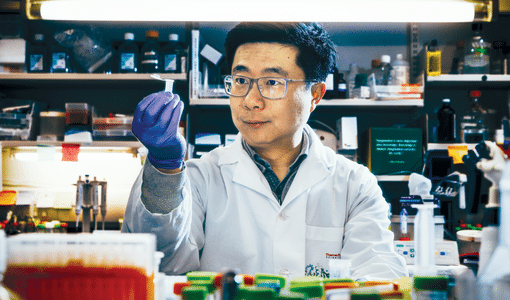
Dr. Guang Yang has always been drawn to puzzles. At the University of Calgary, he studies childhood diseases so rare they don’t even have names. His research focuses on what happens when proteins in the brain stop doing their jobs properly, and why certain genetic mutations result in different diseases even when they originate from the same gene. He compares that work to the complexity he encounters when solving a Sudoku puzzle or beating a challenging video game. “You fail, you learn from how you fail and you try again,” he says. “Once you see the patterns, you start to improve.”

As satisfying as it is to solve a perplexing puzzle, Yang says the real reward comes from making a difference in someone else’s life. That happened recently when a doctor from France used findings from one of Yang’s forthcoming papers to help identify the genetic cause of a patient’s condition. Yang’s lab, which has been supported by the Azrieli Foundation across multiple projects since its inception, is now exploring whether gene therapy and drug screening could one day lead to treatments for these diseases. “There is still a relative lack of support in Canada for early-stage rare-disease research,” Yang says. “The Azrieli Foundation is one of the pioneers.”

Guang Yang, PhD, Associate Professor, Medical Genetics, Biochemistry and Molecular Biology, University of Calgary; Canada Research Chair, Gene Regulation in Brain Development. Photography: Shaun Robinson


A collaborative approach to neuroscience is starting to produce results no single lab could achieve alone

Sign up to receive emails about the remarkable people and programs we support.

Subscribe to our newsletter