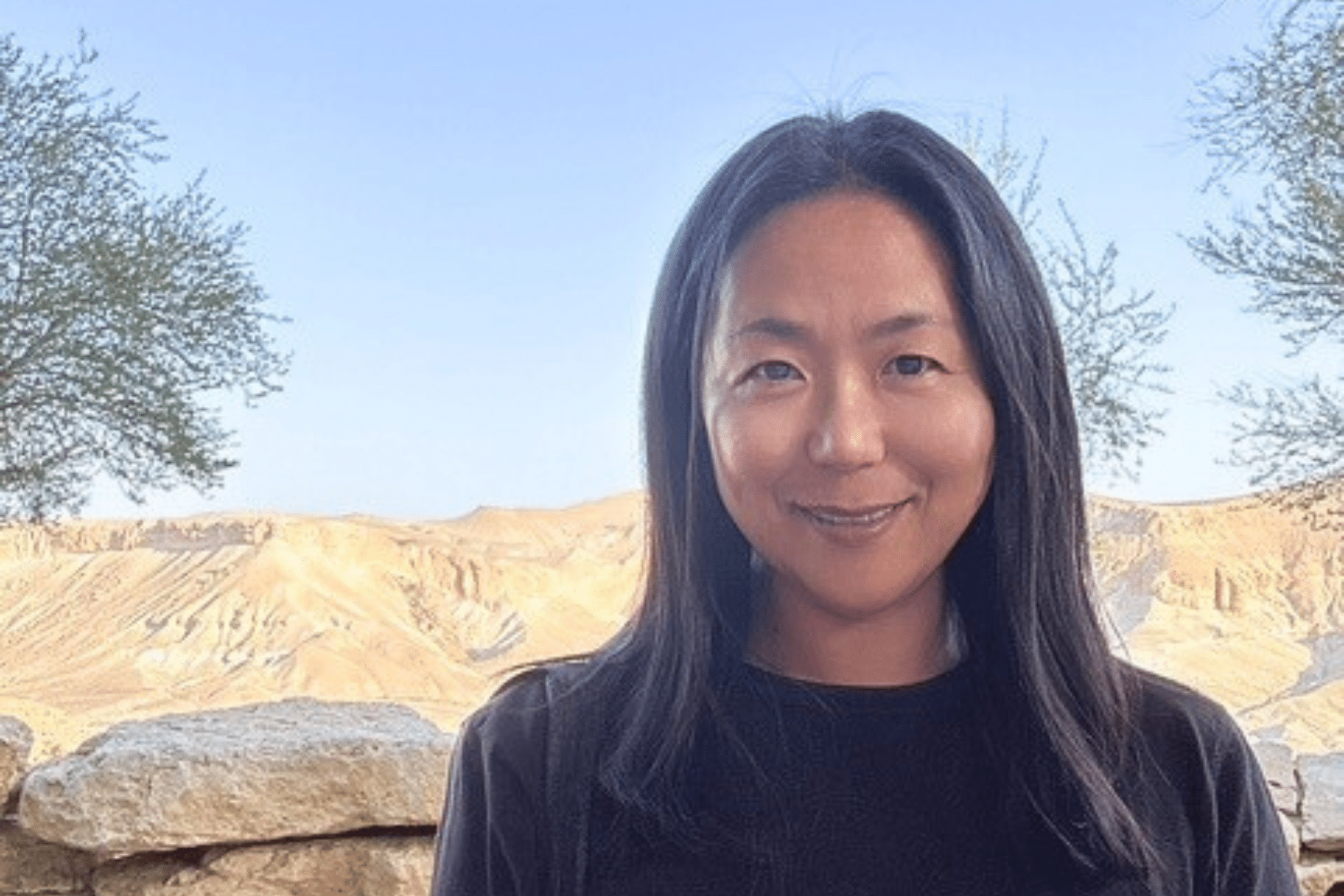
Education is at the heart of the Azrieli Foundation’s mission—and for Dr. Yuri Keum, it has been the compass guiding her journey. From her early fascination with immigration to her groundbreaking research on children’s citizenship, Dr. Keum’s story shows how learning can open doors to discovery and impact. We asked her a few questions about what inspires her work, how The Azrieli Center for Israel Studies at Ben-Gurion University – known by a Hebrew acronym, MALI (Merkaz Azrieli Le-limudei Israel) – shaped her path and what’s next on the horizon.
1. What first sparked your interest in citizenship and migration studies?
In general, I was always interested in the history of immigration and the stories of immigrants. This general interest led me to study history at York University in Toronto, a city known for its multicultural character. At York, I was particularly drawn to the courses offered by the Israel and Golda Koschitzky Centre for Jewish Studies (a grantee of the Azrieli Foundation), such as The Jewish Experience: Symbiosis and Rejection and Modern History of the Jews. These courses taught me the extensive migratory traditions and historical struggles of Jewish communities, which profoundly fascinated me. My undergraduate years at the Koschitzky Centre significantly shaped my passion about citizenship and migration and eventually led me to pursue graduate studies in Israel.
2. How did your time at MALI shape your research and career path?
In line with the mission and mandate of the Azrieli Foundation, MALI provided a unique environment that valued education as a transformative force. Being part of this community allowed and nurtured me to grow as an aspiring researcher. For my PhD, I compared the citizenship and migration regimes of Germany, South Korea and Israel. Specifically, I examined how these three states allocate residential rights to “undocumented” children and offered a refined understanding of children’s citizenship. I completed my PhD with MALI’s generous support – as well as the guidance of top-notch professors at the Ben-Gurion Research Institute for the Study of Israel and Zionism in the Sde Boker campus of Ben-Gurion University.
3. Your work focuses on children’s citizenship—why is this topic so important today?
In addition to filling a research gap (children’s citizenship is largely understudied), I aim to shed a critical light on the precarious citizenship stance of “undocumented” children. Children who grow up without legal status face various kinds of barriers to education, healthcare and belonging. These barriers then hinder them from developing a sense of a secure future, the very basis for realizing their potential and becoming contributing members of a given society. Understanding these dynamics intertwined with citizenship laws and policies is the first step to conceiving new ways to improve the enforcement and protection of children’s rights, which should be a priority for any society that wishes to flourish.
4. What surprised you most during your research journey?
The most striking experience was the October 7th massacre and emergency in Israel. It was an unfathomably painful time all around. Simultaneously, I witnessed an extraordinary level of volunteerism and communal resilience. In fact, I was privileged to see MALI’s initiative to launch educational programs for the affected communities. It started with one community (the Erez community) and has now extended to nine communities, coping with trauma and beyond. My experience assisting this initiative continues to influence how I think about the role of active citizens in times of hardship. Another truly striking experience followed: the broad scholarly network that MALI has built with universities abroad (where the field of Israel Studies has not yet been established, such as in India and South Korea). Exciting exchanges and programming have been conducted over the past two years, including designing a course and seminar tailored to universities in these countries. This development has given me much hope vis-à-vis the challenges the Israeli academic sphere faces, amid the intense discourse concerning the state of Israel. The field of Israel Studies is not only thriving but also expanding. All in all, it is knowledge and solidarity that empower us and let us know who we truly are.
5. If you could give one piece of advice to future MALI Fellows, what would it be?
Stay curious and embrace interdisciplinary learning. My own path has spanned history, sociology, migration studies, and Israel studies. Each perspective added depth to my research and helped me approach complex questions with a more holistic lens. Take advantage of the fellowship to explore your research subject beyond your immediate field and to enrich your horizons.
6. What’s next for you? Any projects or goals you’re excited about?
I am excited about the following two projects. First, I aim to advance our understanding of children’s citizenship by continuing my research on citizenship regimes and how they impact children without legal status. With an enhanced comparative analysis, I anticipate my first book on this subject in the not-too-distant future. Second, I am collecting data and testimonies from non-Jewish victims of the October 7th attack, including released hostages. This work aims to understand their experiences and evaluate how these narratives might reshape Israeli citizenship and migration policies. Both projects start with historical contexts but ultimately seek to inform contemporary discourse about laws, politics, rights and belonging.
About Dr. Yuri Keum
Dr. Yuri Keum is a postdoctoral fellow at The Azrieli Center for Israel Studies (MALI) at the Ben-Gurion Research Institute for the Study of Israel and Zionism, Ben-Gurion University of the Negev. Grounded in comparative citizenship studies, her research focuses on the intersection between exclusionary citizenship practices and inclusionary discourse on children’s rights. Originally from South Korea, she is passionate about amplifying marginalized voices in global citizenship debates.