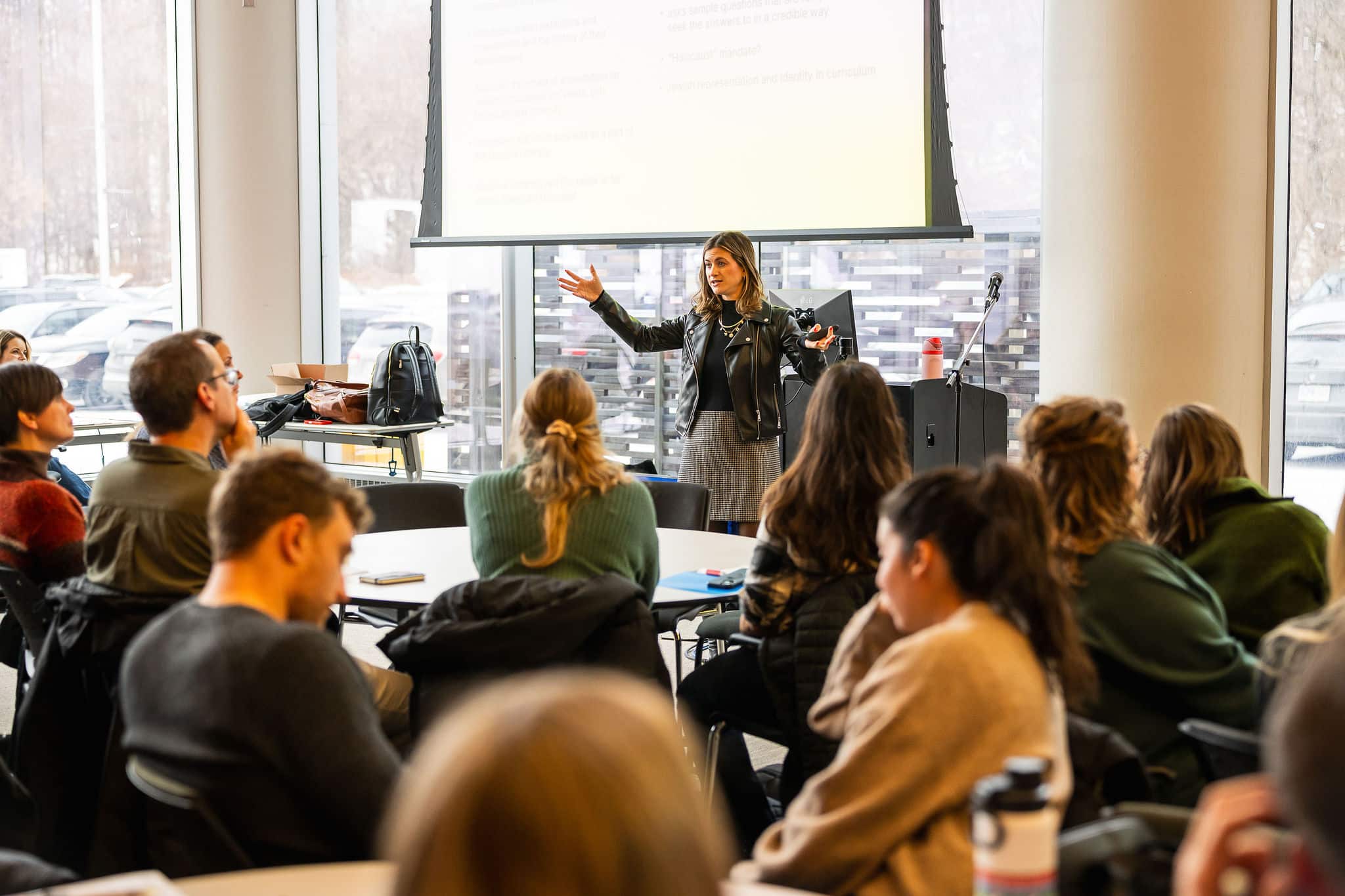
Imagine walking through the bright atrium of the Toronto Holocaust Museum on a crisp winter morning. Sunlight streams through floor-to-ceiling windows in a nearby conference room, where educators gather for a full day of learning. They’ve come for one purpose: to gain the tools and confidence to teach about Jewish life and the Holocaust in ways that resonate with today’s students.
This is the heart of Holocaust Education: Tools for Today, a professional development session co-created by the Toronto Holocaust Museum, Facing History & Ourselves Canada and the Azrieli Foundation’s Holocaust Survivor Memoirs Program. It’s part of a signature initiative designed to help teachers navigate complex topics with sensitivity and accuracy, while fostering deeper understanding among young learners.
The day begins with an introduction in the museum atrium before participants split into two groups. One explores the museum’s exhibits, while the other heads to a sunlit conference space where Azrieli educators lead interactive sessions. Michelle Sadowski, Educator with the Holocaust Survivor Memoirs Program, sets the tone with an icebreaker: What is your earliest memory of learning about the Holocaust? She reminds the group, “You’ll likely be that early memory for your students…no pressure.”
From there, the conversation dives into Ontario’s new Grade 6 curriculum, the politics behind its rollout and why reactive teaching (like introducing Holocaust lessons only after antisemitic incidents) falls short. “Students need more than history lessons about tragedy,” says Michelle. “They need to see Jewish life in all its richness—joy, diversity and resilience—so they understand that Jewish identity is vibrant and alive today.”
The session emphasizes trauma-informed teaching and age-appropriate themes, supported by Azrieli-published memoirs. Teachers read excerpts, workshop lessons and explore strategies to help students connect past events to present realities. Jody Spiegel, Director of the Holocaust Survivor Memoirs Program, adds: “When educators feel prepared, they create spaces where students learn empathy, critical thinking and the importance of standing against hate.”
After lunch, groups switch. Museum staff guide participants through exhibits, sharing insights on how students typically engage and offering tips for meaningful discussions. The day closes with reflection activities, leaving educators inspired and equipped to bring these lessons back to their classrooms.
Why does this matter? Because Holocaust education isn’t just about remembering—it’s about shaping a future where understanding triumphs over ignorance. By giving teachers the tools to teach confidently and compassionately, the Azrieli Foundation and its partners ensure that students learn not only about the darkest chapters of history but also about the resilience and vibrancy of Jewish life.